More Than 1 in 10 Participants Dropped Out of Senior Jobs Despite 2.2 Trillion Won Investment Last Year
Reduced Opportunities for Unselected Applicants, Declining Budget Efficiency
Main Causes: Deteriorating Health and Participation in Other Jobs
Ministry of Health and Welfare to Improve Selection Criteria Next Year
It has been revealed that more than 1 out of every 10 participants in the senior job creation program, which receives more than 2 trillion won in funding each year, has dropped out before completion. While deteriorating health was identified as the most significant reason, structural problems such as mismatches between job type characteristics and working conditions were also noted, highlighting the need for qualitative improvements beyond mere quantitative expansion.

According to the Ministry of Health and Welfare and the National Assembly Budget Office on August 3, out of 1,262,110 participants in last year's senior job creation program, 131,671 people (10.43%) dropped out midway. By type, the dropout rate was highest in community business projects, at 17.3%. Of the 69,634 participants in these projects, 12,064 quit. Community business projects involve running small shops, food production, and agriculture, and are income-generating jobs that generally require a heavier workload compared to other types. Senior public interest activities, which account for 63% of all senior jobs, also had a dropout rate of 12.5%, with 99,842 out of 801,057 participants leaving the program. This was followed by senior capacity utilization programs (8.9%) and child care support (3.3%).
The most common reason for dropping out was health deterioration, accounting for 61,974 people. This was followed by finding other employment or participating in other job programs (9,739 people), being classified as a basic livelihood security recipient (8,590 people), and mismatch between aptitude and work conditions (4,082 people).
The senior job creation program is a flagship policy to combat high rates of poverty among the elderly. The poverty rate for Koreans aged 66 and older is 39.7%, the highest among member countries of the Organisation for Economic Co-operation and Development (OECD). In response, the government increased the relevant budget from 2.1847 trillion won last year to 2.3851 trillion won this year. Previously, on Parents' Day, President Lee Jaemyung stated, "We will move towards a country where the state and community share responsibility, rather than relying solely on parental sacrifices—a nation where people are happy." He added, "We are preparing institutional measures to ensure a healthy and vibrant old age, including a record-high of 1.15 million senior job positions."
However, there are concerns that rising dropout rates may reduce opportunities for those not initially selected and decrease budget efficiency. The Ministry of Health and Welfare plans to address health issues, which are a leading cause of dropouts, by improving selection criteria starting next year. The ministry is considering increasing the weighting given to the assessment of physical and communication abilities related to job performance. A ministry official said, "It is difficult to penalize participants who temporarily suspend their activities due to health reasons," and added, "We will improve the system to evaluate job performance capabilities more thoroughly at the selection stage."
Hot Picks Today
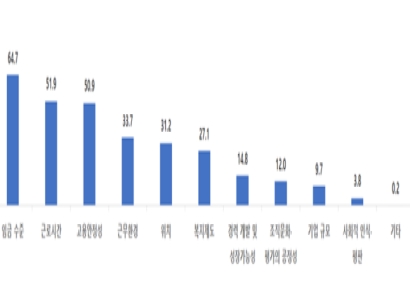 "Please Pay Me at Least 3 Million Won a Month": More Than Half of Young People Today Prioritize "Working Conditions" Over Company Size
- Selling Like Crazy Every Year... 30-Year-Old Hetbahn Takes on a New Challenge: Tastes Better Than "Mom's Home Cooking" [On-Site Report]
- Ran 18 km With 9-Year-Old Tied to Him at the Waist... "Man Banned From Competing for 3 Years"
- "Hey, Lady, Teach Your Kids to Behave!" ... 300,000 Won in Cash and a Bodily Injury Claim Demanded Over Child's Door Ding
- Beachgoer Finds 'Plastic' That Turns Out to Be Perfume Ingredient Worth More Than Twice as Much as Gold
A National Assembly Budget Office official stated, "Senior jobs serve the purpose of supplementing income and supporting social activities for vulnerable seniors," and continued, "It is necessary to analyze the reasons for midterm dropout by program type and to pursue qualitative advancement through job design tailored to regional demand."
© The Asia Business Daily. All rights reserved. Unauthorized AI training and use prohibited.





![[Market ING] KOSPI Seeks Rebound in Superweek Packed with Corporate Earnings and FOMC](https://cwcontent.asiae.co.kr/asiaresize/307/2026102514484873155_1792907327.jpg)