Leading Scholars in Exotic Nuclei Gather in Daejeon to Discuss the Future of RAON Research
IBS Conference on Exotic Nuclei to Be Held July 22-24
Sharing the Latest Achievements in Nuclear Physics and AI Research
Scientists leading global research on exotic nuclei are gathering in Daejeon to discuss the future research directions using RAON, the Korean heavy-ion accelerator.
The Institute for Basic Science (IBS) announced on July 20 that the Rare Isotope Science Project and the Institute for Rare Isotope Science (IRIS) will host the ‘IBS Conference on Exotic Nuclei’ from July 22 to 24 at the IBS Science Culture Center and IRIS in Daejeon.

The IBS Conference is an international academic event in the basic sciences where leading scholars and key researchers from around the world share their latest findings and trends. Since 2013, IBS has organized such conferences by discipline to promote exchanges among domestic and foreign researchers and to expand international joint research.
This year’s event will feature 23 prominent experts in exotic nuclei from Korea and abroad as speakers, including Faical Azaiez, Director of the National Institute for Nuclear Physics in Legnaro, Italy (INFN-LNL), and Professor Dean Lee of the Facility for Rare Isotope Beams (FRIB) at Michigan State University, United States.
The speakers will present the latest research on the structure and reactions of exotic nuclei, the generation of rare isotope beams, and other topics in nuclear physics. They will also introduce research cases in nuclear physics utilizing deep learning and artificial intelligence (AI).
Participants will tour RAON, Korea’s first heavy-ion accelerator, and share updates on its operation and beam commissioning results. They will also discuss ideas for new research topics using RAON and plans to expand international joint research.
Hot Picks Today
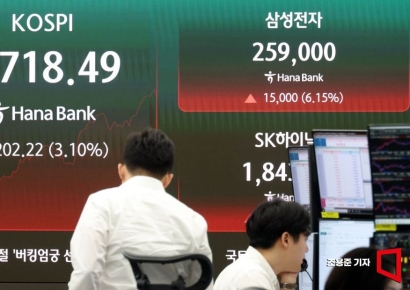 End of Selling Spree in Sight: "Leverage Unwinding Nearing Completion, KOSPI Target at 12,500," Says JPMorgan
- "$300 Gone in One Date"...U.S. Gen Z Ditches Restaurants for Parks
- "It Took Three Hours Just to Exit the Parking Lot"... Vehicles Stuck at Asan Medical Center
- "Broke the Piggy Bank... Salaries Just Aren't Enough": The Stocks Individual Investors Are Rushing to Buy Worldwide
- Zara’s “Death Pants” Too Stylish to Give Up: “I Almost Died Just 30 Minutes After Going Out”
Han In-sik, Director of the IBS Rare Isotope Science Project, said, “We hope that this conference will serve as a venue for international exchange, sharing the latest achievements and new ideas in the field of exotic nuclei,” adding, “It will also help invigorate research using RAON and foster greater collaboration with researchers worldwide.”
© The Asia Business Daily. All rights reserved. Unauthorized AI training and use prohibited.