Daebo Magnetic Caught for Failure to Issue Subcontract Documents; Ordered to Correct and Fined 32 Million Won
51 Cases of Written Contract Omission in Demagnetizer Parts Outsourcing
FTC Plans to Raise Fixed Fine Standard to Strengthen Deterrence
A company that manufactures demagnetizers, which are essential equipment in the secondary battery production process, has been sanctioned by the government for failing to properly issue written subcontract agreements when outsourcing parts manufacturing to subcontractors.

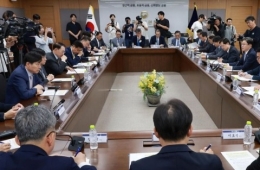
On July 20, the Fair Trade Commission announced that it had decided to issue a corrective order and impose an administrative fine of 32 million won on Daebo Magnetic for violating the written issuance obligation under the Fair Transactions in Subcontracting Act when outsourcing the manufacturing of demagnetizer bodies, frames, and screens.
According to the Fair Trade Commission's investigation, from November 2021 to July 2022, Daebo Magnetic outsourced a total of 51 demagnetizer component manufacturing orders to two subcontractors. During this process, it was found that the company did not provide the subcontractors with a signed or sealed written contract specifying the legally required details before the subcontractors began work.
Specifically, for 50 transactions, Daebo Magnetic conducted individual orders by sending emails containing only partial information—such as drawings, product names, quantity ordered, and delivery date. In the remaining one transaction, only an "order form/contract" was issued that lacked signatures or seals from both parties, and critical legal items such as inspection methods and subcontract payment details were omitted, yet work proceeded. Article 3 of the current Subcontracting Act requires that both parties sign or seal a written document specifying subcontract price and payment method, which must be issued before work starts.
The Fair Trade Commission determined that Daebo Magnetic's actions undermined the fundamental principle of the Subcontracting Act, which is to clarify transaction conditions and prevent disputes. As a result, the Commission issued a corrective order and imposed a fixed administrative fine of 32 million won. Because it is difficult to calculate the violation amount ratio in cases of failure to issue written contracts, a fixed amount fine was applied.
Meanwhile, the Fair Trade Commission is in the process of revising the notice on fines by raising the base amount for fixed fines and rationalizing the criteria for their imposition as part of institutional improvement. This move is in response to the perceived limitations in the effectiveness of current sanctions.
Hot Picks Today
 "I Ate at Home to Save Money, But My Account Balance Was Still a Shock"
- Suddenly Called Out During Class, Awarded $100,000 as Students Cheer in the Gym
- "Hacker’s Identical IP Detected Across Financial Institutions... Large-Scale Attacks Using AI"
- "After a Dream About Feces, Bought a Lottery Ticket and Won 20,000 Won... Scratched Again and Hit a 2 Billion Won Jackpot"
- "Uncle Will Buy Them All for Wonie"... Men in Their 30s Sweep Up 600,000 'RESCENE Bread'
The Commission stated, "We will strictly enforce the law against failure to issue written documents, which threatens the basic order of subcontract transactions, and will continue to improve the system to ensure that fines imposed are commensurate with the degree of violation, thereby strengthening deterrence against legal breaches."
© The Asia Business Daily. All rights reserved. Unauthorized AI training and use prohibited.