[Reporter’s Notebook] Should Leveraged ETFs Be Blamed Alone for Stock Market Volatility?
Financial Regulators Blame Volatility Solely on Leveraged ETFs
Semiconductor Sector Fluctuations Reflect Global Trends
Policy Measures Could Further Distort the KOSDAQ Market
![[Reporter’s Notebook] Should Leveraged ETFs Be Blamed Alone for Stock Market Volatility?](http://www.asiae.co.kr/news/img_view.htm?img=2026071616591849229_1784188758.png)
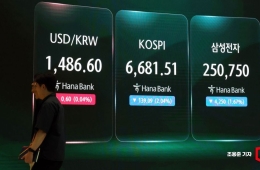
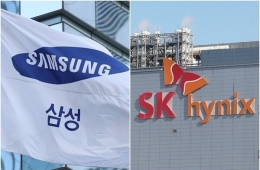
The government has announced sweeping regulatory measures targeting leveraged exchange-traded funds (ETFs) for Samsung Electronics and SK hynix. The reasoning is that excessive volatility requires investor protection mechanisms. The policy framework, including a temporary suspension of new listings and raising the minimum deposit for investing in single-stock leveraged ETFs from 10 million won to 30 million won, has been designed to raise the entry barrier for trading.
The intent to protect investors is hard to deny. However, the real issue lies in the approach. There is a need to examine whether blaming market volatility solely on leveraged ETFs and responding by raising transaction barriers truly reflects an accurate reading of the market’s dynamics.
Leveraged ETFs are no longer unfamiliar products in the global stock market. Since the launch of single-stock leveraged ETFs in the United States in 2022, they have seen steady growth. The purpose of listing them in Korea was to keep up with this global trend. As individual investors showed growing interest in various 2x leveraged ETFs traded in the U.S.—such as TQQQ, SOXL, and NVDL—the idea was to channel this demand into the domestic market, simultaneously boosting the local stock market and stabilizing the exchange rate.
However, authorities have suddenly begun to treat leveraged ETFs as the culprit behind market volatility. While it is true that recent surges in funds flowing into semiconductor stocks and leveraged products have heightened volatility, it is worth questioning whether leveraged ETFs alone have made the domestic stock market so disorderly.
The volatility in the semiconductor sector is not unique to Korea. It is a trend in global capital markets that Wall Street and central banks around the world are also wary of. For example, Micron Technology saw its largest single-day drop for the month at 10.57% on July 1. SanDisk fell by 14.13% on July 13. SK hynix also recorded a record single-day decline of 15.37% on July 13, a figure not much different from those. Additionally, the commission revenues from brokerage trading at U.S. securities firms such as Goldman Sachs and JP Morgan have surged recently due to increased trading as the market sees sharp ups and downs.
Liquidity flowing into the stock market from the cryptocurrency market has also amplified volatility. Super-large cryptocurrency exchanges like Hyperliquid and Binance have been rolling out “stock tokenization” products, focusing on semiconductor stocks. Similar to leveraged ETFs, these products maximize returns through the use of options and other derivatives alongside the underlying stock. As volatility in Bitcoin and Ethereum has subsided, idle liquidity has moved into the stock market, contributing to even more frequent surges and plummets, according to some analyses.
This measure may inadvertently depress the KOSDAQ even further. Savvy investors can sell off other assets to meet the deposit requirement, making it more likely that blue-chip KOSDAQ shares, which already tend to be overlooked, will be the ones sold. In this way, the government’s policy to revitalize the KOSDAQ could end up undermining itself.
Hot Picks Today
 "Resale Brings 'Hundreds of Times' the Profit" Crowds Line Up at Dawn... A Bag Harder to Get Than Luxury Brands
- Woman Wins $8.5 Million Lottery After Divorce... Court Rules Ex-Husband Has No Rights
- Foreign Tourists Mimic "SNS Reviews" Posted After Visiting Korea
- "I Earned 200 Million Won But Lost It All": Jaewon Kim Directly Criticizes 'Samsung Electronics and Hynix Leverage'
- As the Final Whistle Blows, Argentina Loses Both the Match and Their Composure with Fists Instead of Celebration
Leveraged ETFs are not to blame for market volatility. If this measure proves ineffective, who or what will be targeted next? If, in the name of protection, policymakers take such a narrow view of the market, capital will simply migrate to sectors where regulation is weaker. What is needed is a more accurate reading of market trends and smarter solutions.
© The Asia Business Daily. All rights reserved. Unauthorized AI training and use prohibited.