Kim Yongbeom Draws Line at Leveraged ETF Delisting... What "Additional Measures" Are on the Table?
Ruling Party and Government to Discuss Follow-Up Measures on Leveraged ETFs on July 20
Delisting and Leverage Adjustment Unlikely... Focus Shifts to Tracking Error Management Window
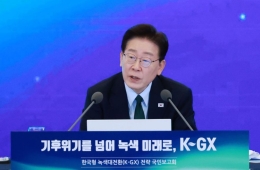
The debate over regulatory measures surrounding single-stock leveraged Exchange Traded Funds (ETFs) with Samsung Electronics and SK hynix as underlying assets has entered a 'second round.' Last week, the government introduced additional measures such as raising the minimum deposit to 30 million won, but experts say these steps fall short in addressing the structural issues of the market, such as excessive capital concentration. In particular, as Blue House policy chief Kim Yongbeom ruled out the possibility of delisting these products, market attention is shifting to potential ‘additional measures’ that could mitigate volatility.
The Democratic Party lawmakers of the National Assembly’s Political Affairs Committee, along with the Financial Services Commission and the Financial Supervisory Service, are scheduled to hold a party-government consultation on July 20 to discuss follow-up measures for single-stock leveraged ETFs. Although this consultation is mainly positioned as an inter-departmental work report related to the formation of the National Assembly for the latter half of the year, discussions regarding leveraged ETFs are expected to carry significant weight, given that such products have been identified as a key driver of domestic market volatility. Lawmakers of the People Power Party will also hold a seminar on July 21 at the National Assembly Members' Office Building to discuss countermeasures for the so-called 'Rollercoaster Samsung-Hynix Leveraged ETF.'

"Cannot Stop Structural Capital Concentration" – Louder Calls for Additional Regulation
The main concern is what additional supplements the authorities will adopt. In the market, there is a prevailing view that essentially all the available measures such as raising the deposit requirement and increasing mandatory investor education hours have already been deployed by the financial authorities. On July 16, the joint supplementary measures made public by the relevant ministries included: ▲ Immediate temporary suspension of new listings and prohibition of advertising ▲ Raising the basic minimum cash deposit to 30 million won ▲ Increasing the minimum trading unit to 20 shares ▲ Strengthening the mandatory tracking error management standard ▲ Expanding pre-investment education to three hours, among others.
On this, an asset management industry insider stated, “These are positive in that they cool short-term overheating and raise investor risk awareness,” but also pointed out, “The fundamental cause of market distortion lies in the structural excessive capital concentration into specific stocks and liquidity limitations in the domestic derivatives market. Therefore, regulating only the products cannot fix the structural capital concentration in the market as a whole.” The 30 million won base deposit is also lower than the 50 million won amount that had been floated in the market.
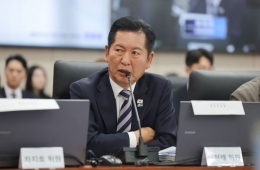
Furthermore, there are continued calls for outright delisting. Jeong Uijeong, head of the Korean Stock Investors Association, asserted, “It is right to move in the direction of making delisting the guiding principle. Of course, delisting would inevitably create victims, but a simple calculation comparing the total amount of harm from delisting to the damages currently occurring will yield a clear answer.” He added, “With all the money flowing into the Samsung-Hynix 2x leveraged products, the imbalance in supply and demand has become so severe that Kosdaq is experiencing a drought, resulting in low trading volumes and a prolonged period of undervaluation despite strong earnings.”
The so-called 'Samsung-Hynix leveraged' products have been criticized for increasing market volatility and for effectively turning the domestic equities market into a 'betting floor.' The market capitalization of the 16 leveraged ETF products grew from 4.4 trillion won on May 27 to over 15 trillion won within just a month, and, even after a recent correction, continues to hover at around 12 trillion won. Particularly, the ‘short gamma’ structure—selling more during sharp drops and buying more when prices soar—has intensified volatility. Since the launch of leveraged ETFs up to July 16, the KOSPI sidecar was triggered 19 times and the circuit breaker activated five times.

Kim Yongbeom: "Delisting, Hard to Imagine" – Admits Need for Additional Measures
The government is currently rejecting calls in some quarters for delisting these ETFs. When announcing the first supplementary measures on July 16, the Financial Services Commission declared, “Leveraged products do not qualify for delisting.” Policy chief Kim Yongbeom also publicly stated his opposition. On July 19, appearing on ‘Sunday Diagnosis Live,’ he said, “Delisting is hard to imagine. There are already investors involved, and the product scale exceeds 10 trillion won. Delisting itself could deliver an enormous shock to the market.”
Another additional measure under market discussion is adjusting the leverage multiple. However, there is skepticism that lowering the leverage from 2x to 1.5x would not align with the original intent of these products, and this change could only be implemented after shareholder approval, making it difficult to realize. Financial authorities have thus confirmed that this measure is not under consideration. Kim Yongbeom also argued, “A 1.5x product would just be a different product,” and thus cannot be seen as a supplementary measure.
However, Kim did indicate that “tracking error needs to be minimized,” signaling that additional measures centered on this may be under review. The tracking error is an indicator representing the difference between an ETF’s actual net asset value (NAV) and its trading price in the market. Kim is particularly focused on the current structure where orders are concentrated just before the market closes, causing sharp volatility in leveraged ETF products.
He noted, “To minimize tracking error over a 30-minute period, sell orders are concentrated in a short window, which in itself applies additional short-term selling pressure. Authorities, asset management firms, and brokerage houses must discuss how to minimize market impact.” He went on, “Do we have to manage the tracking error within 30 minutes, or could it be over two hours? Is it necessary to use only cash sales to manage this, or are there other ways, such as using other derivatives, to achieve reasonable management? We need to look for ways to minimize market shocks.”
Industry insiders interpret Kim’s remarks as suggesting reforms to loosen the current end-of-session tracking error management in order to reduce concentrated order flows. At present, trading is concentrated at the market close to align tracking error, but discussions may focus on extending the management window or using derivatives instead of underlying equities.
"Supplementary Measures Introduced Shortly After Launch – Financial Regulator Cannot Escape Blame"
Inside and outside of the market, there is ongoing criticism that having to introduce supplementary steps just a month and a half after the single-stock leveraged product was launched speaks to the financial authorities’ failure to properly supervise the approval process. There are arguments that neither the design of the product nor overall investor protection were sufficiently considered, and the authorities simply rushed ahead with the launch. Some claim that the hastily issued supplementary measures effectively shift responsibility onto the industry.
Related Articles
 People Power Party: "Yongbum Kim Offers Only Excuses, No Apology for Gambling ETF Debacle... Parliamentary Probe Needed"
- "Deposit Raised" Supplementary Measures for Samsung and SK hynix Leveraged ETFs: How Effective Are They? (Comprehensive)
- Supplementary Measures Introduced for Samsung Electronics and SK hynix Leveraged ETFs... Stricter '30 Million Won Cash Deposit' Requirement (Update)
- Ahead of F4 Meeting, Lee Eogwon Says "Leverage ETF Measures Coming Soon"... Avoids Answer on Trading Halt
Moreover, controversy is growing over the independence of the financial authorities' policy-making, as Kim Yongbeom’s media interview occurred first during the launch process of the leveraged products. In response, Byun Jeho, Director of the Capital Markets Bureau at the Financial Services Commission, stated, “Decision-making authority and responsibility for introducing leveraged ETFs rests with the FSC and was decided following a formal resolution.”
© The Asia Business Daily. All rights reserved. Unauthorized AI training and use prohibited.