"1.1 Billion Won for 30 Seconds, 'Made for Money' Controversy... Wenger Says 'Hydration Break Under Review'"
"We Exist for Football Fans...
Further Review to Be Conducted"
Arsene Wenger, FIFA Global Football Development Director, did not give a definite answer on whether the newly adopted 'hydration break' at the 2026 North and Central America World Cup would continue in the future.

On the 18th of last month (local time), during the second match of Group A in the 2026 North and Central America World Cup held at Zapopan Guadalajara Stadium in Mexico, the Korean and Mexican teams faced off. Players were drinking water during the hydration break in the middle of the game under the direction of Head Coach Hong Myung-bo. Photo by Yonhap News Agency
View original imageAccording to the BBC on July 19 (Korea time), former Arsenal (England) manager Wenger acknowledged that the hydration break, introduced for the first time at the North and Central America World Cup, was unpopular. He stated that FIFA would review its impact after the tournament ends. As Global Football Development Director, Wenger is responsible for reviewing not only the tactical aspects of the game but also newly introduced regulations.
FIFA implemented three-minute hydration breaks in both the first and second halves of every match during this World Cup. After about 22 minutes into each half, the referee would stop play to allow players to hydrate. FIFA has presented 'player health protection' as the reason for this introduction.
However, because the hydration break was implemented uniformly in every match regardless of temperature or weather conditions, criticism has arisen that its purpose was to guarantee broadcasters—who pay significant rights fees to FIFA—dedicated time slots for commercials. During this pause, broadcasters aired full advertisements. England manager Thomas Tuchel pointed out, "It disrupts the flow of the match and changes the identity of football."
The BBC noted that Fox Sports—the U.S. broadcast partner for the tournament—charged an average of $200,000 to $300,000 (about 300 million to 450 million won) for a 30-second World Cup commercial. During U.S. matches and the tournament stage, the price climbed to as much as $750,000 (about 1.12 billion won).

Wenger said, "People did not like the hydration break," adding, "FIFA will analyze its impact after the World Cup." He continued, "I don't think it influenced the results of the matches," but emphasized, "We are here for the people who watch football. A final decision will be made later."
Hot Picks Today
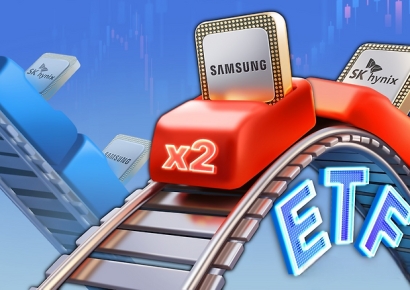 "Already a Gambling Den... Hard to Pull Korean Retail Investors Out" Casino Comparison Emerges Amid Leveraged Product Frenzy
- A '71 Million Won' Catch in the Net... 7.3m 'Lottery of the Sea' Minke Whale Accidentally Caught Off Ulsan
- "Iranian Assassination Threats Real"... Why Trump Switched Air Force One
- "Afraid Korea Might Restart Production, The Tide Turns"...Taiwan Shaken by Korean Memory Expansion [Taiwan Chip Dispatch]
- "No Matter How Hot It Is, This Crosses the Line": Outrage as Woman Bathes and Scrubs Herself in Broad Daylight at Cheonggyecheon, Stirring 'Most Notorious Villain' Scandal
Meanwhile, regarding the expansion of the World Cup from 32 to 48 teams, Wenger said, "I believed it was an ethically necessary move to offer more teams an opportunity," and added, "I am convinced it was the right decision and a great success."
© The Asia Business Daily. All rights reserved. Unauthorized AI training and use prohibited.