[One Year Since the Commercial Act Revision]① 75% of Experts Say It Helped Resolve the "Korea Discount"
Survey of Capital Market Experts:
Expansion of Directors' Duty of Loyalty Seen as Most Significant Change
Follow-up Legislation Needed; Focus on Next Year's Shareholders' Meeting Season
Business Community Voices Concerns Over Rapid Changes and Delays in Decision-Making
A year ago, the implementation of the revised Commercial Act, which focused on strengthening shareholder rights, marked the first step toward resolving the “Korea Discount” (undervaluation of the Korean stock market) in Korea’s capital markets. Over the past year, starting with the expansion of the directors’ duty of loyalty, Korea has seen a series of institutional reforms aimed at enhancing shareholder rights and improving corporate governance. However, there remain significant challenges to increasing the effectiveness of these measures. To mark the first anniversary of the enforcement of the revised Commercial Act, The Asia Business Daily will present a four-part series examining the impact of these legislative changes on the capital market, based on surveys and interviews with experts from the financial investment industry, academia, the business community, and the legal sector, and will identify the tasks ahead to usher in an era of the “Korea Premium.”
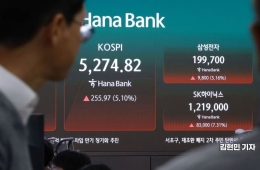
Three out of four domestic capital market experts evaluated that the revision to the Commercial Act has contributed, at least in part, to alleviating the “Korea Discount” during the past year. Analysts explain that growing expectations for enhanced shareholder returns and improved corporate governance, alongside the stock market rally led by the semiconductor sector, have supported a reassessment of the Korean stock market. However, many pointed out that supplementary legislation and institutional enhancements are urgently needed to establish the reforms, and concerns have also emerged over management uncertainties arising from such rapid changes.
According to a survey conducted by The Asia Business Daily on July 21, ahead of the first anniversary (July 22) of the enforcement of the revised Commercial Act, among 20 capital market experts, 55% responded that the legislative amendments had “contributed to some extent” to addressing the Korea Discount. Including those who answered “contributed greatly” (20%), a total of 75% viewed the legislation as having been effective. Meanwhile, 15% answered that “it is still too early to judge,” and 10% said it had “barely contributed,” citing reasons such as the KOSPI rally’s heavy reliance on semiconductor sector performance and the continuing sluggishness of the KOSDAQ.

When asked to evaluate the overall impact of the revised Commercial Act over the past year, the majority of respondents gave a positive assessment. “Very positive” responses accounted for 20%, while “somewhat positive” made up 60%. As for the most significant changes (multiple responses allowed), more than half of the respondents cited the “expanded duty of loyalty for directors (50%),” which has been in effect since July last year. This was followed by “strengthened protection of shareholder rights (45%),” “increased interest from overseas investors (40%),” “expanded shareholder returns by companies (40%),” and “the KOSPI rally (25%).” However, 15% answered that “there has not yet been any noticeable change.”

Since the amended Commercial Act passed the National Assembly in three stages last year and is still being implemented gradually, current expert evaluations are largely considered “preliminary.” The expanded duty of loyalty for directors took effect in July 2025, and from the latter half of this year, additional measures such as the so-called “3% rule,” changes to the ratio of outside directors appointed, and the mandatory cumulative voting system will be introduced. Accordingly, next year’s regular general shareholders’ meetings are expected to be a major milestone in determining whether the amended Commercial Act has been firmly established.
An anonymous capital market expert commented, “The undervaluation of the Korean stock market historically stemmed more from institutional and structural issues in the capital market than from any lack of corporate competitiveness,” adding, “The revision of the Commercial Act, expansion of shareholder returns, improvements in corporate governance, and the strengthening of stewardship activity are all measures that have helped alleviate such discount factors.”

Nonetheless, there have also been considerable concerns raised during the early phase of implementation. Seo Joonsik, professor of economics at Soongsil University, said, “The revision itself is significant,” but added, “It will take time for the reforms to take root, and there are fears that provisions could be exploited in ways that undermine their original intent.” Some pointed out that ongoing reform momentum—such as further legal and institutional revisions—will be critical, and cautioned that for certain companies, loopholes could allow the revised Commercial Act to remain largely symbolic.
Related Articles
 Lee Yongwoo: "Leverage ETFs Undermine Stock Market Reform Momentum... Predictable Markets Are Essential" [Commercial Act Amendment 1 Year] ①
From a business community perspective, there have been worries about increased management uncertainties and delays in decision-making due to these rapid regulatory changes. A business group official who participated in the survey emphasized, “In order to facilitate stable business operations, follow-up measures are necessary to enhance legal predictability.”
© The Asia Business Daily. All rights reserved. Unauthorized AI training and use prohibited.