China Dismisses Trump’s Election Interference Claims: "Pure Fabrication... Not Interested in U.S. Affairs"
Lin Jian, Spokesperson for China's Ministry of Foreign Affairs, Dismisses "Malicious Slander"
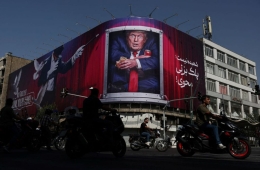
When U.S. President Donald Trump recently claimed that China had intervened extensively in the 2020 U.S. presidential election, in which he failed to win re-election, China dismissed the assertion as a "malicious slander."
Lin Jian, spokesperson for China’s Ministry of Foreign Affairs, stated at a regular briefing on the 17th, "The relevant remarks from the United States are purely fabricated, constitute malicious slander, and have already been proven groundless," adding, "China has always adhered to the principle of non-interference in internal affairs, is not interested in the U.S. presidential election, and has never attempted to interfere."
Spokesperson Lin pointed out, "On the contrary, the international community has clearly seen who frequently meddles in other countries’ internal affairs, who has long indiscriminately monitored governments, companies, and ordinary people around the world, and who has stolen other nations’ citizens’ data on a large scale."

Lin further urged, "We call on the United States to engage in self-reflection and stop unfounded slander against China," and said, "We urge the U.S. not to use China as an excuse in its elections, and to focus instead on actions that are beneficial for China-U.S. relations."
When asked whether President Trump’s remarks could affect Chinese President Xi Jinping’s planned visit to the U.S., Lin declined to answer directly, instead repeating, "We urge the U.S. not to use China as an excuse in its elections, and to focus instead on actions that are beneficial for China-U.S. relations."
On July 16 (local time), President Trump claimed in a national address that there was evidence China interfered in the 2020 U.S. presidential election to sway the outcome. Regarding this, President Trump released what he described as materials collected and analyzed by the U.S. administration, though local media reported that these were merely a repetition of previously circulated conspiracy theories, once again presented without clear evidence.
In addition, China’s Ministry of Foreign Affairs also pushed back against the Trump administration's decision to shorten the stay period for foreign journalists working for foreign media outlets, decrying it as a "discriminatory measure."
On July 16, the U.S. Department of Homeland Security announced regulations limiting the stay of international students in the United States to a maximum of four years and reducing the stay of foreign journalists entering the U.S. on I visas to 240 days (or 90 days for journalists with Chinese nationality).
Spokesperson Lin stated, "The U.S. setting restrictions on cultural and people-to-people exchange benefits neither side, and this is a discriminatory action targeting specific countries by the United States," further adding, "China considers these new U.S. regulations a serious violation of the three main agreements on media issues reached between China and the U.S. in 2021, and says they will severely affect the normal work of Chinese journalists in the United States."
Hot Picks Today
 Wealth Surpasses 20 Quadrillion Won... The Super-Rich Score Big, But Where Did the Money Flow?
- "Spend 200,000 Won, Get 100,000 Won Back?"... Government's Bold Move Unveiled [Essential Tips for Benefits]
- Jisun Hong Responds to 'All-In' Home Purchase Criticism: "It Was for Stable Self-Residence"
- "Should Seniors Avoid It? Praised as a Health Secret, Now Faces a Surprising Warning [Experiment Note]"
- "I'm Getting Married, But Please Don't Come"... Gen Z's Changing Wedding Trends [World is Z-gold]
He continued, "China demands that the United States immediately rescind its discriminatory policies against Chinese journalists and safeguard the lawful rights and interests of Chinese journalists in the U.S.," adding, "China reserves the right to take reciprocal countermeasures."
© The Asia Business Daily. All rights reserved. Unauthorized AI training and use prohibited.