[New York Stock Market] Mixed Opening Amid Semiconductor Weakness
TSMC Ends Lower on Higher Capital Expenditure Forecast
Semiconductor Stocks Weaken in U.S. Market
On July 16 (local time), the three major indices on the New York Stock Exchange are showing mixed trends due to weakness in semiconductor stocks.
As of 9:43 a.m. on the New York Stock Exchange (NYSE), the Dow Jones Industrial Average was trading at 52,698.57, up 39.93 points (0.08%) from the previous session. The S&P 500 Index, focused on large-cap stocks, was down 35.39 points (0.47%) at 7,537.01. The tech-heavy Nasdaq Index was also down 271.36 points (1.03%) at 25,994.58.
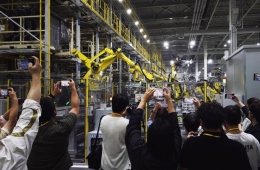
![[New York Stock Market] Mixed Opening Amid Semiconductor Weakness](http://www.asiae.co.kr/news/img_view.htm?img=2026071622300849370_1784208609.jpg)
TSMC, which recorded its highest-ever quarterly net profit in the second quarter of this year thanks to soaring demand for artificial intelligence (AI) semiconductors, ended lower the previous day. As a result, semiconductor stocks are also weak in the U.S. market.
According to CNBC, despite TSMC's better-than-expected second quarter results, an upward revision of its capital expenditure outlook weighed on its share price. TSMC expects its capital expenditures this year to reach between $60 billion and $64 billion, up from a previous forecast of $52 billion to $56 billion.
The VanEck Semiconductor ETF (SMH) was down 2.65%, while Arm Holdings plunged 5%, leading the decline. SK hynix ADR was down 6.76%, Intel fell 2.91%, AMD dropped 3.27%, and Qualcomm was down 3.50% as well.
Bloomberg reported that investors remain uncertain about when the trillions of dollars in investments will translate into tangible profits, as they continue to debate whether technology stocks are overvalued. The four major U.S. AI companies, including Meta and Alphabet, are expected to invest more than $725 billion this year alone.
Matt Maley of Miller Tabak analyzed that, despite TSMC's strong performance, the negative market reaction has triggered concerns about management among investors. He said, "The future movement of semiconductor-related stocks continues to be the most important issue in the stock market. Clearly, significant cracks are now appearing, so a strong and sustained rebound will need to appear soon, or else it will become a serious warning sign."
The previous day, the U.S. Producer Price Index (PPI) came in lower than expected, fueling optimism that inflation will ease and supporting a firm tone for the Dow index.
Last week, initial jobless claims decreased and June retail sales posted a modest increase. Ellen Zentner, chief U.S. economist at Morgan Stanley Wealth Management, assessed, "Despite the challenges, consumers are still spending and the labor market shows no signs of collapse."
Hot Picks Today
!["Don't Use Chinese-Made Products": One U.S. Warning Triggers a 5 Trillion Won Jackpot for Korean Batteries [Weekend Money]](https://cwcontent.asiae.co.kr/asiaresize/93/2025121709393659037_1765931975.jpg) "Don't Use Chinese-Made Products": One U.S. Warning Triggers a 5 Trillion Won Jackpot for Korean Batteries [Weekend Money]
"Don't Use Chinese-Made Products": One U.S. Warning Triggers a 5 Trillion Won Jackpot for Korean Batteries [Weekend Money]
- "Dividend Payouts of 40 Million Won Before Their First Birthday"...'Baby Shareholders' Put Ordinary Workers at a Disadvantage
- Order Volume Surges by 9,000%...How Generation Z in China Finds Fulfillment With Just 20,000 KRW [China.zip]
- "Planning a Trip to Japan?"... Accelerating Yen Strength [Weekend Money]
- '12 Billion Bottles of Surplus' – Enough for the World to Drink for 3 Years... Wasn't MZ Just Trending Recently?
She added, "While this data may not directly influence the Federal Reserve's policy direction, it does demonstrate the continued resilience of the U.S. economy."
© The Asia Business Daily. All rights reserved. Unauthorized AI training and use prohibited.