"AI Data Centers, Not Rental Businesses"...Jungah Hwang Hosts AI Policy Forum
Hosted by Jungah Hwang, Kiheon Song, Junho Han, and Others
Forum on Promoting AI Infrastructure Investment and Intelligence Export Strategies
The AI Data Center (AIDC) industry has voiced the urgent need for institutional reforms to recognize data centers as a core national industry, rather than merely as “real estate leasing businesses,” if AI infrastructure investment is to be accelerated. Since current regulations classify data centers under leasing businesses, thereby excluding them from various forms of support such as investment tax credits, calls have grown for regulatory adjustments that reflect the true industrial characteristics of data centers.
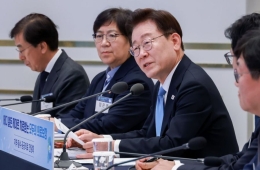
On the 16th, the office of Jeongah Hwang, member of the Democratic Party of Korea, held a forum at the National Assembly titled “AI Infrastructure Investment Promotion and Intelligent Export Strategy.” Participants emphasized that AI data centers are not simply facilities for renting space, but are key infrastructure for producing and exporting AI, and called for improvements to related systems.

Sungeun Yoon, Head of AI Policy Research at SK Telecom (Senior Vice President), stated, “AI data centers are industries that produce intelligence and export it.” He pointed out, “Despite being proactive facilities that produce AI, not leasing businesses for renting space to big tech companies, data centers are still classified as leasing businesses under the Restriction of Special Taxation Act, so they are excluded from investment tax credit eligibility.”
He continued, “To transform Korea into a country that produces and exports AI, rather than just importing it, policy support for AI data centers is essential.”
Sungjun Bae, Executive Director of Naver Cloud, also noted, “A significant proportion of the costs for building an AI factory goes into investing in AI computing infrastructure, such as GPUs. Since data centers are classified as leasing businesses, it is difficult to receive investment tax credits; further, GPUs must be replaced every two to three years, but depreciation is calculated on a five-year basis, which increases the investment burden.” He suggested introducing accelerated depreciation for AI servers and establishing forecasting systems for public and private AI demand.
Hangjae Lee, Executive Director of Samsung SDS, pointed out the need to address overlapping regulations for data centers. He explained, “Large-scale data centers are already subject to inspections under the Information and Communications Network Act, but with the revision of the Electrical Communications Construction Business Act, an obligation for maintenance inspections has also been added, creating the potential for duplicate regulation of the same facilities.” He clarified, “The intention is not to eliminate regulation, but to revise the system so businesses face less burden.”
Hot Picks Today
 South Korean Wins KRW 5.8 Billion Lottery While Working in Vietnam: "Checked the Numbers Several Times"
- Oh Se-hoon Sentenced to Annulment of Election: “Ruling Lacks Direct Evidence... Will Appeal” (Comprehensive)
- "10 Million Won Grows to 2.18 Billion"... 'Father of ETFs' Recommends This Stock for Grandchildren [KOSPI 10,000 Era]
- A Daily Cup at Work... How the Way You Drink Coffee Affects Aging
- "Joey Wong Returns After 22 Years: The Secret Behind Her Unchanging Beauty"
Hyogeun Chae, Executive Director of the Korea Data Center Council, said, “Because data centers have not been clearly classified as a separate industry, they have been recognized as real estate leasing businesses until now.” He pointed out, “Recently, a new use designation for data centers was added under the Building Act, but the industrial classification and taxation and regulatory frameworks still fail to keep pace with reality.” He also urged the creation of a control tower overseeing related policies and improvements to overlapping regulations.
© The Asia Business Daily. All rights reserved. Unauthorized AI training and use prohibited.