Government to Eradicate Police Corruption... Introducing Conflict of Interest Rule and Anti-Corruption Investigation Unit (Comprehensive)
Public Apology and Announcement of Measures to Eradicate Internal Corruption and Strengthen Oversight
Comprehensive Job Rotation to Eliminate Regional Ties and Favoritism
Introduction of Conflict of Interest Rule and Voluntary Reporting for Cases Involving Family Members
Change of Investigative Team If Supplementary Investigation Requests Are Ignored
Going forward, a conflict of interest rule will be introduced, prohibiting police officers from handling cases involving their spouses or direct family members. A dedicated investigative body to address internal corruption will be newly established within the National Investigation Headquarters, and an independent investigation agency staffed by civilian experts to review police investigations is also being planned.
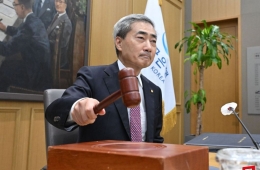
On the afternoon of July 16, Yoon Hojung, Minister of the Interior and Safety, announced these measures as part of a policy entitled "Measures to Eradicate Internal Corruption in Police Investigations and Enhance Democratic Control," during a press briefing at the Government Complex Seoul.

Yoon Hojung, Minister of the Interior and Safety, greets before delivering a public statement on the eradication of internal corruption in police investigations and strengthening democratic control at the Government Complex Seoul in Jongno-gu, Seoul on the 16th. Photo by Yonhap News
View original imageThese measures have been introduced in response to the recent arrest of Jang Yunki, the head of an investigative team, in order to strengthen both external oversight and internal inspections of police investigations. Minister Yoon stated, "To restore public trust undermined by inadequate and concealed investigations, we will root out internal corruption within the police and comprehensively overhaul the investigative system."
He pointed out, "There has been growing public disappointment and criticism regarding police investigations in general. Jang Yunki, the head of the investigative team in the recent case, was arrested on charges of evidence tampering, and deliberate collusion and lenient investigations by the team continue to come to light one by one."
He added, "As the Minister responsible for public safety and lives, I deeply regret and would like to offer my condolences to the victims' families, and I apologize to the public for causing concern."
He continued, "The government views this situation very seriously. To restore public trust that has been damaged by inadequate and concealed investigations, we will eradicate police internal corruption and thoroughly revamp the investigative system. Not only those directly responsible for this incident but anyone engaged in corruption will no longer have a place within the police."
In response to the Jang Yunki incident, the government will implement a comprehensive job rotation system to eliminate the issue of police officers being assigned to their hometowns or regions of personal connections. In addition, self-reporting and the introduction of the conflict of interest rule for cases involving spouses or direct family members will fundamentally prevent the practice of protecting colleagues within the force.
In particular, an "Internal Corruption Investigation Unit" will be established directly under the Chief of the National Investigation Headquarters, which will thoroughly pursue misconduct and corruption by police officers nationwide and impose strict punishment according to the principle of zero tolerance. At the same time, the government will strengthen the original role and authority of the National Police Commission to ensure robust democratic oversight and checks and balances between institutions for comprehensive supervision of police investigations.
Minister Yoon emphasized, "We will establish an 'Investigative Human Rights Inspection and Investigation Organization' dedicated to external oversight and control of police investigations, thereby ensuring true democratic control and independent oversight." He added, "Civilian investigators with expertise will independently probe into inadequate or unfair investigations, as well as cases where requests for supplementary investigation by prosecutors are not acted upon, eradicating evidence tampering or deliberate mishandling from an external perspective."
Minister Yoon also proposed measures to strengthen checks and balances between the new Public Prosecution Service, which will be launched in October, and the police. He stated, "If the police do not comply with prosecutors’ requests for supplementary investigation, making it difficult to proceed fairly, prosecutors will be empowered to change the investigative team or office. In crucial cases, such as when the statute of limitations is approaching, if the Public Prosecution Service requests joint or cooperative investigation, the police will be required to comply immediately."
Hot Picks Today
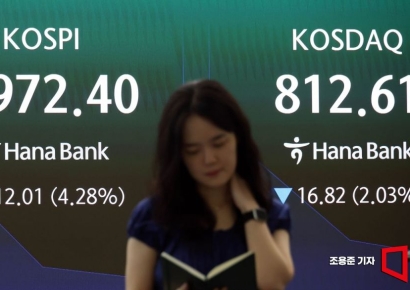 "KOSPI Faces Record Volatility Amid Doubts Over Semiconductor-Only Dominance"
- "Despite Fears of Collapse Without Chinese Tourists... Koreans Become Japan’s Tourism Saviors"
- Birth Rate Among Youth Settled in Non-Capital Regions at 73.2%... 7.9%p Higher Than in the Capital Region
- President Lee: "Sejong Office Should Be an Enduring Landmark Befitting National Stature"
- "If I Can't Ride the Subway for Free, I Can't Do This Job... Keeping It Secret from Friends" The Struggles of a White-Haired Courier
He concluded, "We will reform the police to be an organization that stands for justice, not one that is swayed by personal connections, and we will rebuild public trust and fairness in police investigations to meet the expectations of our citizens."
© The Asia Business Daily. All rights reserved. Unauthorized AI training and use prohibited.