[Q&A] Ministry of Agriculture and Food: "Gwacheon Racecourse Relocation Site to Be Finalized by September"
Preliminary Briefing on Ministry of Agriculture, Food and Rural Affairs’ Business Report
Relocation Funding Plan to Be Finalized Within This Month
Open Application for New Site to Follow, with Final Decision Expected by September
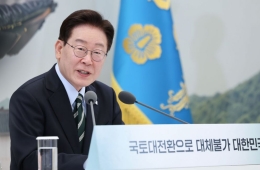
Kim Jonggu, Vice Minister of Agriculture, Food and Rural Affairs, stated on the 15th, "We are currently discussing the funding for the relocation of the Korea Racing Authority’s Gwacheon Racecourse. Following this, we will conduct an open application process targeting the local governments in Gyeonggi Province, and will finalize the relocation site by September."
On this day, ahead of the ministry’s work briefing, Vice Minister Kim said at a preliminary briefing held at the Government Complex Sejong, "The government, as well as the labor and management of the Korea Racing Authority, are in agreement on relocating the racecourse," and made the above remarks.
![[Q&A] Ministry of Agriculture and Food: "Gwacheon Racecourse Relocation Site to Be Finalized by September"](http://www.asiae.co.kr/news/img_view.htm?img=2026051510431864611_1778809397.jpg)
Earlier this year, the government announced during the ‘1·29 Supply Plan’ that it will develop the area around Gwacheon Race Park and the Armed Forces Counterintelligence Command site into a mini new-town, providing 9,800 housing units.
Vice Minister Kim added, "A significant amount of funding will be needed to relocate the racecourse. Authorities overseeing fiscal policy and taxation are currently discussing whether the Korea Racing Authority can cover the cost with sales revenue, or if additional funding measures need to be included. After these discussions are finished, we plan to launch a call for proposals among local governments in Gyeonggi Province hoping to host the new site. We expect to announce this plan within July, and the actual open application will take about one to two months. I would like to assure you that the relocation of the Gwacheon Racecourse is progressing as planned without any setbacks."
The following is a summary of the key questions and answers exchanged between Vice Minister Kim Jonggu and the press corps.
▲ What is the status of the agricultural cooperative reform?
= Among the main points of the first reform plan, the direct election of the National Agricultural Cooperative Federation’s president by its members has been typically accepted by the cooperative. However, other components—such as the independence of the audit committee—are still met with opposition. As the government has made clear before, our position is that we will push ahead with the tasks in the first reform plan without wavering.
▲ There are rumors that the National Agricultural Cooperative Federation will move to Naju. Is this true?
= We have no information regarding the relocation of the National Agricultural Cooperative Federation to Naju. I think the final decision on relocation will be made after comprehensive consideration of national competitiveness and balanced regional development. While there are concerns that relocating the Federation to a provincial area could weaken its competitiveness, I believe changes in organizational structure and work processes are needed to address such concerns.
▲ Will the rural basic income pilot project be expanded next year?
= The purpose of enacting the Rural Basic Income Act is to provide a clear legal basis for the government to systematically and explicitly promote this project. Through the legislation, we can say that 'we will enhance stability on a permanent basis.' As for the rural basic income, the Ministry of Agriculture, Food and Rural Affairs intends to target all 69 regions designated as population extinction areas. Currently, the program is being conducted in 17 regions. As for how many more regions will be added next year, this will depend on budget allocations, and discussions are underway with relevant budget authorities.
▲ What is the strategy for achieving this year’s K-Food Plus export goal of $16 billion?
= We are focusing on expanding exports, centered on the 'Global K-Food Export Strategy' that we announced in December last year. In the first half of this year, K-Food Plus exports reached a record high. For the ASEAN region, while Vietnam used to be very popular, grapes have recently gained significant popularity in Taiwan and the Philippines. In the second half of the year, we plan to concentrate on countries and items where performance can be achieved. Last December, we selected the Middle East and Africa as strategic regions, but recently Latin America has shown strong demand for K-Street Food, or 'bunsik.' Therefore, for the second half of this year, we also plan to focus on Latin America.
▲ When will the results of the comprehensive farmland survey and the related system improvement plan be announced?
= Following the farmland survey, we need to design certain aspects of the system improvements within this year. There are aspects revealed in this in-depth survey that we should realistically take into account. For example, though not yet finalized, there seem to be various types of fallow land. Some urban residents leave land fallow for speculative purposes, and some rural residents do so because of labor shortages. The system should be designed to consider these real-life situations.
Hot Picks Today
 "KOSPI Faces Record Volatility Amid Doubts Over Semiconductor-Only Dominance"
- "Despite Fears of Collapse Without Chinese Tourists... Koreans Become Japan’s Tourism Saviors"
- Jang Yoon-gi Case Investigation Team Leader Apologizes to Victim's Family: "No Intentional Cover-up"
- "Comfortable and Well-Paid"... China's Buzz Over College Students' 'Sweet Part-Time Job' in Summer Childcare
- "If I Can't Ride the Subway for Free, I Can't Do This Job... Keeping It Secret from Friends" The Struggles of a White-Haired Courier
Some are concerned that farmland transactions may disappear as a result of the comprehensive survey. However, based on our data, there is no conclusive evidence that farmland transactions have decreased solely due to the survey. The overall volume of land transactions in the country is declining, and farmland is showing a similar trend.
© The Asia Business Daily. All rights reserved. Unauthorized AI training and use prohibited.