MAFRA: "71% of Primary Farmland Survey Completed… Numerous Speculation Cases Detected in Sejong and Jeju" [Work Report]
Ministry Announces 'Key Work Plan for Second Half' on July 16
Rapid Advancement of Agricultural Cooperative Reform and Farmland Survey
K-Food+ Sets Record-High Exports in First Half
All-Out Efforts to Achieve USD 16 Billion in Exports This Year
Since May this year, the government has been conducting a primary basic survey to eradicate farmland speculation. As a result, a significant number of farmlands requiring on-site verification due to suspected unauthorized fallow, illegal conversion, and violations of leasing regulations have been identified in areas such as Sejong and Jeju. The government plans to include these suspicious farmlands in the in-depth investigation and focus on a thorough review.
On July 16, the Ministry of Agriculture, Food and Rural Affairs announced its 'Key Work Plan for the Second Half of the Year', which included these details.
![MAFRA: "71% of Primary Farmland Survey Completed… Numerous Speculation Cases Detected in Sejong and Jeju" [Work Report]](http://www.asiae.co.kr/news/img_view.htm?img=2025091115380829514_1757572688.jpg)
Kim Jonggu, Vice Minister of Agriculture, Food and Rural Affairs, stated, "In the second half of the year, the ministry will lead key future-oriented tasks, such as responding to climate change, accelerating the transition to artificial intelligence (AX), strengthening the agricultural management safety net, boosting K-Food Plus (+) exports, and supporting the shift to renewable energy. At the same time, we will swiftly push forward reforms in the agricultural sector, including the comprehensive survey of farmland and the reform of agricultural cooperatives," he said. "In particular, we plan to promote locally-driven growth by expanding basic income programs and fostering industries specialized in rural areas."
◆ Primary basic survey 71% complete... In-depth survey to start in August = The ministry is carrying out a phased, comprehensive survey to eradicate farmland speculation and reform related systems. This year, the primary basic survey targets farmland acquired since the enforcement of the Farmland Act (1996), covering 1.36 million hectares, and it is scheduled for completion by July 31.
According to the ministry, as of July 14, 71% (970,000 hectares) of the targeted area (1.36 million hectares) had been surveyed. Among these, 27.6% were flagged as suspicious for unauthorized fallow, illegal conversion, or lease violations. A ministry official commented, "The interim results of the farmland investigation suggest that about 27% of farmlands in areas such as Sejong and Jeju present a possibility of illegal practices. If we add farmland in the Seoul metropolitan area and other land transaction permit zones marked for in-depth investigation, we expect the scope of the in-depth survey starting in August to cover over 50% of the total farmland," he explained.
The ministry plans to finish the primary survey by the end of this month, and carry out in-depth investigations of risk-prone and suspicious areas from August to December. Next year, the survey will shift to farmland acquired before the Farmland Act took effect (590,000 hectares). For speculative ownership by non-farmers, the ministry will enforce strict measures. To address concerns on the ground about restricted farmland transactions, it will expand direct purchase programs and establish a new direct transaction platform. For concerns over damages to some tenant farmers, it will operate a special remediation period and reporting centers, and provide alternative farmland, actively addressing such issues.
To normalize the operation of agricultural cooperatives as soon as possible, reforms will also be expedited. The first reform proposal, launched through discussions of the 'Agricultural Cooperative Reform Task Force' in February, will move swiftly through the National Assembly in the second half of the year. The ministry will also draft a second reform bill, focused on revitalizing economic operations and strengthening union competitiveness, aiming for passage within the year.
![MAFRA: "71% of Primary Farmland Survey Completed… Numerous Speculation Cases Detected in Sejong and Jeju" [Work Report]](http://www.asiae.co.kr/news/img_view.htm?img=2022081814275691126_1660800476.jpeg)
◆ 17 pilot sites for rural basic income... Additional selections under review for next year = The ministry has recently added seven new pilot areas for the rural basic income program (Hwacheon, Boeun, Jinan, Muju, Gurye, Boseong, and Cheongsong). The seven counties will begin receiving basic income from August.
The ministry will focus on establishing a legal basis for stable project operation and creating successful regional revitalization cases. To institutionalize basic income, it will enact the 'Act on Rural Basic Income' and, in the latter half of this year, analyze the outcomes of each pilot sector in collaboration with the National Research Council for Economics, Humanities, and Social Sciences.
An expansion of the pilot sites is also under consideration. A ministry official said, "This year, we have 17 pilot sites, and we are consulting with budget authorities to add more next year. However, it has not yet been decided whether sites will be added, or if so, how many will be selected."
◆ Major agricultural policy transformation: responding to climate change and realizing AI = The ministry plans to ensure a stable supply of agricultural and livestock products at reasonable prices by establishing an optimal production and supply system and producing tangible results in distribution reform. In the distribution sector, based on the foundation laid in the first half of the year—such as the institutionalization of the cancellation of wholesale corporation designation (February) and the enactment of the 'Online Wholesale Trading Act' (March)—the ministry will focus on results that make a difference for the public. It will introduce a stricter evaluation framework for wholesale corporations to enhance competition, and the online wholesale market will be expanded with a focus on direct transactions from production regions, which are most effective in reducing distribution costs. In September, the ministry will pilot launch an AI-based price comparison app for agricultural and livestock products in five regions, enabling consumers to compare prices at local supermarkets.
The ministry also seeks to make artificial intelligence (AI) accessible for all farmers and rural residents. This year, it aims to expand the distribution of smart agriculture for horticulture from the current 20% to 35% by 2030 and accelerate the adoption of AI technology. The number of smart agriculture hubs will be increased from 10 to 23, and a model for affordable smart farms will be developed and verified within the year. In particular, leading farms will focus on data collection and pilot AI and data solutions, while 25 AI models, including crop harvesting and sorting robots, will be commercialized quickly.
◆ K-Food+ reaches record-high exports in the first half... Strategic focus on priority products and markets in the second half = To achieve the target of USD 16 billion in K-Food+ exports by 2026, the ministry will concentrate available resources on strategic products and markets in the second half of the year through public-private cooperation. Specifically, it aims to create collaborative achievements, including joint entry into new markets by large and small companies, and partner marketing initiatives (instant noodles and kimchi). The ministry will also expand K-Culture/Sports collaborative marketing and support activities of K-Food honorary ambassadors (such as Faker and Edward Lee), broadening K-Initiative-related marketing activities.
The ministry will also strengthen risk response by closely monitoring the situation in the Middle East and import restrictions. It will provide companies with customized updates on foreign regulations and operate a new 'Agri-Industry Global Licensing Support Team' to help companies navigate the entire process of complex agro-industry licensing abroad.
In addition, the ministry will formulate a comprehensive animal welfare program this year, covering not only companion animals but also farm and laboratory animals, through the enactment of an Animal Welfare Fundamental Act and plans to establish an Animal Welfare Promotion Agency. To revitalize rural areas, the ministry intends to nurture specialty industries and support youth entrepreneurship. By the end of the year, it will devise spatial plans for 139 rural cities and counties to promote the functional specialization of rural spaces. For the activation of rural specialty industries, such as tourism, the ministry will develop wide-area rural tourism belt pilot models, operate experiential village stamp tours with public participation, and promote K-Gourmet Journeys, including the Chicken Belt.
Hot Picks Today
 "I Ate It Often Because It Tasted Good"... This Eating Habit Linked to 40% Higher Odds of Asymptomatic Cerebrovascular Damage
- "I Thought Only Samsung and SK Were Thriving"... Chinese Chipmaker Forecasts 600% Revenue Surge
- "A Mourning Run? That's Disturbing": Posting Running Records to Honor Deceased Runner... Some Call It "A Runner's Way"
- "Why on earth come to Korea and do this?" ... Chinese Man in Hanfu Says He'll Promote Chinese Culture at Gyeongbokgung
- "A College Degree Isn't Really Necessary"... Choi Taewon's Advice to Young People

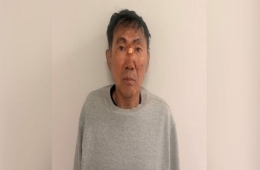
Song Miryung, Minister of Agriculture, Food and Rural Affairs. Ministry of Agriculture, Food and Rural Affairs
View original imageSong Miryung, Minister of Agriculture, Food and Rural Affairs, stated, "Our policy success should be evaluated by the changes it brings to people's lives, and by real changes on the ground. If the first half of the year was focused on revamping the agricultural policy framework to implement government agenda items, in the second half we will do our utmost to deliver results that the public can truly experience."
© The Asia Business Daily. All rights reserved. Unauthorized AI training and use prohibited.


!["Please Take Them Off!" They Made It All the Way to the Bed... Then "80% of Fecal Bacteria" Struck [Deep Scroll]](https://cwcontent.asiae.co.kr/asiaresize/307/2026101610053063338_1792112730.png)