Strengthening Life-Cycle Management of Retired Racehorses... Korea Racing Authority Vows "Responsibility After Retirement"
Nine Initiatives Including Mandatory Registration and Tracking Movement Routes
Improvements to Registration System Boost Welfare and Transparency for Retired Racehorses
The Korea Racing Authority has established a comprehensive plan to manage the entire life cycle of retired racehorses, taking active steps to enhance equine welfare.
On the 16th, the Korea Racing Authority (Chairman Woo Hee-jong) announced that it has developed the “Comprehensive Management Plan for the Life Histories of Retired Racehorses” to systematically manage the movement and care information of horses after their retirement from racing.
This plan aims to address the gaps in life-cycle record management and strengthen the welfare of retired racehorses. Under three main strategies—▲ strengthening the legal framework for horse registration, ▲ improving the record management system, and ▲ enhancing accessibility to registration—the Authority will implement nine detailed initiatives.
First, the legal basis for horse registration will be reinforced. In collaboration with the Ministry of Agriculture, Food and Rural Affairs, the Korea Racing Authority will seek to amend the Horse Industry Promotion Act, transitioning the current voluntary horse registration process into a mandatory one.
Additionally, by refining regulations for Thoroughbred and general horse registration, the Authority plans to upgrade management systems to ensure that key information such as changes of ownership, movement, and deaths is reported in a timely manner.
System enhancements will also be made to more transparently manage the movement routes of retired racehorses. The application for removal of racehorses will now require more detailed information, such as the removal company’s name, contact information, and final destination. The Authority will also boost information sharing with distribution companies to more systematically track the post-retirement movements of these horses.
Furthermore, the slaughter information acquisition system, previously centered on Jeju, will be expanded nationwide to minimize unreported deaths and establish a foundation for tracking the final management status of retired horses.
The on-site registration system will also be improved. To reduce blind spots in nationwide registration, the Korea Racing Authority will increase the number of external registration inspectors and establish a mobile-based system for horse registration and history reporting, thus streamlining reporting procedures. The Authority also plans to distribute microchip readers so that horses can be immediately identified on site.
This comprehensive plan is expected to raise the overall level of welfare by enabling more accurate tracking of the movement and management status of retired racehorses, while enhancing the credibility and transparency of the horse industry overall. In particular, the introduction of a system that holds responsibility for racehorses not only during their racing careers but also after retirement is noteworthy.
Hot Picks Today
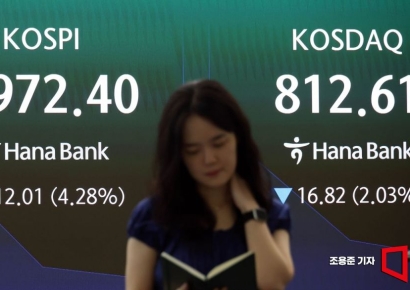 "KOSPI Faces Record Volatility Amid Doubts Over Semiconductor-Only Dominance"
- "Despite Fears of Collapse Without Chinese Tourists... Koreans Become Japan’s Tourism Saviors"
- Birth Rate Among Youth Settled in Non-Capital Regions at 73.2%... 7.9%p Higher Than in the Capital Region
- President Lee: "Sejong Office Should Be an Enduring Landmark Befitting National Stature"
- "If I Can't Ride the Subway for Free, I Can't Do This Job... Keeping It Secret from Friends" The Struggles of a White-Haired Courier
Yoo Seong-eon, Director of the Horse Registration and Welfare Center at the Korea Racing Authority, stated, “To fundamentally improve the welfare of retired racehorses, it is essential to accurately identify where and how they are managed after retirement. Through seamless implementation of this comprehensive plan, we will establish a robust welfare system that ensures responsible care for retired racehorses.”

The 'Jang Chaewon - Communication with Horses,' recipient of the Special Malbok Award. (Provided by Korea Racing Authority)
View original image© The Asia Business Daily. All rights reserved. Unauthorized AI training and use prohibited.