"Semiconductors See Sharp Correction, But the Cycle Isn’t Over"... Samsung and SK hynix P/B at Bottom Levels [Weekend Money]
ADR, Leveraged ETFs for Samsung Electronics and SK hynix Amplify Volatility
"No Signs of AI Infrastructure Investment Slowing Down"
Key Cycle Turning Point? "Start of New Fab Operations"
As volatility increases in the share prices of semiconductor companies such as Samsung Electronics and SK hynix, securities analysts in Yeouido have stated that this does not necessarily signal the end of the semiconductor cycle.

On July 18, Lee Jongwook, a research analyst at Samsung Securities, commented on the recent double-digit stock declines seen in semiconductor stocks such as Samsung Electronics and SK hynix, saying, "One should not interpret the mere magnitude of the correction as evidence that the cycle is over," adding, "While the floor has become slippery, the fundamental nature of this cycle has not changed."
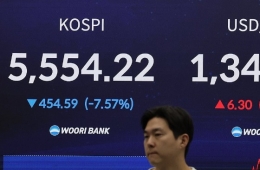
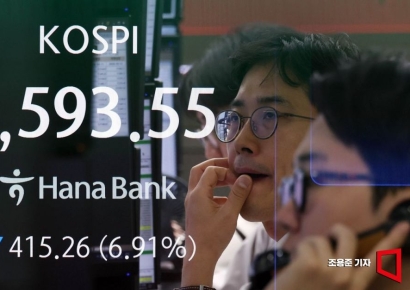
On July 13, SK hynix declined by 15.4%, marking its steepest one-day drop since the global financial crisis in October 2008, a span of 17 years. Samsung Electronics (-10.7%), Samsung Electro-Mechanics (-18.6%), and LG Innotek (-11.3%) also posted double-digit drops on the same day.
Samsung Securities judged that the decoupling between SK hynix’s stock price and its American Depositary Receipt (ADR) listed on the New York Stock Exchange triggered supply-driven selling, and the widening intraday losses led to panic selling. The firm also highlighted risk aversion driven by renewed Middle East war threats and concerns over SK hynix’s second-quarter earnings as independent factors weighing on sentiment.
Furthermore, the leverage exchange-traded funds (ETFs) for Samsung Electronics and SK hynix appear to have amplified volatility. However, Lee emphasized, "This volatility derives from market structure and is not a direct indicator of conditions in the memory sector itself," stressing, "Increased volatility does not fundamentally alter the relationship between the semiconductor cycle and stock prices."
Samsung Securities also stressed that, despite the share price corrections, there are no signs that AI infrastructure investment is slowing. As an example, the firm cited Meta’s July 13 announcement—the day Korean semiconductor stocks plummeted—that the company would expand its investment in the Hyperion Data Center in Louisiana from the previous 27 billion dollars to more than 50 billion dollars.
!["Semiconductors See Sharp Correction, But the Cycle Isn’t Over"... Samsung and SK hynix P/B at Bottom Levels [Weekend Money]](http://www.asiae.co.kr/news/img_view.htm?img=2026070808080837777_1783465688.png)
The long-term investment trend in semiconductors remains unchanged as well. On July 9, Micron announced plans to invest a total of 250 billion dollars in the United States by 2035, revealing intentions to produce 40% of its DRAM output in the U.S. over the next decade. Intel likewise announced major AI-focused capital investments of 5.7 billion dollars in Ireland and other locations.
Lee noted that "Alphabet’s rights issue was oversubscribed, and Berkshire Hathaway has also committed 10 billion dollars, indicating continued market confidence on the funding side. The guidance on next year’s capital expenditure (CAPEX) expected in hyper-scalers’ earnings results to be released at the end of this month could provide the solution to this correction."
While concerns are mounting about SK hynix’s second-quarter earnings, Samsung Securities believes this may serve as an opportunity for investors to recognize both sides of long-term agreements (LTAs). While LTAs provide predictability and support a re-rating narrative, they may also limit upside profits during boom periods.
The analyst pointed to the start of new fabrication plant (fab) operations as a critical turning point in the memory stock price cycle. He explained, "The activation of a fab does not immediately lead to oversupply, but the valuation of companies should differ between periods when a supply shortage is unlikely and when supply and demand balances are in question. In this cycle in particular, we assess that a rally phase will likely continue until the significant supply expansions by memory companies begin in the second quarter of next year, after which a sideways movement is expected."
Hot Picks Today
 "I Invested KRW 10 Million, Only KRW 2 Million Is Left" ... 77% Plunge Sends Retail Investors Who Piled Into Samsung Electronics and SK hynix Leveraged ETFs Crying Out
- "There's a Drink Like This?"... Chinese Beverage With "Korean" in Its Name Rakes in 85 Million Won in Monthly Sales
- "No Need to Hire a Model"... The 25-Year-Old Woman Who Entered Social Media with a Face That Cost Just 1,500 Won [AI Content: The Bright and Dark Sides] 1
- "Samsung Electronics at 70,000 won, SK hynix at 200,000 won"... Why the gloomy outlook despite 'record-breaking earnings'?
- "The leggings are all see-through. It's so embarrassing to look at," complaints prompt Lululemon to fire development staff.
Lee added, "As of July 13, Samsung Electronics’ price-to-book ratio (P/B) stands at 1.78x, and SK hynix’s at 2.45x—both already at their lower bounds. We believe that as long as investors trust the AI cycle, the lower floor will be defended, and from this standpoint, the price correction is nearing its end." He continued, "While both rallies and corrections will continue to see wide swings, large volatility should be treated as a constant, not a variable. Once you filter out the noise of volatility, it should not be difficult to distinguish whether this is merely a correction or the peak of the cycle."
© The Asia Business Daily. All rights reserved. Unauthorized AI training and use prohibited.