LH Restructuring Plan to Be Announced in September... New Type of Public Rental Housing Targeting Middle Class Prepared [Work Report]
LH Restructuring Timeline Unveiled in Presidential Work Report by Ministry of Land and Transport
Over a Year of Internal Review Following President Lee's Directive in June Last Year
Adjustments Made in Conjunction with Housing Welfare Roadmap for Public Housing and More
The government has decided to prepare an organizational restructuring plan for Korea Land and Housing Corporation (LH) by September 2026. The LH restructuring is an issue that President Jaemyung Lee publicly requested the Ministry of Land, Infrastructure and Transport, the responsible department, to address. The plan was originally scheduled to be formulated by December of last year, but it has been delayed due to internal and external circumstances. Since the announcement date has already been postponed twice, contrary to initial promises, there is growing interest in whether it will be kept this time.
During the presidential work report on July 16, the Ministry of Land, Infrastructure and Transport announced, "We will establish LH reform measures to enable efficient and sustainable operation of LH by ensuring that land developed by LH is not sold to the private sector but instead supplied directly for housing or leased as industrial land." The deadline was set for September 2026. The ministry did not disclose specific details of the restructuring plan.

At the launch ceremony of the LH Reform Committee held last August, Kim Yoonduk, Minister of the Ministry of Land, Infrastructure and Transport (left), and Professor Lim Jaeman from Sejong University (Private Sector Chairman, current President of the Korea Research Institute for Human Settlements) are taking a commemorative photo. Photo by Yonhap News
View original imageThe reason why the LH organizational restructuring is attracting attention is that it has been prolonged for over a year, even after President Lee directly instructed the direction for reform at a Cabinet meeting in June 2025. In his third Cabinet meeting after taking office, President Lee pointed out fundamental problems with LH's land sale business and ordered a restructuring. He called for a shift toward public development focused on direct construction, rather than so-called 'land dealing.' Since LH has accumulated significant debt due to public rental housing management, it has relied on land sales and other means to cover funding shortfalls.
In response, the Ministry of Land, Infrastructure and Transport formed the LH Reform Committee, which included various experts such as then-Sejong University Professor Jaeman Lim (current President of the Korea Research Institute for Human Settlements), to review specific restructuring measures. The LH Reform Committee, launched in August 2025, initially aimed to present a restructuring plan by December of the same year but failed to do so. Reasons cited included confusion over the appointment of a new president and the need for a comprehensive adjustment of LH's massive debt, which was expected to require more time than originally anticipated. Around the end of last year, Kim Yoonduk, Minister of Land, Infrastructure and Transport, stated that the LH restructuring plan would be released in the first half of this year.

Seong Hoon Lee, President of LH, conducted an on-site inspection on the 8th in preparation for heavy rain and heatwaves. President Lee, a former official at the Ministry of Land, Infrastructure and Transport, recently moved to his current position after serving as Secretary for Land and Transportation at the Presidential Secretariat. Photo by LH
View original imageUltimately, this promise was also not fulfilled. Kim Itak, First Vice Minister of Land, Infrastructure and Transport, explained in a recent briefing, "There were local elections in the interim, and now that the LH president has been appointed, the conditions for an announcement have been met, which is why the September schedule has been finalized."
Similarly, the Housing Welfare Roadmap, which was also supposed to be released in the first half of this year but was delayed, is expected to be announced in conjunction with the LH restructuring plan. Vice Minister Kim stated, "Since the Housing Welfare Roadmap is linked to the public and rental housing supplied by LH, it can be pursued concurrently with the LH organizational restructuring."
For over a year since President Lee took office, the government has not presented a clear direction for housing welfare, leading to continued criticism that policies for low-income groups are being neglected. In the previous Moon Jae-in administration, which also launched without a transition committee, the Housing Welfare Roadmap was presented about six months after inauguration. Likewise, although there were different political orientations, both the Park Geun-hye and Yoon Suk-yeol administrations provided mid- to long-term blueprints for housing stability for low-income groups within two to three months of taking office.

In 2014, Jaeyoung Lee, then President of Korea Land and Housing Corporation (LH) (left), and Jaemyung Lee, then Mayor of Seongnam, shake hands after signing a business agreement. In 2013, when Jaemyung Lee was Mayor of Seongnam, the city and LH had a major conflict over the rental housing in the Pangyo redevelopment relocation complex. Provided by LH
View original imageMeanwhile, as part of its housing stability strategy, the Ministry of Land, Infrastructure and Transport announced during the work report that it will introduce a new type of public rental housing that allows long-term residency at an affordable level. Although the rent or deposit may be somewhat higher than existing rental housing, this model is expected to target even the middle class by offering expanded floor space and prime locations in urban areas.
Hot Picks Today
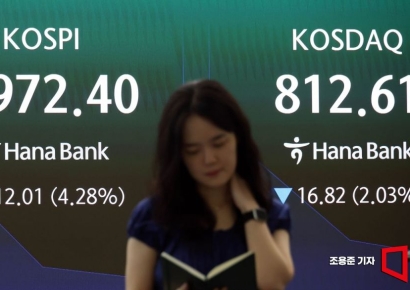 "KOSPI Faces Record Volatility Amid Doubts Over Semiconductor-Only Dominance"
- Ahead of F4 Meeting, Lee Eogwon Says "Leverage ETF Measures Coming Soon"... Avoids Answer on Trading Halt
- President Lee: "I Will Never Tolerate Agency Heads Who Don't Know Their Work... Stay Up All Night If You Must to Understand It"
- "Earned $100,000 at 18": Young Americans Flock to Skilled Trades Like Plumbing, Undeterred by AI
- "If I Can't Ride the Subway for Free, I Can't Do This Job... Keeping It Secret from Friends" The Struggles of a White-Haired Courier
Additionally, the ministry unveiled a plan to expedite and increase housing supply by shortening the development timeline of major districts such as the third-generation new towns by one to two years and converting commercial land for residential use. There are also plans to reduce the disadvantages faced by young people by linking public housing support with income and assets, as well as to require the establishment of housing welfare centers in all local governments in the second half of this year.
© The Asia Business Daily. All rights reserved. Unauthorized AI training and use prohibited.





![[Second Half Work Briefing] Free Public Access to "Korean-Style ChatGPT" for All... Era of One AI Assistant Per Person Next Year](https://cwcontent.asiae.co.kr/asiaresize/307/2026071611414748611_1784169708.jpg)