Bank of Korea Raises Rates for First Time in Three and a Half Years... Heightened Inflation Concerns (Comprehensive)
0.25 Percentage Point Increase... Base Rate Raised to 2.75% per Annum by Unanimous Decision
Inflation Far Exceeds the Target and Semiconductor-Led Growth Upgrade Expected
Caution over Volatile Exchange Rate, Overheated Housing Market, and Ho
The Bank of Korea has raised its base interest rate to 2.75% per annum, with the decision made unanimously. With this move, the central bank has shifted its monetary policy back to a tightening stance for the first time in three years and six months since the previous increase in January 2023. This hike was largely anticipated, as all three factors the Bank of Korea closely monitors—prices, growth, and financial stability—indicated the necessity for an increase.
The market’s attention has now turned to the timing and pace of further hikes. The key factors are the extent of inflationary pressure and the trajectory of economic improvement. Experts cited two major variables in assessing these dynamics: the Middle East war, which has entered a lull but is not yet over, and the potential changes in the outlook for the semiconductor sector.

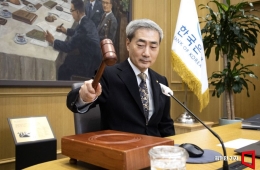
Shin Hyun-song, Governor of the Bank of Korea, attends the Monetary Policy Committee meeting held at the Bank of Korea in Jung-gu, Seoul on the morning of the 16th and strikes the gavel. Photo by Joint Press Corps
View original imageBase Rate Raised to 2.75%...First Hike in Three and a Half Years
On July 16, the Monetary Policy Board of the Bank of Korea announced after its monetary policy meeting at the central bank’s headquarters in Jung-gu, Seoul, that it had raised the base rate by 0.25 percentage point (25 basis points) from the current level of 2.50% to 2.75%. This outcome was in line with market expectations. All 14 respondents in a recent The Asia Business Daily expert survey had predicted a rate increase this month. In its statement on monetary policy direction, the Monetary Policy Board said, “While the growth trend, primarily led by exports and investment, is strengthening, the inflation rate is projected to remain above the target level for a significant period, and risks related to financial stability persist, making a 0.25 percentage point base rate increase appropriate.”
The main driver of this rate hike was inflation running above the target level of 2.0%. Consumer price inflation exceeded 3% in both May (3.1%) and June (3.2%). The June increase in consumer prices was driven by a continued rise in petroleum prices, along with a wider increase in prices for agricultural, livestock, and fishery products, bringing the figure to 3.2%. Core inflation, which excludes food and energy, also stayed in the 2.5% range. The public’s expected inflation rate for the next year remained at 2.8% in both May and June. The perceived inflation rate as reflected in the living cost index rose from 3.3% in May to 3.4% in June, the highest since April 2024 (3.6%). Shin Hyun-song, Governor of the Bank of Korea, previously noted that since March, the living cost index has consistently exceeded the general consumer inflation rate, underlining the need for tightening. The Board expects inflation to remain elevated for a significant period, noting, “Although global oil prices have fallen, higher cost levels and the impact of the exchange rate persist, and the demand-side pressures arising from improved income are also expected to steadily increase.”
Expectations of substantial economic improvement have also weakened the case for maintaining an accommodative policy stance. In the economic growth strategy for the second half, released on July 14, the government projected Korea’s growth rate for this year at 3.0%. This is 0.4 percentage points higher than the Bank of Korea’s May projection of 2.6%. According to the International Finance Center, as of late June, major overseas investment banks’ average projection for Korea’s annual growth rate stood at 3.0%. Governor Shin also recently indicated that the annual growth forecast would be mechanically raised since Korea’s real gross domestic product (GDP) for Q1 was revised upward to 1.8%, 0.1 percentage point higher than the preliminary figure. Professor Seok Byoung-hoon of Ewha Womans University pointed out, “This year’s export boom, led by semiconductors, makes it highly likely that the Bank of Korea will also raise its growth forecast to the government’s level of 3.0% next month.”
Concerns over high volatility in exchange rates and an overheated housing market in the Seoul metropolitan area have persisted from a financial stability perspective. The won-dollar exchange rate has been fluctuating around the 1,480 won mark for the first time in about two months. Factors include eased concerns over U.S. tightening, expectations of Korean won conversion from SK hynix’s U.S. American Depositary Receipt (ADR) proceeds, and a reduction in foreign selling of local stocks. However, given that the weekly closing price reached as high as 1,555.8 won at 3:30 p.m. during the month, vigilance around exchange rate volatility remains high. Similar concerns extend to housing prices and household debt. According to the Korea Real Estate Board’s June nationwide housing price trends survey, the average sale price of homes in Seoul—including apartments, rowhouses, and single-family houses—rose by 1.03% from the previous month. Jeonse (long-term lease) and monthly rents also increased by 1.08% and 0.96%, respectively. Demand continued to focus on properties undergoing redevelopment, large housing complexes, and areas near subway stations. The outstanding balance of household loans at deposit banks increased by 7.6 trillion won at the end of June compared to the end of May, marking the largest monthly gain in a year and ten months since August 2024.
Meanwhile, the Board also voted to raise the rate for financial intermediary support loans from 1.00% to 1.25% per annum, effective immediately.

Shin Hyun-song, Governor of the Bank of Korea, is attending the Monetary Policy Committee plenary meeting held at the Bank of Korea in Jung-gu, Seoul, in the morning of the 16th, striking the gavel. Photo by Joint Press Corps
View original image"Further Hikes Expected"—War and Semiconductors Remain Key Variables
Experts generally anticipate one additional rate hike later this year, most likely in October. However, heightened concerns over inflation leave open the possibility of “back-to-back hikes” with another increase as soon as August, following July’s move.
The main rationale for further tightening is the ongoing concern over inflation in the second half of the year. While the Bank of Korea foresees less inflationary pressure from the supply side due to falling global oil prices, it expects demand-side pressures from rising incomes to grow. The impact of previously elevated costs and exchange rates is also expected to persist, suggesting that inflation will remain above the target level for a considerable period. The Bank expects this year’s consumer price inflation rate to roughly match its earlier May projection of 2.7%, while anticipating that the core inflation rate will be somewhat higher than the prior forecast of 2.4%. Markets expect the risk of core inflation remaining elevated from the second half of the year through the first half of next year to prompt additional base rate hikes by the Bank of Korea. However, there remains considerable uncertainty over factors influencing future inflation, including global oil prices, exchange rate trends, the improvement of domestic demand, and the extent of wage increases.
The ongoing improvement in economic indicators, especially those related to semiconductors, is also seen as supporting further rate increases. In a recent special parliamentary report, the Bank of Korea noted, “The current semiconductor market is exhibiting far stronger momentum than previous upcycles, thanks to a boom in global artificial intelligence (AI) infrastructure investments, including data centers. Most major forecasting agencies expect the global semiconductor sector to remain strong at least through next year. Going forward, infrastructure investments tied to AI application areas, such as physical AI, are expected to keep the sector expanding for an extended period.”
Experts pointed out that future rate hikes will depend on the semiconductor cycle and the course of the Middle East war. Kang Sung-jin, Professor of Economics at Korea University, said, “The biggest variable for Korea’s growth going forward is semiconductors. If the semiconductor boom continues this year, as expected, it will fuel growth. The length and strength of the semiconductor upturn will also have major implications for inflation.” Professor Seok added, “It will be critical to monitor how long the AI-driven investment momentum in semiconductors continues, as this will affect both the peak of the cycle and its potential to support further growth.”
The unresolved war in the Middle East also remains a decisive factor. Professor Kang said, “The war heavily influences both oil prices and exchange rates. Given that the U.S. midterm elections are coming up in November, the conflict may not last through the end of the year; however, unless a solution is found, current conditions could persist.”
Hot Picks Today
 "The Transfer Failed, but 'Ding Dong' Money Came In"... 32.5 Billion Won Financial Incident at Toss Bank
- "Those with Money Have Already Moved Their Gold"... Holdings Surge 16-Fold as Wealthy Investors Flock to 'This Country'
- "A Shot on One Side, and Cancer on the Other Side Melted Away"... Breakthrough Against Hard-to-Treat Cancer With a 30% Survival Rate [Reading Science]
- "Baek Jongwon Had Been Quiet, Then Hit It Big"... Waits in the 100s in U.S. Despite KRW 46,000 Pork Belly
- 'Hangover Legend' Returns After 11 Years... Lee Sunmin Hyung's 'Captain Q' Sells Out

Shin Hyun-song, Governor of the Bank of Korea, is attending the Monetary Policy Committee plenary meeting held at the Bank of Korea in Jung-gu, Seoul on the morning of the 16th, exchanging opinions with the committee members. Photo by Joint Press Corps
View original image© The Asia Business Daily. All rights reserved. Unauthorized AI training and use prohibited.