[Second Half Work Briefing] Free Public Access to "Korean-Style ChatGPT" for All... Era of One AI Assistant Per Person Next Year
The government will unveil an artificial intelligence (AI) service accessible to all citizens in the second half of this year. The “Everyone’s AI” service—allowing users to freely utilize a general-purpose AI chatbot similar to ChatGPT at no charge—will be launched in the latter half of the year to enhance public accessibility and utilization. Additionally, the government will concentrate its efforts on AI data centers (AIDC), fostering physical AI, and cultivating the AI semiconductor sector as part of its “Three Major Mega Projects.”
The Ministry of Science and ICT reported this plan as part of its 2026 second-half work agenda at a briefing session presided over by President Jaemyung Lee on July 16, 2026. Sixteen organizations attended the briefing, including the Ministry of Science and ICT, the Broadcasting Media Communications Committee, the Personal Information Protection Committee, and the Korea Aerospace Administration (KASA).

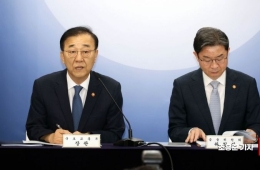
Deputy Prime Minister and Minister of Science and ICT, Background Hoon, is reporting at the ministry work briefing presided over by President Jae-myung Lee at the Blue House State Guest House on the 16th. Photo by Yonhap News
View original imageFirst, the government will create an environment in which anyone can use AI without cost or usage restrictions. To this end, “Everyone’s AI,” a new service allowing citizens to freely access a general-purpose AI chatbot based on a domestic AI model, will be rolled out in the second half of this year. Applications from participating companies will be accepted until August 11, with a beta service planned for the end of September, and full service scheduled before the end of the year. The project requires that at least 50% of the AI model be domestically developed. Kakao and LG Uplus have officially declared their participation, and major companies such as Naver, SK Telecom, and KT are actively considering joining as well.
A Ministry of Science and ICT official explained, “Everyone’s AI is not about building new models from scratch, but integrating and linking existing developed services. We have collected feedback from companies more than 30 times, and as the performance of domestic AI models continues to improve, launching the service within this year is fully feasible with government support.”
“Everyone’s AI” will include features such as easily finding government support benefits for young people, receiving informational guidance, and even completing application submissions via AI. Starting next year, the service aims to be further advanced into an AI agent system, launching the era of “one-person, one-AI agent” for every citizen.
Additionally, the government will work to develop an AI model with global top 10 performance within the second half of this year. The heightened importance of securing independent AI models is due to the U.S. government’s export controls on MITHOS. Subsequently, the government will support the development of advanced graphics processing units (GPUs), data, and talent, focusing on securing globally top-performing, independent AI models.
The government will also strengthen AI utilization capabilities. In cooperation with 12 relevant ministries, including the Ministry of Science and ICT, the Ministry of Education, and the Ministry of Employment and Labor, AI education will be provided to 5.14 million people by the end of the year. This second half will see the launch of four AI-powered services: agricultural and livestock price comparison, AI tax consultation, national heritage commentary, and crisis response for children and adolescents on social networking services (SNS). A total of 10 services are planned to be available by next year.
To address cyber threats caused by AI, the government will begin using AI this month to check for vulnerabilities in communications, platforms, and related infrastructure. At the same time, it will promote the adoption of security-specialized AI models based on independently developed domestic AI models.
Full Commitment to the Three Major Projects...Focusing on AI Data Centers, Physical AI, and Semiconductors

Deputy Prime Minister and Minister of Science and ICT Heeun Bae is announcing support measures related to 'AI Data Center and Physical AI' at the National Fiscal Strategy Meeting presided over by President Jae-myung Lee at the Blue House on the 13th. Photo by Yonhap News
View original imageThe government is making every effort to support the previously announced Three Major Projects. To this end, it will strive to secure the world’s highest capabilities in AI data centers, physical AI, and Korean semiconductors.
First, it will support the operation of AI data centers, for which companies such as SK, GS, and Naver are investing a total of 550 trillion won. The government will provide expedited administrative support for securing power and sites, as well as licensing and permitting, through a three-pronged support system consisting of an inter-ministerial task force, public-private alliance, and dedicated support units. It plans to localize and advance core solutions and equipment related to AI data centers—including IT, power, and cooling systems. Support packages for manpower, test labs, finance, and exports will also be provided to foster both upstream and downstream industries.
The government aims for physical AI to achieve the world’s top position by 2030, leveraging Korea’s strong industrial infrastructure and AI capability. The plan begins with the development of a proprietary “world model” to mass-produce synthetic data based on physical laws. The goal is to establish a system for learning and training physical AI using the accumulated data, and to secure a world-class physical AI foundation model within three years. Based on this, Korea will complete a full-stack physical AI solution and develop physical AI into a key export industry.
Hot Picks Today
 "Fears of a 'Robot Vacuum Repeat'... China Quietly Expands Its Reach Into Automotive Parts"
- Single-Home Owners with Apartments Over 300 Million Won in the Seoul Metropolitan Area to Be Banned from Jeonse Loans Without Residency Record [8/13 Real Estate Policy]
- Deposit Daily for a Month to Earn 10% Interest... Ultra-Short-Term Installment Savings Exceeds 100,000 Accounts in Four Days
- "Just Wanted a Cup of Tea at Starbucks"... 63-Year-Old Man Suffers Severe Injury to Genital Area
- "We Offer 33 Million Won a Month" ... Where Is the Bold Recruitment Limited to Doctors Over 60?
The government will also foster the semiconductor industry. It will build a K-AI semiconductor full-package ecosystem, using only domestic technology for AI semiconductor chips, infrastructure and networks, software, and services. To secure core next-generation semiconductor technology, the government plans to carry out preliminary planning in the second half of this year and begin developing ultra-fine (1nm class device) semiconductors and next-generation High Bandwidth Memory (HBM) semiconductors.
© The Asia Business Daily. All rights reserved. Unauthorized AI training and use prohibited.