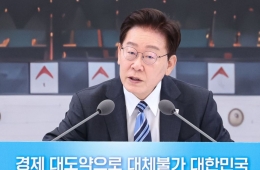
Assemblyman Minho Shin Initiates First Metropolitan-Level Support Ordinance for Agricultural Solar Power
Institutionalizing Resident-Participation Power Generation Projects
Laying the Foundation for Carbon Neutrality
An ordinance to provide institutional support for the "agricultural solar power" project—a new income model attracting attention as a solution for rural areas facing population decline and aging—is being promoted by the Jeonnam Gwangju Integrated Special City Council.
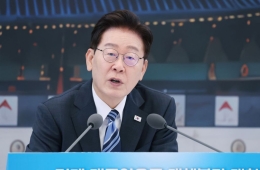
The "Ordinance on the Promotion and Support for Agricultural Solar Power Generation Projects in Jeonnam Gwangju Integrated Special City," sponsored by Assemblyman Minho Shin (Democratic Party of Korea, Suncheon District 6), passed the review of the Climate, Environment, and Energy Committee on July 15.
Agricultural solar power involves installing solar facilities on farmland to allow farming activities to continue while simultaneously generating electricity. It has gained interest as a "solar pension" model wherein local residents participate in the power generation business and share profits.
This marks the first time that a metropolitan-level local government has pursued a related support ordinance.

The ordinance establishes administrative and financial grounds for supporting resident-participation agricultural solar power projects, including funding, research and development of relevant technology, dissemination and pilot projects, as well as condition surveys.
In particular, it creates a framework allowing the Jeonnam Gwangju Integrated Special City Mayor to recommend that local public enterprises and public institutions give priority to utilizing renewable energy produced by agricultural solar power projects through power purchase agreements (PPAs) and similar methods, thereby promoting the public sector’s transition to renewable energy.
The ordinance also includes safeguards to minimize concerns about damage to agricultural production infrastructure and productivity declines. It prescribes the establishment of policies to ensure that agricultural functions are not weakened during the project’s implementation, thereby promoting a balance between farming and power generation businesses.
Hot Picks Today
 "I Might End Up Paying My Entire Salary Just for Interest"... Annual Per-Person Interest Could Reach 6.73 Million Won, 'Yeongkeul-jok' Lament
- "Die from Heat or Starve": Amid Unprecedented Heatwave and Delivery Ban, Italian Riders Go on Strike
- "Will I Really Be Left Out If I Don't Use It?"... The App Used by 23 Million Koreans Monthly, Is Naver Feeling the Pressure?
- Jensen Huang: "SK hynix ADR Is Incredibly Successful"
- UK Introduces Strict 'Digital Curfew': SNS Use for Teens Automatically Blocked from Midnight
Assemblyman Shin stated, "A resident-participation agricultural solar power project is necessary for the sustainable future of the Jeonnam region, which has the country's highest proportion of farming households and aging population," adding, "Even after the ordinance is enacted, I will carefully ensure that practical budgetary and administrative support for resident participation cooperatives is maintained."
© The Asia Business Daily. All rights reserved. Unauthorized AI training and use prohibited.