Pyeongtaek Mayor Choi Wonyong Personally Inspects Persistent Congestion Areas... Speeds Up '30-Minute Living Zone' Initiative
Mayor Choi Wonyong Launches Full-Scale 'Pyeongtaek 30-Minute Living Zone' Initiative
First Official Order: Forming a Traffic Task Force, First Field Inspection Targets Congestion Hotspots
Mayor Visits Four Habitual Congestion Sites to Seek Solutions
Driving 'Traffic Innovation': City Implements Short-, Mid-, and Long-Term Tailored Measures
Pyeongtaek Mayor Choi Wonyong has launched a full-scale initiative to establish the 'Pyeongtaek 30-Minute Living Zone,' a key pledge of the 9th popularly elected administration, by personally inspecting habitual congestion areas during the morning commute and assessing the reality of traffic congestion on-site.

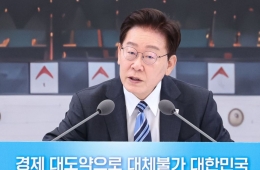
Pyeongtaek Mayor Choi Wonyong conducted on-site inspections on the 15th during the morning rush hour at four habitual congestion areas including Yongidong, Taepyeong Apartments, Samsung Jungang-ro, and Dongsak Intersection. Provided by Pyeongtaek City
View original imageOn July 15, Pyeongtaek City in Gyeonggi Province announced that Mayor Choi led on-site inspections during the morning rush hour at four frequent congestion points: Yongidong, Taepyeong Apartments, Samsung Jungang-ro, and Dongsak Intersection.
This inspection goes beyond merely addressing public complaints about traffic and marks the starting point of a comprehensive overhaul of the city's traffic system to connect all areas of Pyeongtaek within a 30-minute living radius. Upon taking office, Mayor Choi prioritized resolving traffic issues to the extent that his first official directive was to form a dedicated Traffic Task Force.
On the day of the inspection, Mayor Choi thoroughly reviewed vehicle queues, intersection traffic volumes, signal operation methods, left and right turn lane capacities, and vehicle merging and weaving phenomena. He also checked the locations of bus stops and crosswalks, and even considered the potential increase in traffic volume from future developments, examining road infrastructure, public transportation, and pedestrian environments as a whole.
Pyeongtaek City plans to implement short-, mid-, and long-term measures in a phased approach based on the findings from the inspection.
In the short term, the city will prepare immediate traffic improvement measures such as adjusting signal cycles, improving lane operations, and refurbishing pavement markings. There are also plans to reorganize bus stop locations and enhance public transportation services to help disperse car-centric traffic demand.
For the medium term, the city aims to improve major arterial roads by restructuring congested intersections, expanding roundabouts, connecting disconnected roads, and securing bypass roads. A transfer system will also be established to link trunk buses and local circulator buses as well as demand-responsive transportation (DRT), centered around major hubs such as Pyeongtaek Station, Jije Station, Seojeong-ri Station, and Anjung Station.
In the long term, the city plans to establish the 'Pyeongtaek Ring,' a circular road network designed to divert traffic concentrated on National Highways No. 1, 38, and 45 and key downtown roads to the outskirts. Through this, the city aims to densely connect northern-southern and eastern-western living zones, ultimately creating a traffic system that allows residents to reach major living hubs from anywhere within 30 minutes.
For large-scale projects such as road expansions and alternative bypass constructions, plans call for strengthening cooperation with relevant agencies including the Ministry of Land, Infrastructure and Transport, Gyeonggi Province, and Korea Land & Housing Corporation (LH), so that these projects can be actively reflected in metropolitan area-wide transportation improvement measures.
Mayor Choi stated, "Roads are like the lifeblood of a city; a well-connected and organic road network is essential for a vibrant urban environment. Current traffic congestion and the limitations of our road network not only inconvenience citizens but also create disconnection between regions and hinder balanced urban development."

Choi Wonyong, Mayor of Pyeongtaek City, conducted on-site inspections on the 15th during the morning rush hour at four habitual congestion areas: Yongidong, Taepyeong Apartments, Samsung Jungang-ro, and Dongsak Intersection. Provided by Pyeongtaek City
View original imageHe went on to say, "'The Pyeongtaek 30-Minute Living Zone' is not just a transportation policy, but a key initiative for connecting divided areas of the city and achieving balanced development. We are committed to resolving the daily traffic inconveniences experienced by our citizens and will create a more vibrant Pyeongtaek."
Hot Picks Today
 30 Beluga Whales Dramatically Rescued After Two Years Trapped in Shuttered Theme Park
- "I Shouldn't Have Sold Yesterday": SK hynix Soars Over 10% on Surging U.S. ADRs, Forecasts Reach 4.92 Million Won
- "Annual Interest Per Capita to Surge to 6.73 Million Won"... Desperate Calculations by 'Yeongkeuljok' Borrowers
- Cheongju City Council Member Meets Minor via Chat App... Search and Seizure Over 'Child Prostitution Charges'
- ‘Paradise Island’ Turns into ‘Hell’...4,000 U.S. Soldiers Endure Heat With Only Fans
Meanwhile, following inspections during the morning commute on July 15, the city plans to conduct additional site visits during the evening rush hour on July 16 to assess traffic flow by time segment and devise further improvement measures.
© The Asia Business Daily. All rights reserved. Unauthorized AI training and use prohibited.