[Reading Science] Hwang Woo-suk Stripped of Highest Scientist Award After 22 Years...Scientific Community Says "Delayed but Just" (Comprehensive)
Presidential Award Ultimately Revoked for Fabricated Research Achievements
Experts Say, "Principles of Research Ethics and National Honors Reaffirmed"
The cancellation of the Republic of Korea's Highest Scientist Award bestowed on Professor Woo-Suk Hwang, former Seoul National University professor who caused controversy with the fabrication of stem cell research papers, has been finalized after 22 years. In the scientific community, it has been assessed as "delayed yet inevitable," with many voices emphasizing that national honors given to unverified research achievements must be corrected.
According to the relevant ministries on July 15, the Ministry of Science and ICT requested the Ministry of the Interior and Safety to cancel Professor Hwang's Highest Scientist Award in March. The Ministry of the Interior and Safety requested presidential approval on July 14, and the cancellation was ultimately finalized that same day when the president gave his approval. The Ministry of the Interior and Safety is expected to publish the decision in the official gazette soon.

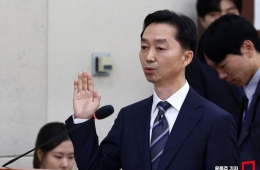
Woo-Suk Hwang, former professor at Seoul National University. The Asia Business Daily Database
View original imageThe Highest Scientist Award is a presidential honor given to individuals who have made significant contributions to the development of science and technology in Korea. Both awarding and cancellation require presidential approval, making it the most prestigious recognition in the field of science and technology.
Professor Hwang received the award and a 300 million won prize in 2004 for his achievements in human embryonic stem cell research. However, when it was later revealed that the related papers had been fabricated, he was dismissed by Seoul National University in 2006, and the government stripped him of his top scientist status the same year. His Order of Science and Technology Innovation was also revoked.
The Initial Cancellation Was Overturned Due to Procedural Flaws…Government Takes New Action
At the time, however, there were no clear regulations for canceling the Highest Scientist Award, so his recipient status was maintained. After related systems were revised, the government decided for the first time to cancel the award in 2020.
Professor Hwang filed an administrative lawsuit claiming that the government's action was unlawful. The court found that the government had not followed due process, including failing to sufficiently provide Professor Hwang with an opportunity to present his opinion. The Supreme Court finalized the original judgment in April 2023, declaring the previous cancellation invalid due to procedural flaws.
In response, the Ministry of Science and ICT addressed the procedural deficiencies pointed out by the court and requested the Ministry of the Interior and Safety to cancel the award again in March of this year. With the recent presidential approval, Professor Hwang has now been stripped of the award 22 years after having received it in 2004.
The overall consensus among the scientific community has been that, "although delayed, this was the right decision." Hong Sungwook, professor at the Department of Science Studies at Seoul National University, stated, "The grounds for awarding the Highest Scientist Award were primarily Professor Hwang’s purported stem cell research, and the fact that this work was proven to be fraudulent has been well established. It is only natural for such awards and decorations to be revoked."
Hong Taekyung, professor at the Department of Earth System Sciences at Yonsei University, also commented, "Because the research achievements that were the main reasons for the award have been canceled and research ethics violations confirmed, the turn of events is ultimately just. The nation’s highest honors must not simply serve to heap more accolades upon already-famous researchers, but should instead develop as a system that elevates the pride of the numerous scientists and engineers who work diligently in silence."
"Scientific Honor Rests on Verification and Ethics"
Some assessments said that this decision goes beyond a mere settlement of past issues and serves as an opportunity to reaffirm the prerequisites of scientific honor. Won Byungmook, professor at the Department of Advanced Materials Science and Engineering at Sungkyunkwan University, remarked, "This reaffirmed the principle that scientific honor and national awards are only valid if based on results that can be verified and on strict research ethics. If the core conclusions are not backed by data or are proven to be manipulated, not only should the papers be retracted, but also awards and public recognition must be reconsidered."
Oh Jiweon, professor at the Department of Anatomy, Yonsei University College of Medicine, said, "This case demonstrates how the ethical lapses of a single researcher can cause immense damage beyond a single paper—to subsequent research, policy decisions, and national authority. The high level of ethical and moral responsibility expected of individual researchers must take root as a core part of the scientific community’s culture."
However, the 22 years it took to finalize the cancellation spotlighted the limitations of the government's award and research ethics response systems. Criticism also arose from the fact that the initial cancellation was invalidated due to procedural flaws, forcing the government into unnecessary administrative lawsuits and repeated action.
Hot Picks Today
 "Ppalli-ppalli Korea, No Wonder It Stings": Plunges from No. 1 to 22nd, Falls Behind Vietnam and Thailand
- "Even New York Taxi Drivers Are Talking About the KOSPI; South Korean Market to Top 9,000 Again Within a Year"... 'Wall Street's Stock-Picking Ace' Names His Picks
- "'Some Get KRW 74 Million, While a One-Day Difference Means a KRW 34 Million Gap' Sparks Outrage... President Weighs In"
- [Breaking] 'Incheon Stabbing' Man in His 50s: "The Hospital Reported Me... Dissatisfied with Investigation"
- 220 cm-Tall 26-Year-Old Woman Dies Less Than a Year After Giving Birth... Deadly Complications Hidden Behind 'Gigantism'
Lee Minwook, principal researcher at the Korea Institute of Science and Technology, said, "Even the courts acknowledged there were substantial grounds for cancellation; the real issue was with the procedures. The process should have followed due legal steps from the outset to minimize unnecessary legal and economic losses." He added, "The lesson from this case should not be to increase procedural or reporting burdens in research settings, but rather, while rigorous due process is needed for decisions such as revoking awards that restrict individual rights, these procedures should not translate into routine administrative burdens on research activities."
© The Asia Business Daily. All rights reserved. Unauthorized AI training and use prohibited.