Dining-Out Market Rises for Second Consecutive Quarter... Early Heat Wave Drives Up Coffee Shop Demand
2Q Restaurant Industry Business Sentiment Index at 78.82
Up 2.04 Points from Previous Quarter... Driven by Compensation Funds and Other Factors
"Core of Restaurant Industry Recovery Shifts from Institutional Cafeterias to Coffee Shops"
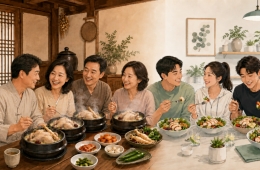
This year, the dining-out market saw growth for the second consecutive quarter, buoyed by the impact of "Family Month" activities and the distribution of compensation funds for losses from high oil prices. The early arrival of hot weather led to increased demand for coffee shops, and the trend toward value-for-money dining choices further contributed to the rise in related dining-out consumption.
On July 15, the Ministry of Agriculture, Food and Rural Affairs and Korea Agro-Fisheries & Food Trade Corporation (aT) announced that the Restaurant Industry Business Sentiment Index (Current Index) for the second quarter of this year recorded 78.82, up by 2.04 points compared to the previous quarter.

The Restaurant Industry Business Sentiment Index is a metric calculated based on a survey of 3,000 dining establishments nationwide. When the index falls below the baseline of 100, it indicates that more businesses experienced a year-on-year decrease in sales than those that saw an increase.
The index has been on an upward trend for two consecutive quarters and is now at its highest level since the first quarter of 2024 (79.28), surpassing even last year's third quarter when living expense recovery coupons were distributed. It is analyzed that the slight rise in the index was influenced by May's Family Month and the payment of high oil price compensation funds.
By sector, coffee shops posted a significant increase from 85.17 in the first quarter to 91.26 in the second quarter. As a result, the current index for non-alcoholic beverage outlets, including coffee shops, reached 89.63 in the second quarter of this year, surpassing the forecast index (88.30). Although forecast indices tend to be higher due to optimism about the future, the current index outpaced the forecast as demand for coffee, beverages, and ready meals grew with the early heat wave.

At the same time, pizza, hamburger, sandwich, and similar food outlets saw a relatively large quarter-over-quarter increase as value-for-money dining trends strengthened. The current index for this segment was 89.23, up by 5.43 points from the first quarter. Expanded consumption of lower-priced dining options and collaborations with well-known chefs served as key growth drivers for the sector. Kimbap and other simple food outlets also benefited from increased demand, rising from 76.08 in the first quarter to 79.27 in the second quarter.
On the other hand, the institutional cafeteria sector has shown a steady decline since the third quarter of last year (96.30), dropping to 91.95 in the second quarter of this year. While the index remains in the 90s, which is high compared to other sectors, recent changes in corporate culture—such as the spread of remote work and increased consumption of convenience foods—are being seen as a new inflection point.
The Restaurant Industry Business Sentiment Forecast Index for the third quarter stands at 84.08, a decrease of 1.61 points from the previous quarter. This decline appears to reflect waning optimism following the expiration of high oil price compensation fund effects and the continued fallout from the Middle East crisis. The forecast index fell back after one quarter. The industry employment index recorded 96.01, down by 0.12 points quarter-over-quarter. Since a slight rebound in the third quarter of last year, this index has remained above 95.
Professor Jin Hyunjung of Chung-Ang University's Economics Department stated in a report, "It is inadequate to interpret this recent rebound as a recovery of the restaurant industry," and added, "The very nature of restaurant industry recovery is changing." She explained, "Whereas recovery in the past was based on increased traditional demand for dining out, recent trends are driven by shifts in consumer choice. While consumers remain price-conscious, rather than cutting out dining out altogether, they opt for businesses offering affordability, convenience, and time efficiency."
Hot Picks Today
 30 Beluga Whales Dramatically Rescued After Two Years Trapped in Shuttered Theme Park
- "I Shouldn't Have Sold Yesterday": SK hynix Soars Over 10% on Surging U.S. ADRs, Forecasts Reach 4.92 Million Won
- "Never Do This During the Rainy Season"... This Action Could Cause Blindness or Fractures
- Pet Dog Collapses Near Mountain Summit, Surprising Cause Identified by Odor of Flatulence
- ‘Paradise Island’ Turns into ‘Hell’...4,000 U.S. Soldiers Endure Heat With Only Fans
In particular, Professor Jin emphasized, "The core of recovery in the restaurant industry is moving from institutional cafeterias—once the symbol of 'survival-type consumption'—to coffee and convenient dining options, which embody the areas of 'value-for-money consumption' and 'small luxuries.'" She stressed that it is important to monitor the divergence in business performance across different sectors and to identify which are benefiting from new consumer trends.
© The Asia Business Daily. All rights reserved. Unauthorized AI training and use prohibited.