[Kim Wookwan's Column] Mayor Min Hyungbae, Now Is the Time for Bold Decisions With Only Citizens in Mind
Kim Wookwan / Honam Regional News Director

It has already been three weeks since the launch of the Jeonnam-Gwangju Unified Special City. This marks a grand unification 40 years after the two regions were separated. Public sentiment about this historic event is a mix of anticipation and concern. What is clear is that the characteristic atmosphere of confusion that accompanies the early stages of integration still lingers.
Visible changes in form are evident. The number of government buildings has increased to three, while the assembly has been unified into one. Although the administrative integration process is underway, it does not give a sense of clarity. The necessary restructuring and personnel appointments that should be urgently addressed are progressing slowly, giving rise to rampant speculation.
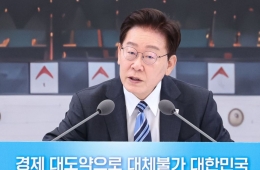
Thus begins the era of Min Hyung-bae, the first popularly elected mayor of the 9th Jeonnam-Gwangju Unified Special City Government. Both politically and administratively, Mayor Min’s stature has been completely transformed. He now holds a ministerial position, along with the authority to participate in the State Council. This provides the region with a powerful channel to directly convey its voice in the central government’s decision-making process. Consequently, Mayor Min bears an immense level of responsibility, almost unprecedented in scale. In interviews immediately after his election, Mayor Min himself predicted a difficult journey, admitting, "It's enough to keep me awake at night."
In political circles, the initial period following the launch of a new government or local administration is often referred to as the "honeymoon period." Like the sweetness of a wedding trip, it is a time to celebrate and encourage the new start. Typically, this period lasts from three to six months. However, it does not represent boundless indulgence; rather, it is more akin to a "cooling-off" period during which people watch with cautious optimism, saying, "Since it’s a fresh start, let’s observe and see what you can do."
Mayor Min too is currently passing through this precious honeymoon period granted by the citizens. Yet the challenges he must overcome during this time are numerous and daunting. Therefore, citizens are earnestly hoping that Mayor Min will face these difficulties head-on without hesitation. They expect his substantial delegated authority to be fully devoted to solving regional issues.
However, Mayor Min’s recent actions give the impression that he has not lived up to expectations. The most notable example is the region’s major issue during the 8th term—the effort to bring a national medical school to Jeonnam. Mayor Min drew a line in the sand, stating he would withdraw from mediation if both universities did not accept the compromise proposal suggested by the Jeonnam-Gwangju Transformation Planning Committee. In the end, Mokpo University accepted the proposal, but Suncheon University refused, leaving the new medical school in jeopardy of falling through completely, rather than making progress.
To solve any problem, it is vital to see through to its essence. The medical school issue traces back to the 1990s as a longstanding attempt to resolve poor healthcare conditions in the southwestern region. However, as this core issue has become entangled with the logic of balanced regional development, it now stands at risk of reverting to square one. In a recent town hall meeting, Mayor Min mentioned, "The administration intervened too deeply," sparking debate over the appropriateness of such an involvement. What is needed now is not avoidance of responsibility, but rather decisive action.
Another concern is the ongoing open recruitment process for two vice mayor positions. By regulation, Mayor Min has the authority to directly appoint two out of four vice mayors. All he needs to do is confidently select suitable candidates to work closely with him and introduce them to the public. Yet, despite being the person in charge, Mayor Min has chosen to take a detour by adopting a "citizen open recruitment system." While the intention to communicate with citizens is understandable, it gives the appearance of being excessively cautious as if seeking to avoid responsibility.
There is no time to waste the golden honeymoon period on unnecessary controversies. Already, the open recruitment format has attracted a lot of noise. A system that began with good intentions is now at risk of degenerating into a political battleground, and it is worrisome how the aftermath will be managed.
Hot Picks Today
 30 Beluga Whales Dramatically Rescued After Two Years Trapped in Shuttered Theme Park
- "I Shouldn't Have Sold Yesterday": SK hynix Soars Over 10% on Surging U.S. ADRs, Forecasts Reach 4.92 Million Won
- "Never Do This During the Rainy Season"... This Action Could Cause Blindness or Fractures
- Pet Dog Collapses Near Mountain Summit, Surprising Cause Identified by Odor of Flatulence
- ‘Paradise Island’ Turns into ‘Hell’...4,000 U.S. Soldiers Endure Heat With Only Fans
This is a frank message for Mayor Min. For long-term tasks that require essential citizen participation, it is important to devote time and attention to gathering a wide range of views. However, for powers delegated to him as mayor, what citizens truly expect is leadership that is marked by responsibility and conviction. The honeymoon period will end quickly. What Mayor Min needs now is not wariness, but responsible "selection and concentration."
© The Asia Business Daily. All rights reserved. Unauthorized AI training and use prohibited.