Is a Healthy Meal for a Family of Four Nearly 100,000 Won? Health Food Faces a 'Value-for-Money Battle' Amid Soaring Prices
The Average Price of Samgyetang in Seoul Reaches 18,154 Won
Meal Kits and Convenience Store Health Foods Gaining Popularity at Major Retailers
Light and Practical Meals Preferred by People in Their 20s and 30s
On July 15, which marks Chobok, the start of the peak summer heat, citizens seeking to boost their health gathered early at Samgyetang restaurants. However, as prices have risen to nearly 20,000 won per bowl, the financial burden on consumers is increasing.
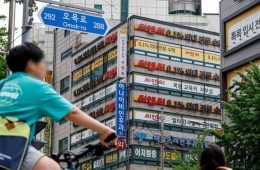
On the same day, according to Yonhap News TV, the average price of a bowl of Samgyetang in the Seoul area has surpassed 18,000 won, resulting in a growing burden on diners. In an interview with Yonhap News TV, one citizen said, "A bowl of Samgyetang is 22,000 won," adding, "With dining out prices so high, it is difficult to eat out without hesitation."

Amid the festive season, the average price of a bowl of Samgyetang in the Seoul area has surpassed 18,000 won, increasing the financial burden. Photo by Jo Yongjun
View original imageAccording to 'Chamgagyeok', the price information portal operated by the Korea Consumer Agency, the average price of a bowl of Samgyetang in Seoul as of May this year was 18,154 won. Compared to 14,077 won in 2021, this marks an increase of 4,077 won, or approximately 29%, over five years. At some well-known Samgyetang specialty restaurants, basic menu items have even surpassed 20,000 won. If a family of four eats Samgyetang and orders drinks or additional side dishes, the total bill for one meal could approach 100,000 won.
More Consumers Turning to Meal Kits for Health Food Amid High Prices
The price increase for Samgyetang is due both to the cost of chicken and to price hikes for ingredients such as glutinous rice, garlic, jujube, and ginseng. In addition, operational costs including labor, rent, and electricity and gas rates have generally increased across restaurants, causing the price of eating out to rise more steeply than raw ingredient costs.
With high inflation combined with the hot weather, more consumers are opting for ready-to-eat meals or meal kits instead of cooking Samgyetang over direct heat. Although people can save money by purchasing ingredients like chicken, glutinous rice, and garlic at traditional markets or supermarkets, the long hours required for cooking are seen as a drawback. In response, major supermarkets have been displaying easy-to-prepare Samgyetang, including promotional items priced in the 4,000-won range, at the front of their health food sections ahead of Chobok.

As high prices combine with hot weather, more consumers are opting for ready-to-eat meals or meal kits rather than cooking Samgyetang over direct fire. The Asia Business Daily DB
View original imageThe advantages are that these meals require only unpacking and heating in a pot or microwave, and they cost less than half the price of eating out at a specialty restaurant. This convenience appeals to single-person households, dual-income couples, and office workers, as it reduces leftover ingredients and dishwashing. Convenience stores are also joining in, seeking to attract demand during Boknal by rolling out products not only of refrigerated Samgyetang and half-portions but also deluxe health foods featuring eel, smoked duck, or abalone, reimagined as lunch boxes, rice balls, hamburgers, and sandwiches.
"Instead of Expensive Samgyetang"—Salads and Easy Meals Popular Among Millennials & Gen Z
Meanwhile, among younger consumers, the notion that one must eat hot and greasy food during Boknal is weakening. Instead of expensive Samgyetang, many are choosing lighter, more convenient options such as chicken breast salad, roasted eggs, or protein drinks as a meal. Salads, especially those with chicken or eggs, provide protein and can be eaten immediately without separate preparation, making them a go-to product for young office workers and single households. These foods have the added advantage of being lower in calories and sodium than traditional health foods, and consumers can adjust ingredients to fit their diets and workout plans.

Among young consumers, the perception that one must eat hot and greasy food on the dog days of summer is also weakening. Photo by Jin-Hyung Kang
View original imageAs more office workers in their 20s and 30s try to control lunch spending due to high prices, the convenience store salad market is also growing steadily. CU's salad sales rose by 22.5% in 2023, 25.1% in 2024, and 18.8% in 2025, marking double-digit growth for three consecutive years. Sales in 2025 were up about 48.6% compared to 2023.
As a result, the retail industry is moving away from the old formula that health foods must be hot and expensive. Beyond Samgyetang, a wider range of products is now available—with different price points and preparation methods—such as Chogyeguksu (cold chicken noodle soup), chicken breast salad, eel rice bowls, and duck lunch boxes, giving consumers more options.
Hot Picks Today
 "I Didn't Expect This Much"... As Chinese Numbers Plunge, South Koreans Become Top Visitors to Japan
- "Are You Okay, Dad? Brother?"... 1 in 18 Men Deficient, U.S. Military to Begin Annual Screenings
- "Home-Cooked Meals Were the Only Affordable Option, but Now Even Hetbahn and Dumplings Are Going Up"
- "One Year from Now Will Be Worse Hell"... 9 Out of 10 Japanese Fear 'Runaway Inflation'
- "How Can So Many Fit on One Boat?"...Crowds in Red: What Is This?
Meanwhile, Boknal is not one of the 24 solar terms but is a traditional period determined based on the summer solstice, the start of autumn, and the cyclical calendar. Chobok falls on the third Gyeongil (the day with a heavenly stem of Gyeong) after the summer solstice, Jungbok falls on the fourth, and Malbok is on the first Gyeongil after the start of autumn. This year, Chobok is on July 15, Jungbok on July 25, and Malbok on August 14. The gap between Chobok and Jungbok is 10 days, but there are 20 days between Jungbok and Malbok. When this interval is 20 days, it is called "Wolbok."

Citizens lining up at a Samgyetang restaurant in Jongno-gu, Seoul to celebrate Chobok. Photo by Jo Yong-jun
View original imageAlthough the appearance of summer health foods is changing, the aim to protect one's health from the heat remains the same. Experts advise that, rather than eating a high-calorie meal just once, it is more important to consume balanced portions of protein and vegetables, and to maintain adequate hydration and sleep for staying healthy in the summer. With dining out prices soaring, this year's Chobok table has become more diverse, ranging from specialty Samgyetang to ready-to-eat meals, convenience store lunch boxes, and salads. Smart consumption—considering price, cooking time, and health as well as "what to eat"—is transforming the landscape of Boknal in Korea.
© The Asia Business Daily. All rights reserved. Unauthorized AI training and use prohibited.