Assemblyman Moonok Park: "May 18, Beyond a Democratization Movement to a Popular Uprising"
Designation of May 18 Historic Sites as National Heritage and Establishment of an Integrated Management System
"Kim Dae-jung Spirit Should Be Reflected Across City Policies"
"Active and Responsible Human Rights Administration Needed for the Jang Yoonki Case"
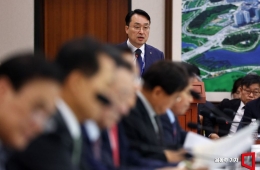
Moonok Park, Member of the Jeonnam Gwangju Integrated Special City Council and a member of the Democratic Party of Korea (representing Mokpo District 3), has called for a reestablishment of the historical value of the May 18 Democratization Movement, improvement of the management system for historic sites, the policy succession of the Kim Dae-jung spirit, and proactive human rights administration regarding the Jang Yoonki case.
At the Democratic Human Rights and Peace Bureau's work report on July 14, Assemblyman Park stated, "May 18 is more than just a democratization movement; it is history condensed from the solidarity and resistance of citizens against state violence. Instead of stopping at the legal designation, it is necessary to take a policy approach that fully embodies its spirit and essence."
He particularly characterized the historical nature of May 18 as "a popular uprising that goes beyond a democratization movement," and emphasized that a more expansive interpretation is needed throughout commemorative projects, historical education, and overall memorial policies.
The issue of management of May 18 historic sites was also raised.
Assemblyman Park pointed out that currently, major historic sites are managed as local heritage sites, which limits systematic preservation and national funding support.

He stated, "Sites related to the anti-Japanese movement receive national-level support as their historical symbolism is recognized. Similarly, May 18 historic sites should be designated as national heritage sites to ensure stable financial support and a preservation system."
He further noted the differing management standards for historic sites between the Gwangju and Jeonnam regions since the launch of the Integrated Special City, and emphasized, "A unified management system befitting an Integrated Special City must be established."
Safety concerns due to the aging of these sites were also brought up.
Assemblyman Park said, "Some historic sites have received a D safety rating. While expanding exhibitions and experience programs is important, ensuring citizens' safety must take precedence," adding that there is a need to expand subscription to public facility liability insurance and establish a proactive safety management system.
On this day, Park also asserted that the democratic, human rights, and peace spirit of the late President Kim Dae-jung should be actively reflected in the policies of the Integrated Special City.
He explained, "The Kim Dae-jung spirit is a key historical and policy asset of the Integrated Special City closely linked to the May 18 spirit. With the launch of the city, it is necessary to establish concrete policies and institutions that can embody this spirit throughout city governance."
Regarding the recent Jang Yoonki case, which has caused significant ripple effects in the local community, Assemblyman Park expressed strong concern.
Park emphasized, "This case should be viewed not merely as a heinous crime but as a structural human rights violation by the judicial authorities. As the bureau responsible for overseeing human rights policy, the Democratic Human Rights and Peace Bureau must issue a clear position and message."
Hot Picks Today
 "I Don't Want to Marry a Salaried Man"... Women Flock to 'This Place' to Find Husbands Amid the AI Boom
- "I thought getting into a big company was the goal"... The 'position' only 1 in 121 employees reaches
- "Jealous of Koreans" - Now a Must-Do on Every Trip... The Place Where Foreigners Spent KRW 229.8 Billion
- "'No! Dad, Run!'... Father Moved by 5-Year-Old Son Who Shielded Him from Ghost at Korean Folk Village"
- "Please Let Me Go Home"... Customers Trapped in Department Store Parking Lot for 5 Hours Vent Their Anger
He added, "Beyond merely protecting victims, this should be an opportunity to thoroughly inspect and reinforce the local community's entire human rights safety net," urging an active response.
© The Asia Business Daily. All rights reserved. Unauthorized AI training and use prohibited.



!["Please, Just Take Them Off" - They Made It All the Way to Bed... Then Fecal Bacteria Struck [Deep Scroll]](https://cwcontent.asiae.co.kr/asiaresize/307/2026101610053063338_1792112730.png)