SK Telecom and SK Biopharmaceuticals Discover New Drug Candidates for Intractable Cancers Using AI
Two ROR1-binding hit compounds secured
Research period shortened from 1-2 years to five months
"Considering collaboration on bio-specialized LLM"
SK Telecom and SK Biopharmaceuticals have discovered initial hit compounds that can be used to develop targeted therapies for intractable cancers through joint research utilizing artificial intelligence (AI).
According to both companies on July 15, the study generated and screened a large number of binder candidates capable of binding to ‘ROR1’—a protein present on the surface of cancer cells—and conducted laboratory verification. As a result, it was confirmed that two types of these candidates showed potential as initial hit compounds.

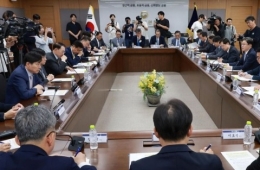
Researchers from SK Telecom and SK Biopharm are discussing the results of AI-based new drug discovery research. SK Telecom
View original imageA binder is a substance designed to bind to a specific target, such as a cancer cell. During the discovery process, multiple criteria such as target binding affinity and structural stability must be considered. ROR1 is a tumor-associated cell surface protein that is highly expressed in various hematologic and solid cancers. In some cancer types, it is overexpressed compared to normal levels, attracting attention in the field of targeted cancer therapy development.
In this study, SK Biopharmaceuticals established a novel binder discovery strategy based on its expertise in drug development. SK Telecom generated a large number of binder candidates using AI, then analyzed their binding potential to ROR1, thereby narrowing down the candidates for laboratory validation.
Research exploring new molecular structures often suffers from insufficient data for AI learning, which means that relying solely on existing data limits the diversity of candidates that can be explored. To address this, SK Telecom applied machine learning that enables various combinations and representations of protein fragments, and used reinforcement learning to give higher rewards to combinations that demonstrate high structural stability. This helped identify optimal binder structures.
During the selection phase, SK Telecom utilized its graphic processing unit (GPU) resources to process numerous candidates in parallel. The company also used AI models to rapidly predict and analyze the binding structures and probabilities between ROR1 and each candidate, enabling efficient narrowing of candidates selected for laboratory experiments. As a result, the research was completed in about five months, cutting the initial drug discovery period—which usually took one to two years for SK Biopharmaceuticals—by more than 60%.
Hot Picks Today
 "I Ate at Home to Save Money, But My Account Balance Was Still a Shock"
- Suddenly Called Out During Class, Awarded $100,000 as Students Cheer in the Gym
- "Hacker’s Identical IP Detected Across Financial Institutions... Large-Scale Attacks Using AI"
- "After a Dream About Feces, Bought a Lottery Ticket and Won 20,000 Won... Scratched Again and Hit a 2 Billion Won Jackpot"
- "Uncle Will Buy Them All for Wonie"... Men in Their 30s Sweep Up 600,000 'RESCENE Bread'
Dongyeon Cho, Head of AI Convergence at SK Telecom, said, "Based on this achievement, we are also considering expanding the scope of technical cooperation across the bio-AI field, including the development of a large language model (LLM) specialized for bio tasks using our proprietary AI foundation model."
© The Asia Business Daily. All rights reserved. Unauthorized AI training and use prohibited.