800 Trillion Won for Fabs... Only 200 Billion Won for Next-Generation Memory
Government Touts "Super-Gap" in Semiconductors
Yet Korea’s Core Memory R&D Support Lags Behind
Burden Falls on Samsung and SK hynix
Kim Joungho: “Investment Needed to Fend Off China’s Pursuit”
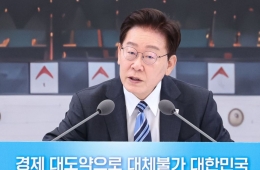
The government has positioned the so-called "super-gap" in semiconductors as the core of its economic growth strategy for the second half of the year. However, support for research and development (R&D) on next-generation memory, following High Bandwidth Memory (HBM), has been limited to just 200 billion won through 2032. This is in stark contrast with 2 trillion won allocated for developing data center-specific and sector-specialized Neural Processing Units (NPUs), as well as investment plans worth 800 trillion won for establishing four new fabs in the Honam region. While memory semiconductors have been the main driver cited for Korea’s export and growth outlook improvements, government support for the next generation of memory development has taken a back seat.

According to the "2026 Second Half Economic Growth Strategy" announced jointly by relevant ministries on July 14, the government designated semiconductors, AI data centers, and physical AI as the three "mega-projects." In the semiconductor sector, main tasks include early completion of fabs in Yongin and Pyeongtaek within the Seoul metropolitan area, establishing four new semiconductor fabs in the Honam region, and making Chungcheong a base for HBM and packaging.
Support for next-generation memory R&D remains relatively small. This growth strategy emphasizes expanding memory production capacity and fostering HBM and packaging hubs. By contrast, in the same semiconductor R&D category, 700 billion won went to developing AI semiconductor technologies for data centers, and 1.3 trillion won was allocated for specialized NPUs for future vehicles, robots, and defense industries. Combined NPU-related R&D alone totals 2 trillion won, which is ten times that allocated to next-generation memory.
Even if the advanced packaging used for HBM is included, the scale of next-generation memory R&D is about 600 billion won. Considering that HBM competitiveness depends on not only memory devices but also packaging, processing, and equipment technologies, support for NPUs still far exceeds that for next-generation memory. For now, NPU sales are still at a negligible level.
Globally, memory semiconductors are now pinpointed as the core bottleneck for AI. Despite this, government investment remains insufficient, with most research and development burdens falling on Samsung Electronics and SK hynix.
The gap becomes even wider when comparing R&D investment to fab construction. The government plans to double memory production capacity within five years by completing fabs early in Yongin and Pyeongtaek and by investing 800 trillion won to build four new semiconductor fabs in the Honam region.
The United States and Taiwan are not only trying to catch up in lagging sectors but are also deploying policy resources to maintain the strengths of existing industry leaders. The United States has been injecting policy capital through the CHIPS Act into advanced fabs, memory production facilities, and next-generation semiconductor research infrastructure. Taiwan, similarly, is working to strengthen its manufacturing, packaging, and design ecosystem through national programs combining AI and semiconductors.
Hot Picks Today
 "I Might End Up Paying My Entire Salary Just for Interest"... Annual Per-Person Interest Could Reach 6.73 Million Won, 'Yeongkeul-jok' Lament
- "Will I Really Be Left Out If I Don't Use It?"... The App Used by 23 Million Koreans Monthly, Is Naver Feeling the Pressure?
- Amid Record Heatwave and 'Delivery Ban' Orders, Italian Riders Strike: "Die from Heat or Starve"
- 30 Beluga Whales Dramatically Rescued After Two Years Trapped in Shuttered Theme Park
- ‘Paradise Island’ Turns into ‘Hell’...4,000 U.S. Soldiers Endure Heat With Only Fans
Kim Joungho, a professor at KAIST known as the "father of HBM," stated, "If we leave the next-generation memory and packaging technologies solely to private sector investment after HBM, our national speed of technological leadership could slow down. HBM development alone requires an investment of over 1 trillion won." He added, "China is making massive government-led investments in HBM development, which could threaten our competitiveness."
© The Asia Business Daily. All rights reserved. Unauthorized AI training and use prohibited.