Abolition of Special Exemptions for Public Notice Delivery by Financial Institutions: Blocking Statute of Limitations Extensions Without Debtor's Knowledge
Amendment to the “Act on Special Cases concerning Expedited Litigation Procedures” Proposed
The government is moving to abolish the special exemption system that has allowed financial institutions to extend the statute of limitations on debts through payment orders without debtors’ knowledge.

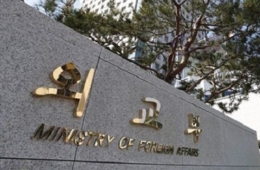
Ministry of Justice building in Gwacheon, Gyeonggi Province. Photo by Yonhap News
View original imageThe Ministry of Justice and the Financial Services Commission announced on July 15 plans to amend the “Act on Special Cases concerning Expedited Litigation Procedures” and to pursue related follow-up policies.
A payment order (demand order) is a simplified legal procedure that enables a creditor to obtain an enforcement order without appearing in court. Generally, public notice delivery is not permitted for such procedures. However, due to a 2014 legislative amendment emphasizing procedural simplicity, an exception has been allowed for a total of 26 financial and public institutions—including banks and specialized credit finance companies—permitting public notice delivery in these cases.
Nevertheless, criticism has arisen that financial institutions have been mechanically extending the statute of limitations for vulnerable debtors with little repayment ability by using this exemption. Responding to this, President Lee Jaemyung ordered, “Reform the current system, which unilaterally favors financial institutions,” and the Ministry of Justice has decided to abolish the exemption for public notice delivery.
The Financial Services Commission will implement concurrent policies to establish the principle of “completion of limitation by default, extension only as an exception” alongside the abolition of the exemption. First, it will strengthen the requirements for writing off bad debts as losses for tax purposes. With the scheduled September amendment of the “Financial Institution Loan Charge-Off Practice Policy,” financial institutions will only be eligible for tax benefits if the statute of limitations for personal financial claims is allowed to be completed at its first expiration.
Additionally, a system for reporting and public disclosure of each financial institution’s performance in statue of limitations completion will be established and results will be released starting with data from the first half of 2026. By September, all financial companies must incorporate reasonable criteria for statute of limitations extensions in their internal regulations, with the aim of proactively resolving delinquent debt portfolios.
Hot Picks Today
 "South Koreans Are All Buying It to Take Home"... This "Drug" Costs 350,000 Won in Korea but Just 80,000 Won in Japan
- "Sharing Credit Card Statements Could Spell Trouble for Couples"... Conflict Erupts Over 2.2 Million Won in Weekly Beauty Spending - What Happened?
- Woman Buys All 196 Apartment Parking Spaces, Installs Locks... Then Faces Lawsuit
- "It's just a cold," you think... Ignore it, and your whole body aches... "This illness" has surged 3.7-fold from last year [The Benefits Handbook]
- "Bride Lee Dogyeong, Groom Lee Dogyeong"... Couple Share the Same Name and Date of Birth: "This Must Be Fate"
Minister of Justice Jeong Seongho stated, “We will do our utmost in the legislative process at the National Assembly to eliminate the indiscriminate practice of repeatedly extending statutes of limitations, which traps debtors in long-term default and hinders their ability to start anew.” Financial Services Commission Chairperson Lee Eogwon added, “We expect that these reforms will correct improper collection practices that have been applied even to debtors with little repayment ability.”
© The Asia Business Daily. All rights reserved. Unauthorized AI training and use prohibited.