Abolish or Partially Retain Supplemental Investigative Powers? Final Democratic Party Dispute Over Criminal Procedure Act
Assemblyman Kiwon Hong Proposes Amendment
Party TF Plan Seen as Insufficient to Ensure Supplemental Investigation Requests
Bill Allows Supplemental Investigations for Livelihood-Related Offenses
Legal Community: "Not a Fundamental Solution
Unclear Criteria for Exceptions Could Spark Equity Concerns"
The Democratic Party of Korea's discussions on amending the Criminal Procedure Act are shifting from a stance of fully abolishing prosecutors' supplemental investigative powers to considering whether to allow certain exceptions. While the party's task force (TF) proposal would abolish these powers and instead strengthen the right to request supplemental investigations, Assemblyman Kiwon Hong of the Democratic Party submitted a separate bill that would partially retain supplemental investigative powers solely for crimes against socially vulnerable groups and livelihood-related offenses. However, some in the legal community point out that if the criteria for such exceptions are not clearly defined, the proposal could cause additional confusion.

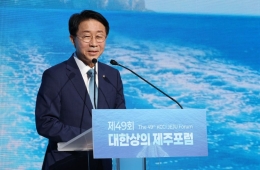
Assemblyman Hong Giwon Proposes Amendment to Criminal Procedure Act Allowing Partial Supplementary Investigation Rights for Prosecutors. Yonhap News
View original imageAccording to political and legal circles on July 15, Assemblyman Hong introduced an amendment to the Criminal Procedure Act the previous day, allowing supplemental investigations by prosecutors for a limited scope: specific serious crimes, crimes against socially vulnerable persons, crimes that threaten citizens’ livelihoods, and cases with urgent deadlines. Simple document supplementation or hearing statements from involved parties are also included in the permitted scope.
The bill also specifies strict adherence to the principle of identity to prevent abuse of prosecutorial power and requires approval from the head of the district prosecutors’ office for compulsory measures such as arrests, detentions, searches, seizures, and verification. It further stipulates that if a party involved in a case requests it, a civilian case review committee can retrospectively review the appropriateness of the supplemental investigation.
This approach differs from the Democratic Party TF bill sponsored by Assemblyman Hangyu Kim. The TF proposal aims to eliminate the legal basis for direct investigative and supplemental investigative powers of prosecutors by deleting Article 196 of the Criminal Procedure Act. Police officers would, in principle, be required to complete investigations within one month from the date a supplemental investigation is requested. If officers fail to comply without a valid reason, requests for removal, replacement, or disciplinary action could be made. The TF bill also contains provisions allowing a different investigative agency to be designated if it is unlikely that a proper supplemental investigation can be expected from the original agency.
The proposals from Assemblyman Yongmin Kim of the Democratic Party and Eunjeong Park of the Cho Kuk Innovation Party go even further in abolishing prosecutorial investigation powers. Their proposals also delete Article 196, unifying investigative authority with the police. While permitting a supplemental investigation request period of three months, these bills remove the option to demand disciplinary action against police officers who fail to fulfill supplemental investigation requests.

Some in the legal community see Assemblyman Hong's proposal as providing a minimum safety net for victim protection. Supporters argue that it is difficult to verify facts outside the police records simply by requesting supplemental investigation and that additional statements from those involved or the confirmation of one or two documents can often fundamentally alter the understanding of a case.
However, many point out that selectively allowing supplemental investigations only for certain cases would make the criminal justice system more complicated without providing a fundamental solution. A prosecutor commented, "Allowing supplemental investigations even in part could be beneficial for victims, but distinguishing which cases qualify and which do not could create equity issues. For example, sexual offenses may be combined with other crimes, or the victim may not be clearly identified, making a clear-cut distinction difficult." He added, "Verifying facts not included in records is essentially what an investigation is. If this right is only allowed for certain crimes, on-the-ground decision-making will become even more complex."
A lawyer with experience as a prosecutor stated, "The proposals being made as alternatives to abolishing supplemental investigative powers only deal with peripheral aspects rather than the core of the issue. The real question is not how much authority prosecutors should retain, but rather what procedures can be instituted to filter out omissions or distortions in police investigations."
The debate now extends beyond the existence of supplemental investigative rights to how best to balance police investigation oversight, victim protection, and the predictability of the criminal justice system. It remains to be seen whether the movement within the party for a more careful approach will lead to adjustments in the rapid push to amend the Criminal Procedure Act based on the complete abolition of supplemental investigative powers.
Hot Picks Today
 "Oops, No Condom... 'I Probably Won't Get Pregnant' – Alarming Neglect of Contraception Among Korean Adolescents"
- Now Is Not the Time to Sell Samsung Electronics and SK hynix...Securities Firms Say "The Market Greatly Misunderstood"[Weekend Money]
- "Difficulties Ahead for the 'Dream Battery': Analysis Shows Profitability Unlikely for Now [Weekend Money]"
- "Why Are You So Noisy": Biological Father Who Caused Death of 10-Month-Old Son by Stuffing Clothes in Mouth Given Seven Years on Appeal
- "No Need for Private Academies: Saving 800,000 Won a Month and Boosting Grades... Parents Flock After Hearing the News"
The National Assembly Legislative and Judiciary Committee will continue discussing the amendment to the Criminal Procedure Act, holding a first subcommittee meeting in the morning and a plenary session in the afternoon. The bill partially retaining supplemental investigative rights, proposed by Assemblyman Hong, is also expected to be referred to the subcommittee for discussion.
© The Asia Business Daily. All rights reserved. Unauthorized AI training and use prohibited.