Ministry of Finance and Economy Launches All-Out Effort to Keep Inflation Within 3% in Second Half..."Will Implement 'New Dimension' Policies in Emergencies" [Work Report]
Work Report to the President at Cheong Wa Dae on the 15th
Inflation Control Tops the List of Ten Core Policy Tasks
Legislation Planned for 'Private Capital + Public Guarantees' Development Finance
The Ministry of Finance and Economy has announced an all-out effort to keep the consumer price inflation rate under 3% in the second half of the year. However, with external variables such as the recently renewed armed conflict in the Middle East,the defense line for prices is expected to come under severe strain. Even within the government, voices are emerging that additional countermeasures will be unavoidable should an emergency situation arise.
Facing a Major Obstacle in 'Defending 3% Inflation'..."A New Dimension of Policy for Emergencies"

Heo Jang, Second Vice Minister of the Ministry of Finance and Economy, conducting a preliminary briefing on the Ministry of Finance and Economy's work report. Ministry of Finance and Economy.
View original imageOn July 15, at the Blue House State Guest House, the Ministry of Finance and Economy reported to President Lee Jaemyung on its major achievements in the first half of the year and outlined the 10 core tasks for the future during its work report. The top priority among these tasks was "stable management of consumer prices within 3%". The government, which estimates that it has achieved an average price reduction effect of about 0.6 to 0.7 percentage points through measures such as the petroleum price cap, quota tariffs, and discounts on agricultural and fisheries products, is planning to mobilize every available means to rein in prices in the second half of the year as well.
Specifically, for the first time ever, the government will launch a nationwide discount event on all agricultural, livestock, and fishery products (July–August). The issuance of “agricultural discount vouchers” (with a 20% discount) will be expanded to 20 billion won per month. The government also plans to import an additional 200 million fresh eggs, directly import and purchase mackerel, release discounted stocks of hairtail and squid purchased directly, double incentives for farmers who supply products to wholesale markets, and expand quota tariffs for food items to tackle rising “table prices.”
Additionally, to stabilize petroleum prices, the government will review whether to extend fuel tax cuts if necessary, and central public utility charges (including electricity and gas) will be kept frozen in the second half. Diesel (for freight vehicles, etc.) and tax-exempt fuel (for farmers and fishers) price-linked subsidies will be provided until September, with the possibility of extension through the end of the year if needed. To curb price manipulation through illegal transactions, amendments to the Price Stabilization Act will be pursued, including the introduction of new fines for hoarding violations and imposition of compulsory enforcement fees, to be implemented in the second half of the year.
However, the government's plans to control prices in the second half are being shaken by escalating local conflicts in the Middle East and added pressure from possible maritime transit tax impositions. Consumer prices have already risen above 3% for two consecutive months due to soaring oil prices (3.1% in May and 3.2% in June). On the previous day, during a preliminary briefing, Heo Jang, Second Vice Minister of the Ministry of Finance and Economy, stated, "If the situation in the Middle East worsens and it becomes certain that an emergency is developing, a new dimension of countermeasures will be necessary," adding, "Whatever the circumstances, we will strive to maintain average inflation within 3% through proactive measures, including comprehensive supply chain policies."
The Era of Free Aid Fades, 'Korean-Style Development Finance' Will Be Promoted
![Ministry of Finance and Economy Launches All-Out Effort to Keep Inflation Within 3% in Second Half..."Will Implement 'New Dimension' Policies in Emergencies" [Work Report]](http://www.asiae.co.kr/news/img_view.htm?img=2026071507492446184_1784069363.jpg)
Another major core task is the full introduction of “K-development finance,” driven by private capital rather than budget-centered official development assistance (ODA). This refers to a financial instrument by which public financial institutions leverage private resources to support private development projects in developing countries. Financial institutions will offer equity investments, long-term loans, and guarantees/insurance to induce the inflow of private capital.
This is expected to enhance Korea’s competitiveness in winning orders in developing countries. Korea has long been seen as falling behind advanced countries like Japan—where companies are equipped with comprehensive financial packages—even though Korean firms possess sufficient technical competitiveness, due to the lack of a development finance function.
Vice Minister Heo explained, “This is a blended finance approach to help our companies boldly invest even in high-risk projects abroad.” The government will establish legal and institutional frameworks for development finance in the second half of the year. In addition, the concessional loan fund, the Economic Development Cooperation Fund (EDCF), will have its minimum interest rate raised tenfold, from the current 0.01% to 0.1%, to normalize rates. Efforts will also be made to upgrade Korea’s international aid policy overall, such as proposing a “K-AI Package” (AI solutions, data centers, and renewable energy), utilizing Korea’s strengths in information and communications technology, to developing countries.
Hot Picks Today
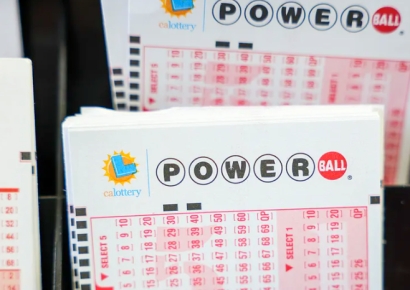 He Left It in the Car and Forgot... "I Nearly Collapsed with Joy": Man Wins $1.48 Million Lottery
- Goldman Sachs Cuts KOSPI Target by 25%... "Excessive Pessimism, Still Attractive"
- "'Nodding Off' on the Subway? Here's Why Koreans Are Getting Even Less Sleep"
- "Please Pay Me at Least 3 Million Won a Month": More Than Half of Young People Today Prioritize "Working Conditions" Over Company Size
- Beachgoer Finds 'Plastic' That Turns Out to Be Perfume Ingredient Worth More Than Twice as Much as Gold
Beyond this, the Ministry of Finance and Economy reported the following as its 10 core tasks: supporting the successful implementation of three mega-projects, transitioning industrial structures currently centered on fossil fuels, specifying investment strategies for the sovereign wealth fund, establishing a systematic foundation for nurturing the service industry, internationalizing the won, shifting to a value-creation model for managing national assets, carrying out comprehensive reforms of public institutions, and normalizing the operations of the Ministry of Finance and Economy.
© The Asia Business Daily. All rights reserved. Unauthorized AI training and use prohibited.