Minister Kim Jeongkwan: "In the AI Era, Corporate Profits Must Fuel Investment... Labor Systems Must Also Change"
Forum on "Corporate Investment and the Future of Labor in the AI Era"
"Fundamental Innovation in Labor-Management Culture and Systems Needed for the AI Era"

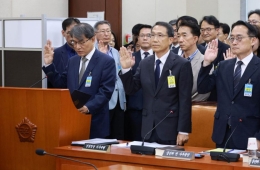
On July 15, Minister of Trade, Industry, and Energy Kim Jungkwan emphasized, "In order to secure national competitiveness in the era of artificial intelligence (AI), both increased future investment by companies and innovation in the labor system must occur simultaneously." He stressed that corporate profits must be directed toward investments for future growth, and that the culture and labor systems that remain rooted in the industrial era must also be reformed to align with the AI era.
Minister Kim made these remarks during the discussion forum "Corporate Investment and the Future of Labor in the AI Era," held on this day at Korea Growth Investment Corporation in Seoul.
Minister Kim presented three key issues for securing leadership in the AI revolution era: What should companies invest in, how should labor adapt, and how should labor-management relations change.
He stated, "In the AI era, corporate profits need to be transformed into investments for the future," and added, "The labor-management culture of the AI era should not be one where parties compete to take more for themselves, but rather one where the central question is how we can grow much larger together."
Andonghyun Ahn, Professor of Economics at Seoul National University, delivering the keynote presentation, pointed out, "An approach that seeks to distribute corporate profits based on excess earnings can weaken a company’s capacity for innovation and increase social unrest." He emphasized that in the semiconductor industry, large-scale capital investment and R&D investment are essential, and, given the high risks of investment failure, corporate profits should be used as resources for reinvestment aimed at future growth.
Dongwook Kim, Professor at Korea University Law School, analyzed, "The current labor legislation, established during the industrialization era, has failed to keep pace with the fast-moving dynamics of AI and semiconductor leadership competition." He suggested that the labor system should evolve into a "flexicurity" model designed to both support flexible workforce management and strengthen retraining and social safety nets.
The subsequent panel discussion, chaired by Namhoon Kwon, President of the Industrial Research Institute, brought together participants from academia, industry, and labor to discuss the future of corporate investment and labor in the AI era, as well as strategies for labor-management culture innovation. The discussion presented a range of policy directions to enable companies and workers to grow together in the AI era.
Hot Picks Today
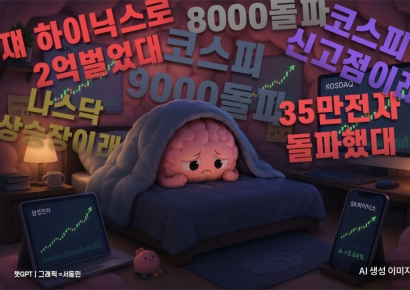 "A Friend Saying 'I Actually Made 200 Million Won with SK hynix' Feels Like Four Weeks' Worth of Pain?"
- After Finally Repaying 15 Billion Won in Debt, Local Governments Face Another Huge Bill... Aging Infrastructure Keeps Them Struggling [Infra, From Construction to Replacement] ⑦
- "Actual Number Likely Higher" 1,645 Infected Sparks Emergency... Parasitic Disease Spreads in US
- "I'll Give You an Extra 1.4 Million Won a Month, But..." Major Firms Make Bold Moves, Even Conservative Japan Is Stirred
- 'What's Going On with Daiso Sunscreen?' YouTube Uproar over "30 Million Won Clinical Trial"—The Truth Behind the 'SPF Shortfall' Controversy [Why&Next]
Yoonjong Jeon, President of the Korea Institute for Advancement of Technology (KIAT), who attended as a discussion panelist, commented on the use of corporate profits: "Corporate profits should be viewed as the result of taking on risk and committing fully to global innovation," adding, "Special purpose taxes serve only to heighten uncertainty in the business environment and ultimately undermine corporate activities."
© The Asia Business Daily. All rights reserved. Unauthorized AI training and use prohibited.