Anti-Corruption Commission: "Resolving Collective Complaints and Strict Action on Bid-Rigging"... Key Priorities for Second Half of the Year
Resolving 130 Prolonged Grievance Petitions
Establishment of "Youth Policy Panel" on People’s Idea Box
The Anti-Corruption and Civil Rights Commission announced that, in the second half of the year, it will resolve prolonged collective and exceptional civil complaints and strictly respond to structural corruption acts such as bid-rigging and improper bonus payments.
On July 16, the Anti-Corruption and Civil Rights Commission held a joint briefing attended by President Lee Jaemyung and announced four major policy priorities for the second half of the year, focusing on these points. The policy directions for the latter half of the year were set as follows: ▲ improving quality of life for citizens through protection of civil rights; ▲ realizing a normal society that meets public expectations.

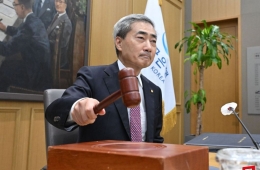
Jeong Ilyeon, Chairman of the Anti-Corruption and Civil Rights Commission, is announcing the key achievements of the first anniversary of the People’s Sovereignty Government at the Government Seoul Office in Jongno-gu, Seoul. Photo by Yonhap News
View original imageFirst, the commission plans to resolve longstanding grievance petitions. Based on the roadmap for resolving collective and exceptional civil complaints announced this month, conflict resolution officers at each authority will collaborate with civilian advisors who are private sector experts, with the aim of resolving 130 cases of collective civil complaints in the second half of the year. In addition, complaints from vulnerable groups will be managed with special focus, support for emergency living expenses will be linked, and the field-oriented "Mobile Civil Complaint Center" will expand to 74 operations in the second half of the year.
Opportunities for young people and adolescents to participate in policymaking will also be broadened. A new youth policy panel for those aged 19 to 34 will be established on the citizen participation platform "People’s Idea Box." By doing so, civil complaints raised by youths over the past year will be analyzed and their needs in military service, employment, and housing will be identified. A tentative "Citizen Proposal Policy-Making System" will also be created.
Legislative amendments to establish public sector discipline and prevent corruption will be pursued. A revised bill for the Act on the Prevention of Conflict of Interest for Public Officials and an amendment to the Anti-Graft Act will be successively submitted to the National Assembly. Through these amendments, it will become mandatory to disclose records of private sector work prior to the appointment of high-ranking officials and to strengthen sanctions against public officials who perform duties in connection with illicit solicitations.
An integrity and ethical management program to support companies’ internal controls will also be expanded. Consulting will be provided to 20 organizations during the second half of the year, and a corresponding roadmap will be drawn up in December. An amendment to the Anti-Graft Act, which would explicitly prevent public officials from soliciting illicit favors from private citizens, will also be submitted to the National Assembly in September. Additionally, a comprehensive hiring practices survey will be conducted in the second half of the year for over 1,500 quasi-governmental organizations that hired new employees last year.
Hot Picks Today
 "Are You Okay, Dad? Brother?"... 1 in 18 Men Deficient, U.S. Military to Begin Annual Screenings
Jeong Ilyeon, Chairperson of the Anti-Corruption and Civil Rights Commission, stated, "I will frequently visit civic sites, communicate directly with the people, listen attentively to their voices, and work to create a nation without foul play and privilege—a nation where the people are the true owners."
© The Asia Business Daily. All rights reserved. Unauthorized AI training and use prohibited.