[New York Stock Market] Indexes End Higher on CPI Slowdown and Semiconductor Rebound
International Oil Prices End Up Over 1%
CPI Slows More Than Expected
2- and 10-Year U.S. Treasury Yields Fall
On the 14th (local time), all three major U.S. stock indices closed higher on the New York Stock Exchange. The rally was driven by the semiconductor sector rebounding after the U.S. June Consumer Price Index (CPI) growth rate showed an unexpected slowdown. In addition, U.S. President Donald Trump retracted his plan to impose tolls on ships passing through the Strait of Hormuz just one day after announcing it, which kept the increase in international oil prices limited.
On the New York Stock Exchange (NYSE), the Dow Jones Industrial Average (the Dow) closed at 52,508.27, up 9.63 points (0.02%) from the previous trading day. The large-cap S&P 500 Index rose 28.25 points (0.38%) to 7,543.59, while the tech-heavy Nasdaq gained 233.83 points (0.90%) to finish at 26,107.00.
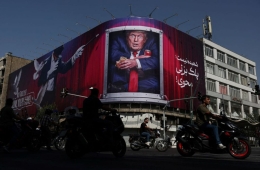
![[New York Stock Market] Indexes End Higher on CPI Slowdown and Semiconductor Rebound](http://www.asiae.co.kr/news/img_view.htm?img=2026071504522546117_1784058745.jpg)
June CPI Growth Slows... July Rate Hike Odds Drop
The market appeared reassured by the June CPI data. According to the U.S. Department of Labor, the June all-items CPI fell by 0.4% month-on-month on a seasonally adjusted basis. This decline, lower than the market expectation of a 0.1% decrease, represents the largest drop since April 2020, when the index fell by 0.8%.
The core CPI—excluding food and energy—was flat (0.0%) month-on-month. This was also below the market consensus for a 0.2% increase, and the rise was more moderate than May’s 0.2% uptick.
According to CME FedWatch, the federal funds futures market now reflects an 87.7% probability that interest rates will be kept on hold at the upcoming Federal Open Market Committee (FOMC) meeting on the 29th. Meanwhile, the odds of a 25-basis-point (1 bp = 0.01 percentage point) rate hike dropped from 41.7% the previous day to 12.3%.
Skyler Wynand, Chief Information Officer (CIO) at Reagan Capital, commented, “A weaker-than-expected CPI print suggests that the surge in inflation triggered by the Iran war is easing; however, since tensions between the U.S. and Iran have escalated significantly in recent days, this relief may only be temporary.”
He continued, “Weak inflation data is likely to cause the Federal Reserve to remain on hold for the time being and reduce the probability of a rate hike. However, investors should remember that Fed Chair Kevin Warsh has taken a consistently hawkish (tightening-oriented) stance in nearly all his comments during his brief tenure so far.”
Warsh: "Won't Tolerate Inflation"
Indeed, Chair Warsh made it clear that it was too soon to declare victory in the battle against inflation, despite the much slower-than-expected rise in June consumer prices.
At a U.S. House Financial Services Committee hearing on this day, Warsh said, “Some may look at the numbers released this morning and say, ‘The mission is accomplished and everything is fine,’ but that’s not my view.”
He then made it clear that the Fed would not alter policy direction based on one month’s price data alone. Warsh stated, “Our committee members will not tolerate persistently high levels of inflation,” adding, “We collectively share a firm determination to restore price stability.”
In particular, he emphasized that ultimate responsibility for inflation rests with the Federal Reserve. He stated, “Inflation is a matter of choice. Now is not the time to shift responsibility elsewhere. The Fed is able to achieve price stability, and it will do so.”
Semiconductor Stocks Rebound... Hormuz Toll Plan Withdrawn
The rebound in the semiconductor sector also boosted indexes. Applied Materials rose 3.53%, Micron gained 4.92%, AMD was up 2.57%, and Intel ended higher by 4.50%.
After President Trump withdrew the plan to impose tolls on ships passing through the Strait of Hormuz, international oil prices fell from their peaks. However, maintaining the blockade of Iranian waters kept prices on an upward trend by the close.
On the New York Mercantile Exchange, West Texas Intermediate (WTI) crude for August delivery rose 1.5% from the previous session to $79.34 per barrel. On the ICE Futures Exchange, September Brent crude climbed 1.7% to $84.73 per barrel.
Hot Picks Today
 Wealth Surpasses 20 Quadrillion Won... The Super-Rich Score Big, But Where Did the Money Flow?
- "Spend 200,000 Won, Get 100,000 Won Back?"... Government's Bold Move Unveiled [Essential Tips for Benefits]
- "Even as Stocks Tumble, This ETF Stands Strong"... The Secret Behind the Steadily Rising ETF [Weekend Money]
- Starbucks' Sales Slump Reverses: Surprise Comeback Against Twosome Place as Card Payments Rebound
- "Just Drinking to Lift Your Mood"...Unexpected Warning: Raises Risk of Cancer Death
Meanwhile, the yield on the 10-year U.S. Treasury note dropped 2.3 basis points from the previous session to 4.587%. The yield on the 2-year Treasury note fell 6.7 basis points to 4.196%.
© The Asia Business Daily. All rights reserved. Unauthorized AI training and use prohibited.