SME Sector Expresses Regret Over Minimum Wage Hike: "Beyond Field Payment Capacity"
10,700 Won Finalized... 3.7% Increase From This Year
"Measures Needed to Protect Jobs for Vulnerable Groups"
The minimum wage for next year has been set at 10,700 won per hour, an increase of 3.7% (380 won) from this year. The small and medium-sized business community has expressed regret, stating that business burdens on micro-enterprises and small business owners will increase.

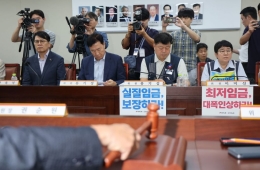
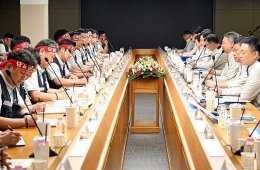
Members of the Korea Federation of Small and Medium Business held a press conference on the 2nd in front of the Minimum Wage Commission at the Government Complex Sejong, opposing the minimum wage increase for next year. Photo by Yonhap News
View original imageOn July 14, the Korea Federation of SMEs issued an official commentary, saying, "While the economy is growing thanks to strong exports and improved performances by large companies, small and medium-sized enterprises (SMEs) as well as small business owners are still facing difficulties due to rising prices and sluggish domestic consumption. Many SMEs and small business owners have been appealing for differentiated application of the minimum wage by industry, as well as for a decrease or freeze in the minimum wage for vulnerable sectors. However, this decision, which is beyond the payment capacity at the grassroots level, has only led to further disappointment."
On this day, the Minimum Wage Commission held its 14th plenary session and decided to set next year's minimum wage at 10,700 won per hour. This equates to a monthly wage of 2,236,300 won (based on a 40-hour work week and 209 working hours per month). Previously, labor groups had proposed an initial demand for a minimum wage of 12,000 won per hour—a 16.3% increase from this year—while employers called for a freeze at this year's rate of 10,320 won.
The Korea Federation of SMEs stated, "The SME sector will strive to fulfill the obligation to pay the minimum wage and maintain employment, but micro-enterprises and small business owners on the brink may be forced to reduce jobs or close down due to excessive labor cost burdens. Ultimately, the burden will fall on vulnerable workers."
Hot Picks Today
 "A Friend Saying 'I Actually Made 200 Million Won with SK hynix' Feels Like Four Weeks' Worth of Pain?"
- "I'll Give You an Extra 1.4 Million Won a Month, But..." Major Firms Make Bold Moves, Even Conservative Japan Is Stirred
- [Exclusive] Hyundai Motor Affiliates Also Halt Operations... Supply Chain on Alert Amid 'Domino Strikes'
- Amid 'Four Millionnix' Hopes, Spotlight Returns to the Lone Securities Firm That Set 'One Point Eight Five Million' Target
- 'What’s Going On With Daiso Sunscreen?' Viral YouTube Claims "30 Million Won Clinical Trial" — The Truth Behind the 'Below SPF' Controversy [Why&Next]
They added, "The government must swiftly come up with support measures to alleviate the business burden on SMEs and small business owners, and to protect jobs for vulnerable groups," stressing, "For a sustainable minimum wage system, differentiated application by industry should be implemented, and the payment capacity of businesses should be reflected in the criteria for determining the minimum wage in order to improve the system."
© The Asia Business Daily. All rights reserved. Unauthorized AI training and use prohibited.