"Government Tightens Loans While Promising More Supply—Contradictions Exposed at First Real Estate Forum (Comprehensive)"
Ahead of Comprehensive Real Estate Measures,
60 Participants Gather from Ministry, Academia, and More
At the first public discussion ahead of the government’s comprehensive real estate policy announcement at the end of this month, participants raised repeated concerns that government loan regulations intended to curb demand are actually blocking housing supply. On the ground at redevelopment, reconstruction, and urban public housing complex projects, stakeholders pointed out that financing for relocation has been cut off. Meanwhile, developers of non-apartment new constructions and registered rental housing operators complained that it is difficult to secure acquisition funds due to the loan-to-value (LTV) ratio being regulated at 0%.
On July 14, the Ministry of Land, Infrastructure and Transport held a "Listening Forum on Housing Supply Expansion Measures for National Housing Stability" at Jeongdong 1928 Art Center in Jung-gu, Seoul, with around 60 participants including Minister Yoonduk Kim, First Vice Minister Itak Kim, officials from the Ministry, representatives from academia, industry, media, civic groups, as well as young people and newlyweds. The forum covered seven agenda items, focusing on restoring non-apartment housing supply, redevelopment and reconstruction, urban public land, ratios of public sales and rental housing, diversification of rental housing, housing costs for youth and newlyweds, and urban and architectural regulation.
"Demand Suppression Now Blocking Supply"

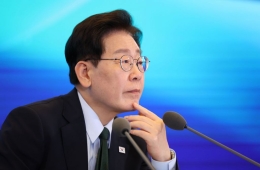
Yoonduk Kim, Minister of Land, Infrastructure and Transport, is speaking at the discussion session on measures to expand housing supply for national residential stability held at Jeongdong 1928 Art Center in Jung-gu, Seoul on the 14th. Ministry of Land, Infrastructure and Transport
View original imageThe issue of financing topped the list of industry concerns. Measures that limited mortgage loans for housing transactions and rental business operators, intended to control housing prices, now also restrict fresh funding for non-apartment new builds.
Kang Kyunghoon, CEO of Jingyeong Construction, participated as a panelist and said, “Since the 9/7 measures, LTV for housing sales agents and rental operators has been limited to 0%, and the same restrictions apply to housing development sales operators who provide new supply.” He added, “We barely keep operations going by temporarily changing the building’s use to neighborhood commercial or by hastily borrowing small sums from savings banks for short periods before final payment.” Kang stressed, “There needs to be a distinction between operators who want to hold properties and those who want to demolish and supply new homes. Please ease the LTV 0% regulation for housing development sales operators.”
Rental housing operators are also experiencing shrinking funding channels. The head of policy at the Seoul Real Estate Policy Development Center said, “There are 407,000 registered private rental homes in Seoul, of which 340,000 are non-apartments such as officetels, villas, and multi-family buildings. These homes serve youth, newlyweds, and early-career individuals, but the LTV 0% regulation makes new acquisitions virtually impossible.” The official added, “A healthy cycle depends on developers building and purchase-type rental operators acquiring the properties, but that link is now broken.” Since apartment rental registration became impossible after the July 2020 measures, if the remaining non-apartment registered rental market shrinks, the overall supply of institutional rental housing will decrease.
Yongjin Kim, Head of REITs Division 1 at Korea Land & Housing Trust, pointed out, “Rental homes must be operated for more than 10 years after completion, and no domestic bank offers long-term fixed-rate loans.” He continued, “Some life and non-life insurers provide 13-year loans backed by the Housing and Urban Guarantee Corporation (HUG), but even those rates exceed 5%.” He suggested looking to the U.S. mortgage-backed securities (MBS) system for 30-year fixed-rate loans and establishing a long-term, low-interest funding mechanism. Kim also noted a severe bottleneck in HUG’s rental business guarantee screening, saying, “Operators can’t proceed until they pass the HUG fund investment review, and currently about 20,000 housing units are awaiting approval. If this is resolved quickly, supply can increase rapidly.”
Redevelopment and reconstruction projects are also struggling to secure relocation funds due to loan restrictions. Myunghee Kim, committee chair of the urban complex project area Singu2 District in Seoul, noted, “Redevelopment, reconstruction, and urban complex projects all require residents to relocate before demolition, and work can only begin after demolition. But without financial institutions offering relocation loans, many projects risk delays as residents cannot secure temporary deposit funds.”
She stressed, “Relocation loans should be viewed as livelihood loans secured by existing assets rather than speculative funding. The government promotes urban complex projects as a fast and innovative supply method, yet crucial financing for these projects is blocked, which is contradictory.” She added that, due to project delays, construction costs per pyeong in Sinbanpo District 22, Seocho-gu, soared from 5.69 million won in 2017 to 13 million won in 2023—more than doubling.
There was also debate regarding the symbolic demand suppression tool: regulated area designation. Deokrae Kim, Senior Research Fellow at the Housing Industry Research Institute, argued, “Overlapping designations of speculative areas, overheated speculation zones, and adjustment targeting areas, plus additional land transaction permit zones, make redevelopment and housing supply difficult and simply spread regulatory side effects elsewhere.” She called for a comprehensive review or a new system to ensure regulations do not hinder real demand. Hyoseon Kim, Lead Real Estate Specialist at KB Kookmin Bank, added, “Both Gangnam District and Giheung District in Yongin face the same regulations, but housing instability must not become a side effect of controlling prices.”
On the other hand, Eunyoung Choi, Director of the Korea Urban Research Institute, rebutted, “After Seoul lifted its land transaction permit zones in February last year, the average apartment price in Seoul exceeded 1.4 billion won in the first quarter. The negative impact of easily lifting regulated area designations must be carefully considered.”
"'Complaint Stage' Regrettable... Government of Lee Jaemyung, No Housing Welfare Roadmap in Over a Year"

A scene from the Listening Forum on Housing Supply Expansion Measures for National Housing Stability held on the 14th at the Jeongdong 1928 Art Center in Jung-gu, Seoul. Ministry of Land, Infrastructure and Transport
View original imageHousing welfare experts and civic organizations criticized the supply-side calls for regulatory relaxation. Director Eunyoung Choi lamented, “Requests to grant floor area ratio benefits equally to private and public developers have turned the forum into a stage for business operators’ complaints. It’s unfortunate how little voice tenants have here.” She continued, “Over a year since the Lee Jaemyung administration began, no roadmap for housing welfare has been presented. Asking for opinions without a government plan, for example on public rental and sales ratios, is inappropriate.”
Haeun Choi, activist with the Mindalpengyi Union, added, “According to the 2024 housing status survey, 82.6% of young people are tenants, spending 31% of minimum wage on housing.” She emphasized, “Given the reality that most people are tenants, housing supply policy should be centered on tenant protection.”
This forum was the first in a three-day relay of discussions starting with the Ministry of Land, Infrastructure and Transport (supply), followed by the Financial Services Commission (finance) and the Ministry of Economy and Finance (taxation). The results will be reflected in the government's real estate policy direction after a presidential discussion on July 23. In his closing remarks, Minister Yoonduk Kim said, “As minister, the most challenging issue seems to be housing,” and promised, “We will thoroughly organize and report your feedback, and work together with ministry staff to make progress against the so-called real estate crisis.”
Hot Picks Today
![Claims That "Daiso Is Being Shut Down to Save AliExpress and Temu" Spread Widely... A Fact-Check [Why&Next]](https://cwcontent.asiae.co.kr/asiaresize/93/2023121315590987574_1702450749.jpg) Claims That "Daiso Is Being Shut Down to Save AliExpress and Temu" Spread Widely... A Fact-Check [Why&Next]
Claims That "Daiso Is Being Shut Down to Save AliExpress and Temu" Spread Widely... A Fact-Check [Why&Next]
- "Three-Star Rooms at 980,000 Won a Night, Five-Star at 2 Million"... Busan Fireworks Festival Seats Cost 100,000 Won, but Hotel Views Bring Another Price-Gouging Row
- Seoul to Launch Second Session of 'Urban Renewal Academy' on Oct. 15
- "All He Did Was Reheat and Eat Fried Rice Made the Day Before"... Man in His 20s Nearly Needed a Liver Transplant
- "Looks Like They're Having an Affair": What If You Opened a KakaoTalk Chat, Filmed It, and Shared the Video With Coworkers?
Meanwhile, on this day, Professor Myunghyun Jin of Myongji University delivered the keynote on “Measures to Expand Housing Supply for National Housing Stability” and Yongman Lee, Professor Emeritus of Hansung University, moderated the forum. Additional panelists included Hubin Lee, Professor at Kangwon National University; Cheongyu Park, head of the Housing and Real Estate Research Division at the Korea Research Institute for Human Settlements; Deokrae Kim, Senior Research Fellow at the Housing Industry Research Institute; Misook Seo, department head at Yonhap News; Hyoseon Kim, Lead Real Estate Specialist at KB Kookmin Bank; Eunyoung Choi, Director of the Korea Urban Research Institute; Jinsu Kim, CEO of JD General Construction; Yongjin Kim, Head of REITs Division 1 at Korea Land & Housing Trust; and Haeun Choi, activist at Mindalpengyi Union. Ministry officials—the main authorities in charge—did not speak but only listened to participants’ feedback.
© The Asia Business Daily. All rights reserved. Unauthorized AI training and use prohibited.