Seo Yeongmi Calls for Clear Principles on Government Office Allocation in Jeonnam-Gwangju Integrated Special City
Without Clear Principles for Allocating Functions and Authority,
Restructuring Will Fuel Recurring Conflicts
Concerns Over Anxiety and Confusion in Public Service Appointments... Call for Transparency
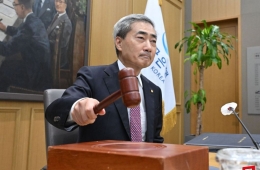
As conflicts between government office buildings regarding the core functions and allocation of powers in the Jeonnam-Gwangju Integrated Special City are causing delays in organizational restructuring and subsequent appointments, Yeongmi Seo, a proportional representative of the Jguk Innovation Party and member of the Jeonnam-Gwangju Integrated Special City Council, called on the administration to establish clear principles and ensure information disclosure.
During the Administrative and Finance Committee work report session at the city council on July 14, Seo stated, "The current delay in organizational restructuring is not simply an issue of administrative procedures. It is a conflict over which government office should house the essential central functions and powers of the integrated special city."

Seo added, "Without clear principles regarding the number of departments at each building and the distribution of key powers, competition between regions may arise again with every restructuring, further increasing anxiety and confusion among public servants regarding personnel matters. If the administration continues to repeat internal consultations without transparently explaining the causes and issues behind these conflicts, it could undermine citizens' trust in integrated administration."
She further emphasized that the success or failure of the integrated special city depends not on disputes over government office allocations but on tangible outcomes that citizens can truly experience.
Seo remarked, "The ultimate test of integration between Jeonnam and Gwangju lies in how much citizens' daily lives have genuinely improved after the merger. Over the next four years, we must resolve long-standing regional issues such as relocating the military airport and establishing a metropolitan transportation network, while also delivering results in future industrial sectors like AI, semiconductors, and energy."
Hot Picks Today
 "Are You Okay, Dad? Brother?"... 1 in 18 Men Deficient, U.S. Military to Begin Annual Screenings
- "What Did He See?"... Warren Buffett Sells Stocks and Piles Up Cash
- [PolPol News] President Lee's Approval Drops 3 Points to 55%... 61% Support Creation of Future Response Fund
- "One Year from Now Will Be Worse Hell"... 9 Out of 10 Japanese Fear 'Runaway Inflation'
- "How Can So Many Fit on One Boat?"...Crowds in Red: What Is This?
Finally, she stated, "Only when these achievements are distributed evenly, rather than concentrated in specific areas, can a truly practical integrated special city be realized for all citizens. Administrative capabilities should be focused on improving citizens' lives, rather than on conflicts over the distribution of power among office buildings."
© The Asia Business Daily. All rights reserved. Unauthorized AI training and use prohibited.