[Exclusive] Hyundai Motor Affiliates Also Halt Operations... Supply Chain on Alert Amid 'Domino Strikes'
Partial Strike by Hyundai Mobis Module and Parts Subsidiaries Planned for July 15
Four-Hour Strikes Scheduled for Day and Night Shifts... Disruption in Core Parts Supply Expected
Hyundai Motor Union Increases Pressure
"We Will Show What
The unions of Motras and Unitus, both manufacturing subsidiaries of Hyundai Mobis, have also announced a partial strike for July 15. As the Hyundai Motor labor union began a three-day partial strike on July 13 following a breakdown in this year's wage and collective bargaining negotiations, concerns have intensified over production disruptions as the key parts affiliates' unions join the industrial action.
According to the automotive industry on July 14, the unions at Motras and Unitus, subsidiaries of Hyundai Mobis that produce core modules and parts for Hyundai Motor and Kia, will launch a partial strike on July 15. Motras manufactures three main modules: driver's seat, chassis, and front-end, while Unitus supplies key safety components, including airbags, steering systems, and braking systems.

On the afternoon of the 13th, when the Hyundai Motor Branch of the Korean Metal Workers' Union began a three-day partial strike, morning shift workers at the Hyundai Motor Ulsan Plant's Myeongchon Main Gate in Buk-gu, Ulsan, left work two hours early. Photo by Yonhap News
View original imageThe Motras and Unitus unions plan to hold two four-hour strikes, one during the day shift and one during the night shift, on July 15. Last year, they split their walkout into two six-hour stoppages in the morning and afternoon, which resulted in a decline in operating rates at major production lines in Hyundai Motor’s Ulsan Plant, with some lines experiencing total shutdowns.
Industry insiders point out that a strike at parts affiliates can impact production lines more directly than a work stoppage at the finished vehicle assembly plants. Hyundai Motor Group’s production system follows a Just-In-Time (JIT) methodology, minimizing inventory and having parts supplied as needed. If the supply of critical components is interrupted, it will immediately affect vehicle production lines.
Motras and Unitus have yet to reach an agreement in wage negotiations. Last year, after the conclusion of Hyundai Motor's labor negotiations, talks at these companies dragged on as they demanded a similar level of wages and performance bonuses, and continued partial strikes eventually impacted production lines at Hyundai Motor and Kia.
In response, management has launched efforts to persuade the unions.
On July 14, Hee Min Lee, CEO of Motras, said in a message distributed to all staff, "Our clients are planning to ramp up production in the second half of the year to make up for disruptions experienced in the first half, and thousands of parts suppliers are preparing in accordance. The only way to ensure stability in the current climate is through market trust."
He emphasized, "Only the trust we've built with customers through stable production and supply can protect all our jobs and our own stability. There are sufficient solutions to resolve labor-management differences that do not involve disrupting production."
With both the Hyundai Motor union and the unions at its parts affiliates engaging in industrial action simultaneously, the risk of group-wide production disruptions is mounting. Hyundai Motor’s labor and management have held 15 rounds of talks to date, but disagreements remain regarding base wage increases, performance bonuses, and employment issues arising from the introduction of AI and humanoid robots.
The Hyundai Motor union has escalated its pressure campaign. If management fails to submit a new offer, the Central Dispute Countermeasures Committee plans to adopt even stronger directives at its July 16 meeting. The union is currently in the midst of a three-day partial strike that started on July 13, with each shift walking out for two hours per day.
On July 14, the Hyundai Motor branch of the Korean Metal Workers’ Union stated via a Dispute Countermeasures Committee statement, “Management thinks that nothing needs to be yielded even if a strike occurs? The branch will show what an all-out war truly means.”
The union added, “Currently, neither practical discussions nor negotiations are taking place,” and warned, “Unless management swiftly produces a forward-looking proposal and focuses on halting this crisis, we will not rule out a prolonged struggle if no additional offers are forthcoming.”
The union is demanding a fair performance bonus, a 50% increase in incentive payments, a practical proposal for extending the retirement age, the reinstatement of dismissed workers, and the withdrawal of provisional seizure claims. “If there is no forward-looking offer, do not even dream of resuming talks,” the union warned.
Hot Picks Today
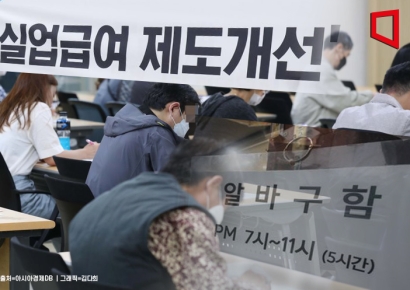 "Let's Reward Those Who Find Jobs Quickly and Stay Long-Term"... Petition Takes Aim at Unemployment Benefits for Voluntary Quitters
- "Your House Is a Mess": Cleaning All Night Before Friends Come Over? Why Home Gatherings Are Disappearing [The World Is Z Now]
- "Was He Looking Because She Was Prettier Than Me?"... Tracking Her Boyfriend's Gaze Reveals a Twist [Experiment Notes]
- "Tired of Seeing My Account in the Red"... 'This' Must Be Tamed for Korean Stocks to Take Off, They Say [Weekend Money]
- "Shares Hit Daily Limit on 56 Billion Won News"... Marubeni Launches Tender Offer for K-Beauty Firm of 'Chae Sira's Husband' Kim Taewook
Meanwhile, due to the union’s partial strike, Hyundai Motor has announced a halt in production across all its locations, including its Ulsan plant. The reason cited for the production suspension is “partial strikes related to collective bargaining,” and management stated that “partial production disruptions for all vehicle types” are expected as a result.
© The Asia Business Daily. All rights reserved. Unauthorized AI training and use prohibited.