Enforcement Decree of AI Framework Act Approved by Cabinet: "Proactive Adoption of AI Products and Services in the Public Sector"
Expanded Definition of AI-Vulnerable Groups
Now Includes Women with Career Interruptions and Job Seekers

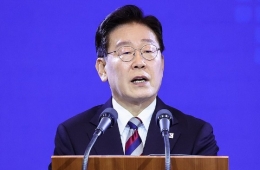
On the 26th, the 'Basic Act on the Development of Artificial Intelligence and the Establishment of Trust (AI Basic Act)' was passed at the plenary session of the National Assembly. Photo by Hyunmin Kim
View original imageThe Ministry of Science and ICT announced that on July 14, the Cabinet approved the amendment to the Enforcement Decree of the "Framework Act on the Development of Artificial Intelligence and the Establishment of Trust" (AI Framework Act), which specifies the matters delegated in the revised law, enacted on January 20.
The AI Framework Act includes the following measures: prioritizing AI products and services in public procurement; supporting utilization costs for AI products and services; improving access for AI-vulnerable groups; and supporting AI startups through the Venture Investment Fund of Funds. The Act will go into effect on July 21.
With the implementation of the AI Framework Act, a system will be established that requires national agencies and related organizations to consider AI products and services as a priority when introducing products and services needed for their work. This allows the public sector to serve as a testbed for innovative AI products and services, facilitating their proactive adoption and use.
AI products and services subject to this prioritization are stipulated in the Enforcement Decree and must be those verified by the Minister of Science and ICT. A technical procedure has been set up to confirm whether AI is actually utilized in the product or service.
In addition, a draft notice titled "Regulation on the Operation of the AI Product and Service Verification Procedure," which establishes the relevant procedures and criteria, was pre-announced on June 26. The Ministry intends to finalize and promulgate the notice to coincide with the implementation of the system, after taking into account feedback received during the pre-announcement period.
Anyone seeking verification for an AI product or service must apply to the Korea Artificial Intelligence and Software Industry Association (KOSA). KOSA reviews the application documents and, if nothing is missing, requests a technical evaluation from the Telecommunications Technology Association (TTA) to assess AI utilization. TTA reviews the submitted documents to determine whether AI is utilized, sends the results back to KOSA, and KOSA then issues a certificate of verification for the AI product or service.
AI products and services with a certificate of verification will be eligible for preferential treatment in the procurement market starting in August, including relaxed requirements and procedures for participation in Multiple Award Schedules (MAS), an additional 1.5 technical points when evaluating credibility for total amount contracts, exemption from delivery performance requirements in software (SW) unit price contracts, and recognition of technical evidence when applying for designation as innovative AI SW products.
Furthermore, the definition of "AI-vulnerable groups" will be expanded. In addition to existing digitally vulnerable groups such as people with disabilities, those aged 65 or older, basic livelihood security recipients, and the near-poor, the scope has been broadened to include women with career interruptions and job seekers who face difficulty accessing high-performance AI services. This aims to help all citizens adapt to the rapidly changing society driven by AI adoption.
A legal basis has also been established for the government and local governments to support the utilization costs of AI products and services. In addition to people with disabilities, seniors, and job seekers who are considered AI-vulnerable, the scope of support has been expanded to include students at non-metropolitan universities, as well as science and engineering personnel. This will enable broad support within the budgetary limits as specified in the Enforcement Decree.
The procedures and requirements for establishing and operating AI research institutes have also been specified. AI research institutes may be established by various entities, including universities, businesses, government-funded research institutes, and non-profit organizations. The establishment requirements include financial soundness, as well as the requirement to develop security measures and internal management regulations.
Hot Picks Today
!["Please Teach Us the Technology"—Korea Once Sought Help from Japan... Now Threatens the Origin Country After 65 Years [Advance of K-Ramen]①](https://cwcontent.asiae.co.kr/asiaresize/93/2024110818333992902_1731058419.jpg) "Please Teach Us the Technology"—Korea Once Sought Help from Japan... Now Threatens the Origin Country After 65 Years [Advance of K-Ramen]①
"Please Teach Us the Technology"—Korea Once Sought Help from Japan... Now Threatens the Origin Country After 65 Years [Advance of K-Ramen]①
- "It's Hard to Succeed With Ordinary Credentials"... U.S. Parents Sending Children on 100 Million Won Around-the-World Programs
- Learning to Walk by Bumping Into Walls... World's First 'Robot Kindergarten' Opens in Beijing, China
- "Sea Hidden by Crowds": Greek Beach Becomes "Hell" After SNS Fame
- "Just a Month After Joining, I Feel Older... My Company Won't Safeguard My Looks" Office Workers' Survival Tactics Go Viral in China
Vice Prime Minister and Minister of Science and ICT, Kiyoung Park, stated, "With the enforcement of the revised AI Framework Act, the adoption and use of AI in the public sector will accelerate, and public accessibility to AI will also increase. In particular, by introducing the AI product and service verification system, the public sector can act as a catalyst for the rapid adoption of innovative AI technologies by the private sector and provide even better public services to the people."
© The Asia Business Daily. All rights reserved. Unauthorized AI training and use prohibited.