"Skipping Cooking for Rest After Work, Lying in Bed"... China's Gen Z Falls for 'Once-a-Week Meals' [Z-World Today]
The 'Human Food' Trend Spreads, Following "Tang Ping"
"A New Way to Survive"… Widely Shared on SNS
"Saves Time and Energy Spent on Cooking"
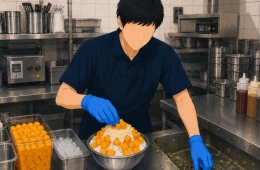
As the "tangping" (lying flat) culture of living with minimal effort has taken root among Chinese youth, a so-called "Human Food" trend, aiming to simplify meals as much as possible, is emerging as a new fad. This involves preparing all the necessary vegetables and meat for each meal at once, storing them frozen, and then heating up small portions at mealtime. This meal routine has gained attention among young office workers who lack the time and energy to cook due to overwhelming work commitments, as it allows them to save both time and energy.
"Make it once, eat for a week"... The "Human Food" craze in China

Recently, the South China Morning Post (SCMP) spotlighted the "Human Food" trend. The outlet reported, "Chinese young people are taking the tangping lifestyle a step further," adding, "To conserve energy in their daily lives, they are preparing and eating Human Food." The report also noted, "Chinese social media is being flooded with posts introducing Human Food as a new way to survive."
The ingredients used in Human Food are mostly vegetables and proteins commonly found in salads, such as broccoli, bell peppers, mushrooms, corn, beef, and shrimp. Users pre-prepare and cook these foods, freeze them, and then heat small amounts in the microwave with a simple addition of salt or seasoning for a quick meal. The media explained that the term "Human Food" is derived from pet food for dogs and cats, emphasizing the concept of eating pre-prepared and convenient meals.
The "Human Food" hashtag has garnered more than 5.4 million views on Chinese social media, reflecting its growing popularity. Busy office workers cite the ability to prepare all their meals for a week in one go—eliminating the need to cook every day—as one of the main advantages. One user commented, "It fills me up, provides sufficient nutrition, and isn't a hassle," while another noted, "Now I can use the time I used to spend cooking for more important things."
Debate over the Human Food trend in China: "Healthy food" vs. "It's like feed"

SCMP analyzed that the demanding work environment of Chinese urban professionals has contributed to the popularity of this trend. In China, long working hours are the norm, and due to high housing prices and rents, many workers live on the outskirts of cities, which means they often lack both the time and energy to cook after long commutes.
Human Food is also gaining traction among fitness enthusiasts, who see it as a form of "healthy fast food" because the use of frozen vegetables and meat simplifies the cooking process and minimizes processing and seasoning. One user even claimed, "I lost 2 kg after eating Human Food for 8 days."
On the other hand, there are also many who reject this standardized style of eating, likening it to animal feed. Some social media users voiced negative reactions: "If we eat like pets, what's left to enjoy in life?" and "Thawed chicken tastes so bad. In the end, my Human Food just became dog food."
There are also concerns about the nutritional aspects. One social media user in the food industry commented positively on the use of a variety of ingredients but pointed out, "Some nutrients are better absorbed when consumed with fat," and cautioned that "simply boiling or microwaving is not always the best cooking method."
Last year, "human feed" made headlines too: "Inspired by cat and dog food"

A meal replacement powder product that gained attention by promoting itself as "human feed." According to China's Xinhua News Agency
View original imageMeanwhile, as a culture that prioritizes efficiency and convenience in food spreads, the meal replacement market is also expanding. In China, the meal replacement brand Luo Pan drew significant attention on social media by marketing its powdered meal replacement product as "human feed." According to China's Xinhua News Agency, 24,000 units of this product were sold within 72 hours of its launch last year, and the brand's founder stated that the idea came from cat and dog food, with the goal of creating a standardized, nutritionally balanced meal for people.
Zhou Bin, a doctor at Pudong New Area People's Hospital, assessed that while the term "human feed" may sound playful, it accurately reflects the practical concerns of modern youth. He added, "The drive for efficiency among young people, faced with fast-paced lives and high work intensity, is extending to their diets." He explained, "In my practice, I frequently see single office workers in their 30s substitute one meal a day with a meal replacement and regularly monitor their nutritional status due to busy work schedules."
Hot Picks Today
 "Can't Get This in the U.S., Korea Is the Best": Americans Flock to Korea as 'K-Comprehensive Health Check-ups' Surge
- "Broke the Piggy Bank... Salaries Just Aren't Enough": The Stocks Individual Investors Are Rushing to Buy Worldwide
- Political Circles Favor 'Selective', Legal Community Insists on 'Full'... Tug of War Over Scope of Supplementary Investigative Authority
- "Stand Up"—Young Fan Struck for Not Rising During National Anthem Sparks Uproar at U.S. Baseball Stadium
- Chinese Group Tourists Abandoned from Noon to Evening After Refusing Shopping... Korea Embarrassed by ‘Low-Quality Tours Focused Only on Headcount’
He further analyzed, "Overall, consumer preference for meal replacements is rising, and as the demand for weight management, convenient meals, and post-exercise protein and energy supplementation grows, the meal replacement market is expanding."
© The Asia Business Daily. All rights reserved. Unauthorized AI training and use prohibited.