KOSPI Manages Rebound at the Brink... Further Gains Depend on This
KOSPI rebounds after nearly 9% drop the previous day
U.S. June CPI data on the 14th may help improve sentiment
Key to watch: CAPEX outlook in big tech earnings later this month

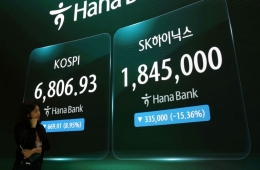
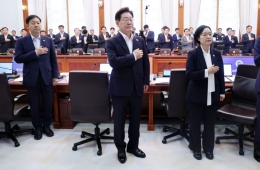
On the 14th, employees are monitoring the stock market and exchange rates in the dealing room at the Hana Bank headquarters in Jung-gu, Seoul. Although the market closed at 6,806.93 after a sharp drop of 8.95% the previous day, the index is expanding its gains today, aiming to break into the 7,000 level. July 14, 2026. Photo by Jo Yongjun
View original imageThe KOSPI succeeded in rebounding after a sharp decline the previous day. The influx of bargain hunting appears to have been triggered by a combination of concerns over the escalation of war between the United States and Iran and worries that the memory semiconductor sector may have peaked, which drove the KOSPI nearly 9% lower the previous day.
KOSPI Rebounds Over 2% After Nearly 9% Plunge the Previous Day
On July 14, the KOSPI opened 0.56% lower at 6,769.06 compared to the previous session, but quickly reversed its losses and was trading at 6,952.92, up 2.14%, as of 10:01 a.m. The KOSDAQ started the day down 0.28% at 797.16 and extended its losses to 793.21.
The early morning weakness in the local market reflected declines on Wall Street, which were driven by the escalation of military confrontation between the U.S. and Iran. Overnight, the Dow Jones Industrial Average fell 0.26% compared to the previous session, the S&P 500 Index declined 0.79%, and the Nasdaq Composite Index retreated 1.55%. Leading semiconductor stocks such as Nvidia (-3.52%), Micron (-4.32%), and SanDisk (-12.63%) registered losses, dragging the Philadelphia Semiconductor Index down by 4.78%.
Tension in the global markets increased after U.S. President Donald Trump announced the resumption of a maritime blockade against Iran, pushing international oil prices and Treasury yields sharply higher. On the ICE Futures Exchange, September delivery crude oil closed at $83.30 per barrel, up 9.6% from the previous session. The yield on the U.S. 10-year Treasury note also climbed to 4.62%, hitting a one-month high.
Suh Sangyeong, Executive Director at Mirae Asset Securities, commented, "U.S. stocks declined due to increased geopolitical risks in the Middle East and weakened investment sentiment for semiconductors," adding, "The risk was exacerbated in the latter part of the session when Fed Governor Christopher Waller signaled the possibility of further tightening in the event of rising core inflation, which pushed Treasury yields even higher."
Despite the U.S. market losses, the KOSPI attempted a rebound on the back of heavy bargain hunting following its 8.95% plunge the previous day. As of 10:04 a.m., institutional investors had net purchases of 1.62 trillion won, lifting the index higher. Foreign investors were also net buyers with 210 billion won, while retail investors were net sellers of approximately 1.8 trillion won.
At 10:05 a.m., Samsung Electronics was trading at 269,500 won, up 5.89% on the previous session, leading the KOSPI's gains. SK hynix was trading 4.50% higher at 1,928,000 won. Other major semiconductor stocks, such as SK Square (up 3.45%) and Samsung Electro-Mechanics (up 2.95%), also trended higher. In contrast, other large-cap stocks, including Hyundai Motor (down 3.94%), LG Energy Solution (down 1.67%), KB Financial Group (down 3.06%), Samsung Biologics (down 2.07%), and Samsung Life Insurance (down 3.07%), recorded losses.

June U.S. CPI and Big Tech Earnings Are Crucial Turning Points
Experts have pointed out that several important indicators need to beat expectations for the local stock market to maintain its rebound. First, the U.S. Consumer Price Index (CPI) for June, which will be announced tonight in Korean time, needs to come in at or below expectations. The market expects a 3.8% year-on-year increase, an improvement over May's 4.2% advance.
According to Hana Securities, since 2022, when the CPI came in below expectations, the KOSPI’s average monthly return was 4.9%, with a 72% chance of gains. When the CPI met expectations, the monthly average return was 1.8% and the probability of an advance was 50%. Conversely, if the CPI exceeded expectations, the monthly average return was just 0.4%, with gains occurring 44% of the time. Hana Securities researcher Lee Jaeman observed, "Looking at past cases, the CPI needs to at least meet expectations for a short-term rebound in the index to be likely."
Lee Kyungmin, a researcher at Daishin Securities, also forecast, "If the upcoming CPI reading tonight confirms easing price pressure, there could be a reversal and stabilization in rising bond yields and the dollar, which would bolster global stock markets and help ease the KOSPI's sharp drop."
Earnings for the second quarter, which are set to be announced in earnest at the end of this month, are also expected to be a key turning point for the stock market. Toward the end of July, major earnings reports and conference calls for Korean companies such as Samsung Electronics and SK hynix—as well as major U.S. big tech firms—are scheduled. Such events could reduce uncertainty about the AI sector and semiconductor industry, potentially fueling hopes for earnings improvement, which may support the local stock market.
Lee Jaewon, a researcher at Yuanta Securities, said, "Big tech earnings in the U.S. and any upward adjustment to capital expenditures will be a major driver for a potential stock market rebound," adding, "In particular, Alphabet’s earnings, which will be released at 5:30 a.m. Korean time on July 23, may serve as a key gauge of future market direction."
Hot Picks Today
 "After the Rush to Samsung and Hynix, Goldman Sachs Points to Causes of Sharp KOSPI Decline"
- "I'll Give You an Extra 1.4 Million Won a Month, But..." Major Firms Make Bold Moves, Even Conservative Japan Is Stirred
- "A Friend Saying 'I Actually Made 200 Million Won with SK hynix' Feels Like Four Weeks' Worth of Pain?"
- "My Mouth Won't Open... Consult a Lawyer": The Rapid Spread of "Leave of Absence Proxy" Services in Japan
- 'What’s Going On With Daiso Sunscreen?' Viral YouTube Claims "30 Million Won Clinical Trial" — The Truth Behind the 'Below SPF' Controversy [Why&Next]
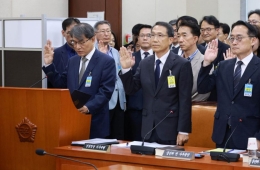
Additionally, other factors such as renewed U.S.-Iran peace negotiations, the reopening of the Strait of Hormuz, and U.S. Federal Reserve Chair Kevin Warsh's first semiannual congressional testimony on July 14 (local time) are also seen as influential points for the market's direction.
© The Asia Business Daily. All rights reserved. Unauthorized AI training and use prohibited.