[Special Report] Will the Perpetual Military Academy Integration Succeed This Time?
Part 1: How Will the Academies Be Integrated?
New Four-Year University at Jaun Base in Daejeon...
Branch-Specialized Training Begins in Senior Year
The debate about integrating the Korea Military, Naval, and Air Force Academies has reignited. In 1962, under the Park Chung-hee administration, the National Defense Committee of the National Assembly first discussed merging the academies, citing budget constraints and inefficiency in the military’s structure. In November 1964, a founding committee was even established to pursue the merger. Subsequent administrations, such as Roh Tae-woo’s push for a “Korea Armed Forces Academy” and Lee Myung-bak’s proposal for a “National Defense Academy,” also tried, but each attempt failed, largely due to resistance from each service branch and internal opposition. The current administration remains determined. This month, it plans to hold a public hearing and pursue the legislative revisions necessary to establish a unified Korea Armed Forces Academy. Opposition persists, with critics arguing that the distinct characteristics and expertise of each branch would be lost. This article examines the methods of unifying the academies, as well as the arguments for and against. <Editor’s Note>
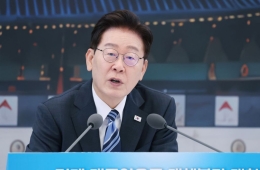
Integrating the military academies is one of President Lee Jaemyung’s campaign pledges. Last September, Ahn Kyubaek, Minister of National Defense, established the “Committee for Military Academy Reform (SAGA Committee)” as a separate working group within the Civilian-Military Joint Special Advisory Committee for Overcoming Internal Disorder and Designing Future National Defense. Progress was swift. In February this year at the Tri-Service Academy Graduation Ceremony at Gyeryongdae, President Lee officially declared the “integration of military academies.” In its comprehensive report, the SAGA Committee highlighted military academy education as the main driver for creating a world-class officer corps, emphasizing rapid response capabilities and jointness, the ability for the military to independently execute operations, and instilling the values of the Constitution and democracy.
![[Special Report] Will the Perpetual Military Academy Integration Succeed This Time?](http://www.asiae.co.kr/news/img_view.htm?img=2026071409370344952_1783989423.jpg)
The SAGA Committee has proposed establishing a specialized university called the “Korea Armed Forces Academy” (tentative name), in charge of officer training, to be operated as a national university. The Ministry of National Defense aims to hold a public hearing as early as this month and move forward with legislative revisions to create the Korea Armed Forces Academy. In September, the government plans to announce the basic integration plan for the academies. The objective is to break ground on the unified academy and admit the first cohort of students during the current administration’s term. Newly selected cadets will receive the same general education from freshman to senior year. From their fourth year, cadets will receive specialized training based on the branch they choose: the Army at Sangmu Training Center, the Air Force at the Air Force Academy in Cheongju, North Chungcheong Province, and the Navy at the Naval Academy in Jinhae, South Gyeongsang Province.
Goal: First Integrated Class Within Current Administration
However, within the armed forces, there is skepticism that integrated selection will be feasible by the 2028 academic year, when current high school sophomores enroll in university. Some point out that if the government officially pursues integrated selection for 2028, it may conflict with the university admissions advance notice system stipulated by the Higher Education Act. The current law requires universities to announce their admissions plan 1 year and 10 months before the start of the academic year. According to this regulation, the admissions plan for the 2028 academic year should already have been announced in May of this year.
Including Medical Officer Academies and Others in Jaun University Integration
The fundamental reason for the Ministry of National Defense’s push to integrate the academies is jointness. On July 1, during opening remarks at this year’s first half major commanders’ conference, Minister Ahn Kyubaek stressed, “Jointness must be ingrained in our culture,” and asked, “How much time does each branch allocate to joint training each year? What about on an individual basis?” He also cited the shortening of mandatory service, declining admissions scores, and a minimum commissioning rate of 70% as additional reasons for integration.
Infrastructure Expansion Likely Demanded in Taereung Housing Project
The Ministry of National Defense has made Army Academy relocation a prerequisite for integrating the academies. The plan is to close the Army Academy campus in Taereung, Seoul, and likely relocate it to Sangmu Training Center in Jangseong, South Jeolla Province. There are concerns that support rates may actually fall if the academy is moved to a provincial area. However, some counter that when the Korea National Police University moved from Yongin, Gyeonggi Province, to Asan, South Chungcheong Province, and the Korea Advanced Institute of Science and Technology (KAIST) relocated from Seoul to Daedeok, Daejeon, talent still flocked to the schools.
Hot Picks Today
 "I Might End Up Paying My Entire Salary Just for Interest"... Annual Per-Person Interest Could Reach 6.73 Million Won, 'Yeongkeul-jok' Lament
- "Will I Really Be Left Out If I Don't Use It?"... The App Used by 23 Million Koreans Monthly, Is Naver Feeling the Pressure?
- "Midnight Switch-Off": Emergency for Teens Scrolling Shorts All Night as UK Introduces Tough 'Digital Curfew'
- ‘Paradise Island’ Turns into ‘Hell’...4,000 U.S. Soldiers Endure Heat With Only Fans
- "Torn Up College Acceptance for a $200,000 Tuition... 18-Year-Old in U.S. Chooses Skilled Trades for Job Security"
The ministry intends to preserve part of the campus after relocation and use most of the land for housing supply. The expected scale of public housing at the Taereung Country Club site is about 6,800 units. But there are several hurdles to overcome. First, local residents argue that expanding transportation infrastructure should be a priority, pointing out that the East Ring Expressway is notorious for chronic congestion. There are also concerns that Taereung’s designation as a UNESCO World Heritage Site necessitates an environmental impact assessment.
© The Asia Business Daily. All rights reserved. Unauthorized AI training and use prohibited.