[Reporter’s Notebook] Conviction Overturned in a Minute... National Assembly Trapped in the 'Sanctuary' of Supplementary Investigation Authority
![[Reporter’s Notebook] Conviction Overturned in a Minute... National Assembly Trapped in the 'Sanctuary' of Supplementary Investigation Authority](http://www.asiae.co.kr/news/img_view.htm?img=2026071409032944800_1783987417.jpg)
"Please make it clear that I am not calling for the abolition of the supplementary investigation authority."
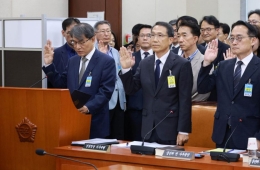
The urgency in the voice on the other end of the line made it clear that a mistake needed to be corrected. Just over a minute earlier, this lawmaker from the Legislation and Judiciary Committee of the Democratic Party of Korea had confided that, although there were calls within the party to reconsider the supplementary investigation authority, there was barely any meaningful discussion taking place. This brief exchange during a reporting interview underscores just how abnormally the current legislative process is unfolding.
The controversy was sparked by the case of a high school girl’s murder in Gwangju, where a police officer father tried to destroy evidence to protect his son. When it emerged that the prosecution’s supplementary investigation had exposed police misconduct, the ruling party’s legislative push to completely abolish the supplementary investigation authority was brought to a halt.
Within the Democratic Party, concerns remain about investigative lapses that might result from the proposed law. Yet, these voices of caution have been buried. In a climate of ideological one-upmanship, even reasonable doubts are dismissed as a “breach of party loyalty.” Some lawmakers interviewed for this story were extremely reluctant to discuss potential downsides to the law, saying, “What difference does it make to raise objections at this point?” One member of the Legislation and Judiciary Committee said, “A considerable number of lawmakers are simply exhausted by the very idea of supplementary investigation authority.”
While discussion of abolishing the supplementary investigation authority remains locked in a political dead end, the outcry from those on the frontlines is growing louder. Not only the prosecution but also the courts, the Lawyers for a Democratic Society (MINBYUN), and even women's organizations have all voiced their concerns. They argue that, without a viable alternative, stripping the prosecution of supplementary investigation authority would ultimately harm those most vulnerable in the justice system.
The mainstream position within the Democratic Party remains total abolition. On July 13, Jeong Cheong-rae, a former party leader running for re-election as party chair, held a press conference saying, “We will finish the complete abolition of the supplementary investigation authority, 100 percent, without exception.” He also took to online forums to criticize calls for further discussion or revision, arguing that such arguments were tantamount to opposition in disguise.
In contrast, on the same day, Hong Kiwon, a Democratic Party lawmaker, announced his intention to propose a bill allowing supplementary investigations in cases related to public safety and livelihood crimes. Lawmakers Kim Dongah and Kim Namhee also joined women’s groups in emphasizing, “The amendment to the Criminal Procedure Act must not worsen conditions for victims.”
Could it be that both the lawmaker who called in a rush and lawmakers Hong Kiwon, Kim Dongah, and Kim Namhee share the same concern? Namely: does this legislation represent progress or regression? The criminal justice system must never become a tool for political purposes or a prize in a competition for party leadership. A reform that recklessly strips away judicial safety nets cannot truly be called reform. The Democratic Party of Korea must deliberate more carefully.
Hot Picks Today
 "A Friend Saying 'I Actually Made 200 Million Won with SK hynix' Feels Like Four Weeks' Worth of Pain?"
- "After the Rush to Samsung and Hynix, Goldman Sachs Points to Causes of Sharp KOSPI Decline"
- "If I Just Borrow a Little, I Could Hit the Jackpot Too"... Debt-Fueled Investment Craze Sweeps the US
- "I Simply Can't Eat It": Shock as Mysterious Blue Chip Found in Famous Potato Chips
- 'What’s Going On With Daiso Sunscreen?' Viral YouTube Claims "30 Million Won Clinical Trial" — The Truth Behind the 'Below SPF' Controversy [Why&Next]
© The Asia Business Daily. All rights reserved. Unauthorized AI training and use prohibited.