[Reporter’s Notebook] The Party Constitution and Rules Are Not Tools of Power
![[Reporter’s Notebook] The Party Constitution and Rules Are Not Tools of Power](http://www.asiae.co.kr/news/img_view.htm?img=2026071409160144840_1783988161.jpg)
Party charters and regulations are like a constitution for a political party. They establish the principles for party management and serve as the minimum agreements that both party leadership and members must follow. This is why, in political circles, it is often said that "the very moment you meddle with the party charter and regulations, the identity of the party itself is shaken."
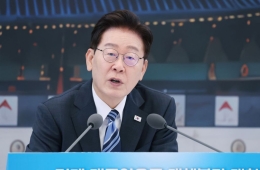
Nevertheless, every major political crossroad brings repeated attempts to change these rules. The growing movement both inside and outside the ruling party ahead of the Democratic Party’s August 17 national convention to elect new leadership is a case in point.
Whether the issue is the method for electing a party leader, nomination rules for candidates, or the party leadership structure itself, justifications for amending the charter and regulations vary in each case. However, these changes almost always involve power struggles, the race to control nominations in general elections, or shaping the structure for the next presidential contest.
Rules gain authority only when applied equally to everyone. If the standards shift depending on the political calendar or individual interests, the party charter and regulations cease to be principles. The moment the perception forms that party rules are like a “rubber band”—flexible to convenience—the first thing to collapse is members’ trust.
The more frequently the charter and regulations are interpreted or revised according to political gain or loss, the weaker democracy within the party becomes, and the more critical public evaluation will inevitably be. The concerns of Democratic Party members are no different. Rather than political engineering aimed solely at immediate calculations, they are asking for consistent principles to be upheld. It is only natural for members to expect a leadership that adheres to standards even at a cost, and a fair party administration that applies the same criteria to everyone.
Party unity is also not created through mere political deals or factional compromise. Only when a reform direction that members can accept and fair rules are secured does the organization become stable. Any justification for expanding the party’s reach or promoting integration is only persuasive if basic principles are securely maintained.
Ultimately, the true owners of a democratic party are its members. Leadership and prominent politicians only exercise power entrusted by the trust of party members. If that power is seen as a tool for an individual's political future, the negative consequences are felt by all involved and have widespread effects. Members' disappointment translates into public sentiment, which can adversely impact the next election.
Hot Picks Today
 30 Beluga Whales Dramatically Rescued After Two Years Trapped in Shuttered Theme Park
- "A Friend Saying 'I Actually Made 200 Million Won with SK hynix' Feels Like Four Weeks' Worth of Pain?"
- Share Price Tumbled, Yet Surging Daily... Companies That Doubled
- "Selected, Then Re-selected?... GH’s U-turn on Public Rental Housing Selection Leaves Applicants Confused"
- 'What's Going On with Daiso Sunscreen?' YouTube Uproar over "30 Million Won Clinical Trial"—The Truth Behind the 'SPF Shortfall' Controversy [Why&Next]
The party charter and regulations are not tools for power struggles but promises that everyone must keep. If those promises lose credibility, it is not just certain factions but democracy itself that is undermined.
© The Asia Business Daily. All rights reserved. Unauthorized AI training and use prohibited.