[Second Half Growth Strategy] SMRs to Be Designated as National Strategic Technology... Expanded Tax Benefits to Boost R&D and Investment Capacity
2026 Second Half Economic Growth Strategy
Expanding Renewable Energy Supply by Identifying Large-Scale, Public-Led Solar Sites
Establishing Decarbonization Transition Roadmap for the 'Five Major Carbon-Intensive Industries'
The government has decided to include small modular reactors (SMRs) in the list of national strategic technologies favored for R&D and investment tax credits, supporting the development and swift commercialization of these technologies. Additionally, in order to achieve 100GW of renewable energy supply by 2030, the government will identify large-scale project sites under public initiative, while also preparing a decarbonization transition roadmap for the five major carbon-intensive industries—steel, petrochemicals, oil refining, cement, and semiconductors—to promote the spread of renewable energy and strengthen the foundation for energy independence through decarbonization.
These are key points in the '2026 Second Half Economic Growth Strategy,' announced by the government on July 14, 2026.
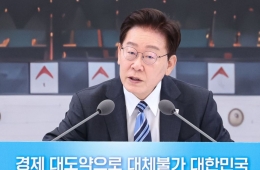
Lee Hyungil, the First Vice Minister of Finance and Economy, stated, "We will strengthen the foundation for energy independence through decarbonization by including future-oriented energy sectors such as SMRs among the national strategic technologies favored for R&D and investment tax credits," adding, "We also plan to announce the 'Korean Green Transformation (K-GX) Strategy,' which includes support for implementing three major mega-projects and reducing dependence on fossil fuels, in the third quarter of this year."
![[Second Half Growth Strategy] SMRs to Be Designated as National Strategic Technology... Expanded Tax Benefits to Boost R&D and Investment Capacity](http://www.asiae.co.kr/news/img_view.htm?img=2026021812225843949_1771384979.jpg)
◆If SMRs are included as national strategic technologies, 30% R&D and 15% facility investment tax credit= The key measure is including SMRs as national strategic technologies. Currently, SMRs are classified as new growth and original technologies, with large companies receiving a 20% R&D tax credit and a 3% facility investment tax credit. If SMRs are designated as national strategic technologies, the R&D tax credit and facility investment tax credit rates would increase to 30% and 15%, respectively. This would allow companies to secure more capacity for R&D and facility investments, given reduced corporate tax burdens. The government plans to review and determine specific technologies and facilities to be included as national strategic technologies during the amendment of the tax law enforcement ordinance in January of next year, after expert evaluations.
Alongside this, the government also plans to simultaneously promote the development of commercialization technologies for i (innovative)-SMR (light-water reactor) and the development of core technologies for next-generation SMRs (non-light-water reactors) and micro modular reactors (MMRs) based on the special law on SMRs set to be implemented in September this year.
The strategy also includes the goal of achieving 100GW of renewable energy supply by 2030. For solar power, the government intends to identify large-scale sites led by the public sector—such as reclaimed land in Siwha and Hwaong, Pyeongtaek Port, Pyeongtaek Lake, border areas, and decommissioned coal plant sites—and boost the adoption of agro-photovoltaics and rationalize separation distances to raise the installed capacity from 30.8GW in 2025 to 87GW in 2030. For wind power, the target is to supply 9GW by 2030 through proactive support for onshore and offshore wind permitting, securing vessels for offshore wind operations, and mobilizing policy funds. To support this, the government will build a West Coast submarine power grid (based on high-voltage direct current transmission, HVDC) by the 2030s, especially ensuring robust power grid infrastructure in major investment areas such as semiconductor industrial complexes.
The government is also pushing for a major transformation of fossil fuel-based industrial structures. Roadmaps for decarbonization transitions will be drawn up for the five major carbon-intensive sectors—steel, petrochemicals, oil refining, cement, and semiconductors—while supporting technology development, facility upgrades, and market creation. The goal is to reduce industry sector carbon emissions by over 24% by 2035 by introducing low-carbon production processes and related measures.
There will also be an acceleration of green investment and climate technology development. Over the next ten years, the government plans to provide 790 trillion won in green policy finance for the climate sector by 2035, with more than 50% to be allocated to regional areas and over 70% to small and medium-sized enterprises. To accelerate climate technology development, the second basic plan (2027–2031) for developing climate change response technologies—which includes enhancing the supply capacity of carbon-free energy, making climate prediction more advanced, and fostering an innovation ecosystem—will be prepared by September this year, expediting the advancement of climate technology based on private demand and artificial intelligence (AI).
◆Strengthening strategic economic cooperation following the Middle East war= The government anticipates that orders related to Middle East reconstruction projects will increase after the conclusion of the war in the region and has decided to strengthen strategic economic cooperation in response. You Byunghui, Director-General of Economic Policy at the Ministry of Economy and Finance, said, "We will proactively offer financial support—providing a total of USD 6 billion in advance finance—to key clients in creditworthy Middle Eastern countries to lead to orders for Korean companies, and will establish a Middle East Infrastructure Strategic Fund within Korea Overseas Infrastructure & Urban Development Corporation (KIND)." He added, "In the United States, after the end of global tariffs, our efforts will be focused on ensuring that the level of tariff restoration toward Korea does not damage the benefits balance achieved in previous agreements. We are also initiating investment processes in the US and plan to establish a Korea-US Shipbuilding Collaboration Center in the US in the third quarter of this year."
To this end, tailored financial support—including a total of USD 6 billion in advance finance—will be provided through Export-Import Bank of Korea and Korea Trade Insurance Corporation, along with launching the Middle East Infrastructure Strategic Fund (inside KIND) and other initiatives for infrastructure cooperation. When Korean contractors and operators attend key meetings with major Middle Eastern project clients, organizations such as the International Contractors Association of Korea, Korea Plant Industries Association, and financial institutions will also participate, establishing a public-private partnership support system.
![[Second Half Growth Strategy] SMRs to Be Designated as National Strategic Technology... Expanded Tax Benefits to Boost R&D and Investment Capacity](http://www.asiae.co.kr/news/img_view.htm?img=2026062515253323625_1782368733.png)
With the United States, the government is working to ensure that the level of tariff restoration toward Korea following the expiration of global tariffs (10%) does not disrupt the benefits balance set by previous bilateral agreements (15%), while also starting investment processes after establishing the Korea-US Strategic Investment Corporation and a special fund (June 18). To speed up the joint Korea-US shipbuilding project MASGA, a Korea-US Shipbuilding Collaboration Center will be established in Washington, D.C., in the third quarter of this year. The center will focus on building local networks for cooperation, tracking policy developments, supporting collaborative activities between companies of both countries, and running detailed programs for improving productivity at US shipyards and workforce training.
Hot Picks Today
 30 Beluga Whales Dramatically Rescued After Two Years Trapped in Shuttered Theme Park
- "I Shouldn't Have Sold Yesterday": SK hynix Soars Over 10% on Surging U.S. ADRs, Forecasts Reach 4.92 Million Won
- "Annual Interest Per Capita to Surge to 6.73 Million Won"... Desperate Calculations by 'Yeongkeuljok' Borrowers
- 'Korea's National Museum,' Now the World's Third Largest, to Extend Opening Hours for Peak Summer Vacation Season
- ‘Paradise Island’ Turns into ‘Hell’...4,000 U.S. Soldiers Endure Heat With Only Fans
With China, follow-up negotiations on the Korea-China FTA service and investment chapters will continue to lay a foundation for expanding service exports to China and creating a stable environment for investment. The government will also accelerate negotiations on improving the Korea-India Comprehensive Economic Partnership Agreement (CEPA), launch the Korea-India Industrial Cooperation Committee (scheduled for December this year), and resume meetings between finance ministers, thereby enhancing economic and industrial communications. To actively address protectionism, Korea is also considering joining the Comprehensive and Progressive Agreement for Trans-Pacific Partnership (CPTPP), a major multilateral free trade agreement.
© The Asia Business Daily. All rights reserved. Unauthorized AI training and use prohibited.