[Second Half Growth Strategy] AI, Blockchain, Defense Industry... Government Accelerates Fostering Future Growth Engines
Additional Leading Projects for Sensors and Humanoid Batteries
Investment-Oriented R&D to Be Introduced

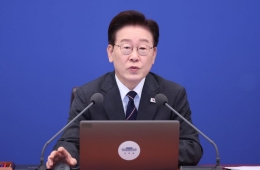
The government is accelerating the development of future industries such as artificial intelligence (AI), advanced manufacturing, and blockchain in the second half of the year. As part of its strategy to secure new growth engines, the government will designate additional core components for the future as “Super Innovation Economy Leading Projects,” and will establish blockchain-based financial infrastructure as well as an investment-oriented research and development (R&D) system.
On July 14, the government announced these measures in its “Second Half Economic Growth Strategy.”
First, core components for future industries, including sensors, actuators (robot drive devices), and secondary batteries for humanoids, will be newly designated as “Super Innovation Economy Leading Projects” and intensively promoted.
In the sensor sector, the government will drive the development of “on-sensor AI” technology by embedding AI directly into sensors and promote demonstrations for industries requiring such technologies. For actuators, a dedicated R&D track for robot components will be established to support the commercialization of core parts for AI robots. For humanoid batteries, high-performance battery technology development and end-to-end demonstration projects will begin in 2027.
The existing leading projects, such as next-generation power semiconductors, graphene, small modular reactors (SMR), smart agriculture and fisheries, K-content, K-beauty, and K-food, will also be further accelerated, with continued efforts to deliver results in these segments.
The government will also move forward with strengthening competitiveness in the pharmaceutical and bio industries. With the goal of placing Korea among the world’s top five bio-powerhouses, an AI-driven new drug development roadmap will be devised within this year, and training data will be made available to build specialized AI foundation models for the bio sector. The government will standardize health examination data and develop AI-based services that link lifestyle and genetic information. Schemes to nurture bio startups leveraging AI and other new technologies will be formulated by September.
Investment in strategic future industries such as defense and aerospace will be increased. The government will launch a Korean version of In-Q-Tel (IQT) and expand support for technology demonstrations utilizing military facilities. Joint ownership of technology and intellectual property (IP) between the government and private companies will also be permitted, and rapid pilot projects connecting development, prototype production, and demonstration will be expanded.
In aerospace, technology development will be promoted with the aim of launching a public-private partnership lunar lander in 2030 and establishing a low Earth orbit satellite communication network by 2035. The construction of a K-Space Data Center and the development of a hybrid vertical take-off and landing vehicle will also be accelerated.
AI agents, quantum technology, and photonic semiconductors will be fostered as next-generation growth drivers. An open lab will be established to verify AI agents’ safety and interoperability, and the phased introduction of AI agents in public procurement will be promoted. At the same time, pilot projects to demonstrate quantum-safe homomorphic encryption and the development of silicon photonics-based photonic semiconductors will be carried out.
The government will also work to create a blockchain-based finance and digital asset ecosystem. A pilot project to tokenize government bonds on a blockchain platform will begin in 2027, and linking institutional central bank digital currency (CBDC) by the Bank of Korea is under review. Legislation establishing the Digital Asset Fundamental Act will set up systems for the legalization of stablecoins and regulation of digital asset businesses. A blockchain-based management and trading system for carbon credits will also be established.
The R&D system will also be restructured to focus on strategic technologies. The government will pursue the “NEXT Project,” which will concentrate budgets and incentives on these strategic fields, and the “K-Moonshot Program,” which will consolidate research data and AI infrastructure. Furthermore, the government will expand investment-oriented R&D—where government funding is recouped through equity upon successful results—and build a comprehensive support system covering the entire cycle from R&D to commercialization of research outcomes.
Hot Picks Today
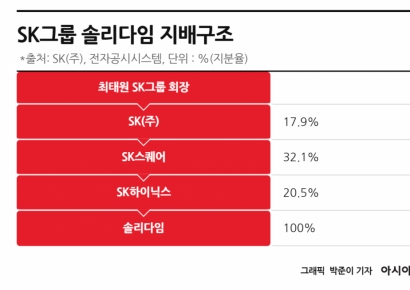 Record Results Expected, but SK hynix Weighs a "Split-Off Listing" Amid High Expectations
- "I Came to Korea and Easily Made 3.3 Million Won a Month"... The "Easy Gig" Everyone's Talking About Among International Students Turns Out to Be...
- President Lee's Approval Rating Falls 2.2 Percentage Points to 35.2% [The Asia Business Daily-Realmeter Poll]
- "Hand in Your Resignation and Get a Year's Salary"... This Country Pushes Early Retirement for Civil Servants
- "Oh Eunyoung's Consultation Fee: Millions of Won? Not Expensive"... Yonsei Professor's Sharp Rebuke over "300,000-Won Lecture Fee"
In addition, the government plans to improve the research environment by integrating administrative tasks and expanding autonomy over research innovation expenses at government-funded research institutes, thereby enhancing researchers' focus and immersion.
© The Asia Business Daily. All rights reserved. Unauthorized AI training and use prohibited.