[New York Stock Market] US Announces Strait Toll and Blockade... All Indexes Close Lower
Investor Sentiment Dampened by Fears of Renewed War
Global Oil Prices Surge
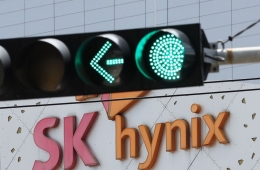
SK hynix Plunges 9%
Semiconductor Stocks End in Weakness
On July 13 (local time), all three major U.S. stock indexes closed lower as concerns mounted that the Middle East ceasefire could collapse following U.S. President Donald Trump’s announcement of a renewed maritime blockade against Iran. In particular, international oil prices surged across the board after President Trump declared he would impose a 20% fee on the value of transported cargo in exchange for guaranteeing safe passage through the Strait of Hormuz, fueling fears over disruptions in energy supplies.
On the New York Stock Exchange (NYSE), the Dow Jones Industrial Average closed at 52,498.64, down 138.37 points (0.26%) from the previous trading day. The S&P 500, focused on large-cap stocks, dropped 60.05 points (0.79%) to finish at 7,515.34, while the tech-heavy Nasdaq Composite declined 408.43 points (1.55%) to close at 25,873.17.
![[New York Stock Market] US Announces Strait Toll and Blockade... All Indexes Close Lower](http://www.asiae.co.kr/news/img_view.htm?img=2026071405120644509_1783973526.jpg)
On July 13 (local time), President Trump announced on the social media platform Truth Social that he would impose a 20% fee on all cargo passing through the Strait of Hormuz and would resume the maritime blockade to block the passage of Iranian ships.
He stated, "We are resuming the 'Iran blockade,' which blocks only the entry and departure of Iranian vessels or customers dealing with Iran," and added, "All other countries will be able to use the Strait of Hormuz fairly and freely."
He further declared that the United States would henceforth be known as the "Guardian of the Strait of Hormuz," saying, "We will be compensated at a rate of 20% on all transported cargo to cover all costs necessary to provide safety and security in this extremely unstable region of the world."
President Trump stated that the structure and related procedures for the fee imposition system would begin immediately, but did not specify whether the 20% would be applied to the cargo price, transportation costs, or other specifics.
Oil Prices Surge Ahead of June CPI Release
With the effective collapse of the ceasefire between the United States and Iran, oil prices soared. On the New York Mercantile Exchange, West Texas Intermediate (WTI) crude for August delivery rose 9.4% from the previous trading day to $78.14 per barrel. On the ICE Futures Exchange, September delivery futures settled at $83.30 per barrel, representing a sharp 9.6% jump from the previous session.
Ian Lyngen of BMO Capital Markets said, "The situation in the Strait of Hormuz is driving price volatility in global markets, bringing renewed focus to the energy sector," adding, "There is a growing perception that the situation is more likely to deteriorate before it improves."
The resumption of tensions in the Middle East is an adverse factor as it could increase upward pressure on prices. This is because it could once again trigger a crisis in energy supply.
The U.S. Department of Labor is scheduled to release the June Consumer Price Index (CPI) report on July 14. According to a Dow Jones survey of economists, the June CPI is expected to decrease by 0.2% from the previous month and to rise by 3.8% year-on-year.
Paul Christopher of Wells Fargo Investment Institute pointed out, "Until there is a change in the situation in the Strait of Hormuz, concerns about rising oil prices, inflation, and interest rate hikes will persist, which will cause volatility in the stock market."
Semiconductor Stocks 'Reel'...SK hynix Plunges
Shares of companies related to semiconductors also came under downward pressure. SK hynix, listed on the U.S. stock market, also plummeted by 9.32%. SanDisk dropped 12.63%, Micron fell 4.32%, Seagate lost 5.46%, AMD slid 4.21%, and Intel declined 6.12%, all closing lower.
Investors are focusing on upcoming earnings releases. According to FactSet, analysts on average expect S&P 500 companies' second-quarter profits to have increased by more than 23% year-on-year.
Sonu Varghese of Carson Group said, "While uncertainty surrounding the Middle East continues, we expect that, especially during the upcoming weeks as earnings season kicks off, the driving force behind the market will be the wave of artificial intelligence (AI)."
It has been noted that if investors confirm profitability in the AI sector during earnings releases, the dampening of investor sentiment may be temporary; however, if volatility arising from the Iran conflict continues, a sustained uptrend will be difficult to maintain.
Ben Fulton, CEO of WEBs Investments, stated, "Until a genuine solution emerges in the Middle East, the market will move within a limited range."
Chris Larkin of E*Trade at Morgan Stanley pointed out, "Although the increase in this week's consumer price index is expected to slow, if traders believe oil prices will rise again, the positive impact on the market may not be significant."
Hot Picks Today
 "One Less Worry About Old Age": Japanese Companies Secure Senior Talent with Regular Employment Beyond 65
- "Six in Ten Koreans Support Female Conscription, Survey Finds"
- "Shares Soar 600% on Debut as Retail Investors Flock to 'Robot Company'"
- Pilots and Cabin Crew Rank First and Second in Radiation-Related Cancer Deaths... The Reason Is 'Cosmic Radiation'
- Raising Prices Boosts Sales... Revival of China's 'Doomed' Ramen Market
Due to continued volatility in semiconductor stocks, it is difficult for technology stocks to maintain a sustained uptrend; intensifying hostilities and rising oil prices are expected to make this even more challenging.
© The Asia Business Daily. All rights reserved. Unauthorized AI training and use prohibited.