[Luxury World] Niche Fragrances in Vogue, From Royal Warrants to 'Scent Wars' Among Five-Star Hotels
From Molton Brown and Byredo to In-House Brands
Capturing Guest Memories Through Signature Scents
Five-star hotels in Korea are cultivating room amenities, such as toiletries, not merely as a service but as a core element of their brand assets. With competition among hotel rooms having become standardized and highly sophisticated, these hotels are striving to differentiate themselves by creating distinctive sensory experiences—especially through scent. At the same time, they are expanding these amenities into lifestyle products sold beyond hotel premises to secure new revenue streams.
According to the hotel industry as of July 19, 2026, leading luxury hotels are strengthening brand competitiveness by actively introducing global premium fragrance brands into their room amenities or by developing their own private brands (PBs).
The domestic hotel market has matured in terms of guest room size, facilities, swimming pools, and lounges—so now, brand experience has emerged as a new competitive factor. Particularly, the sense of smell is directly connected to the brain areas responsible for emotion and memory, making scent a crucial tool for ensuring guests remember the hotel long after their stay.
An industry insider commented, "In the past, beds and breakfast determined a hotel's competitiveness. Now, the defining factor is what experiences and memories guests take with them. Amenities are the most direct touchpoint for guests to experience a hotel brand."
![[Luxury World] Niche Fragrances in Vogue, From Royal Warrants to 'Scent Wars' Among Five-Star Hotels](http://www.asiae.co.kr/news/img_view.htm?img=2026071511104146881_1784081442.jpg)
Sticking to the Same Scent for 15 Years... Hotels Partner with Global Fragrance Brands
Since 2011, The Shilla Seoul has maintained a consistent brand experience by selecting 'Molton Brown', a premium British brand, for its guestroom amenities. Although Molton Brown—famed for its royal warrants and luxury fragrances—was relatively little known in Korea at the time of its introduction, it now stands as a leading premium body care brand. Shilla Hotel has capitalized on this by operating a separate Molton Brown store on the first floor, thus extending the in-room experience to actual consumer purchases.
Signiel Seoul, the flagship hotel under Lotte Hotels & Resorts, chose 'Diptyque', a renowned French niche perfume brand, for its amenities. When Signiel first opened, Diptyque was rare in the Korean market, making it a fitting choice for enhancing the hotel's sophisticated and distinctive brand image.

Chosun Palace, operated by Chosun Hotel & Resort, enhances its brand image by featuring Byredo's 'Le Chemin' collection. Le Chemin was specially created as a luxury-only collection and is offered exclusively at Chosun Palace. Its name, meaning 'the road' in French, symbolizes the adventures and hopes encountered during a journey. The Westin Josun Seoul offers the 'White Tea Aloe Collection', the Westin brand's signature amenity lineup. These products highlight the wellness brand image by using eco-friendly packaging and vegan ingredients that have been certified as environmentally sustainable.
Grand InterContinental Seoul Parnas, managed by Parnas Hotel, provides guests with Byredo's 'Bal d'Afrique' line of niche fragrances, in accordance with InterContinental Hotel Group (IHG)’s global guidelines.
![[Luxury World] Niche Fragrances in Vogue, From Royal Warrants to 'Scent Wars' Among Five-Star Hotels](http://www.asiae.co.kr/news/img_view.htm?img=2026071615110048991_1784182260.jpg)
The Era of 'Hotel Scents' as In-House Brands
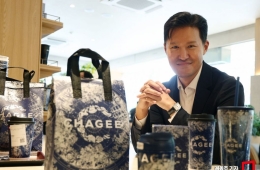
The number of hotels developing in-house brands instead of collaborating with external brands is also growing. One of the most prominent examples is Lotte Hotel, which created its own brand, 'Emissary.73'. This name fuses 'Emissary' with the founding year of Hotel Lotte, 1973. Working with a global fragrance specialist company for about two years, Lotte Hotel developed signature scents for each property. After first applying these scents to amenity items such as shampoo, conditioner, body wash, body lotion, and hand wash, Lotte Hotel began selling them directly to consumers last year through its official online mall, thanks to positive customer feedback.
Grand Walkerhill Seoul features 'Soofee', a nature-inspired skincare brand from SK Group, as its room amenity. Focused on experiencing 'the purity of the forest', Soofee is a vegan cosmetic developed using sustainable ingredients and aims to extend the serenity and natural scent of the forest into everyday life beyond the hotel stay.
JW Marriott Seoul also applies amenities to guest rooms that reflect the uniqueness of its own branded experience. Though part of a global hotel chain, the scents and textures experienced by guests in-room are carefully curated as part of the hotel's brand identity, creating a strong differentiator.
The Plaza Hotel took the lead in Korea’s 'fragrance marketing' among luxury hotels as early as 2010. Its signature scent, 'Parfum des Bois', blends floral and eucalyptus aromas to produce a deep and rich forest-like fragrance. By popular demand, a diffuser version was released in 2015, followed by room sprays and hand creams, thereby expanding the product portfolio.

Amenity brand 'Soofee' of Grand Walkerhill Seoul. Screenshot from the Grand Walkerhill official website.
View original imageIntensifying Room Competition... Hotels Evolving into Lifestyle Brands
The hotel industry's focus on brand competition through scent is driven by a changing revenue structure. As room supply increases and competition intensifies, it has become more difficult to grow solely through accommodation sales, so revenue from food and beverage (F&B), memberships, and wellness services has been supplemented by sales of lifestyle products, now seen as a new engine for growth.
Amenities, once just a part of room service, have recently diversified into perfumes, diffusers, candles, and body care products, becoming stand-alone brand businesses. Hotels are seeking to maintain customer engagement after checkout by encouraging guests to incorporate the scents they experienced in the hotel into their daily lives. In practice, sales of Lotte Hotel’s Emissary.73 rose by 18% in the second quarter of this year compared to the previous quarter.
Industry experts note that guest rooms serve as experiential showrooms for premium fragrance brands, while hotels themselves function as platforms that both enhance brand loyalty and facilitate sales of private brand products.
Hot Picks Today
 "Let’s Give Korea a Spending Spree": Over 10 Million Foreign Tourists Flock In, Credit Card Spending Exceeds 10 Trillion Won
- Is the Stock Market Decline Just Beginning? "An Even Bigger Crisis Is Coming," Warns Rich Dad Author
- 'Black Tuesday': KOSPI Plunges Over 8% Intraday, Circuit Breaker Triggered
- "I Am Really Lucky": U.S. Nurse Walks Over 16km With Trekking Pole Pierced in Back for 6 Hours
- "Prettier Than Idols?" "Tight Outfits Stir Debate"... Why the Virtual Female Weathercaster Is Causing a Stir
An industry insider remarked, "Fragrance is a brand asset that is harder to mimic than other services and can easily extend the brand experience into daily life. Therefore, hotels are likely to further strengthen their own fragrance brands and licensing businesses in the future. We are also likely to see more cases of hotels expanding their product lineup beyond fragrance to include bedding, robes, diffusers, and candles, transforming themselves into comprehensive lifestyle brands."
© The Asia Business Daily. All rights reserved. Unauthorized AI training and use prohibited.