Lee: "If Politics Hinders AI and Semiconductor Boom, Leap Opportunity Will Be Lost"... Next Year's Budget Set at "800 Trillion Won Plus Alpha"
President Lee Presides Over National Fiscal Strategy Meeting
New "Future Response Fund" Created from Semiconductor Tax Revenue,
Focused Investment in Youth, Regional Areas, Talent, and Growth Engines
Next Year's Tax Revenue Projected to Exc
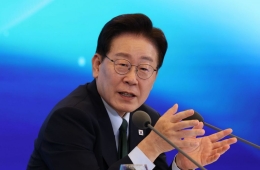
President Lee Jae-myung emphasized on July 13 that South Korea stands at an unprecedented crossroads between a leap forward and a downturn, stressing that the political sector's capabilities will determine the nation's fate. He warned that if the political community waits for the other side to fail and hinders progress, the country could miss out on the opportunities presented by the artificial intelligence (AI) revolution and the semiconductor boom. Meanwhile, the government expects national tax revenue to exceed 500 trillion won next year thanks to the semiconductor supercycle, and plans to invest the additional tax revenue in a 'Future Response Fund' focused on youth, regional development, talent, and growth engines. Total government expenditure for next year will be set at over 800 trillion won, an increase of more than 10% compared to this year’s main budget, while restructuring expenditures worth 50 trillion won will also be carried out in parallel.

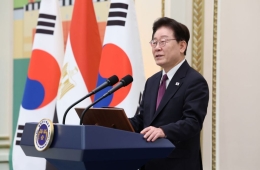
President Lee Jae-myung is speaking at the National Financial Strategy Meeting held at the Blue House on July 13, 2026. Photo by Yonhap News Agency
View original imagePresiding over the '2026 National Fiscal Strategy Meeting' at the Blue House’s State Guest House, President Lee stated, "South Korea is at a turning point: whether we will achieve a new leap forward never seen before, or lose this opportunity and fall again due to infighting, depends on this moment," adding, "What has the greatest impact is, ultimately, political capability."
President Lee further said, "Politicians and political groups must reflect on how to improve our society and work on enhancing their own abilities," stressing, "A society where people slander each other and just wait for someone else to fail, holding each other back, can become the decisive factor in the nation's rise or fall." He added, "It would be best if the political community, including myself, could truly compete to do better."
Next Year’s Total Expenditure to Exceed 800 Trillion Won: ‘Super Expansionary Fiscal Policy’... Long-term Investment via the ‘Future Response Fund’
President Lee described the 2027 budget proposal as "the first budget to be outlined entirely by our administration from the planning stage," and announced plans to use additional tax revenue from the semiconductor boom as a strategic resource for future-oriented investments. Regarding the extra revenue generated by the semiconductor boom, he said, "This is a precious resource that will be spent during the golden time when global AI hegemony is being determined," adding, "We will establish a Future Response Fund to focus investments on four key areas that will shape the nation’s future: the next generation, regional development, education, and talent."
At the meeting, Minister of Strategy and Finance Hongkeun Park projected that next year's national tax revenue would significantly exceed the original forecast of 412 trillion won, reaching ‘500 trillion won plus alpha’. Accordingly, total government expenditure for next year will be set at ‘800 trillion won plus alpha’, more than 10% higher than this year’s main budget.

Minister of Strategy and Finance Hongkeun Park (right) and Minister of Education Gyojin Choi are talking at the National Fiscal Strategy Meeting presided over by President Jae-myung Lee at the Blue House on July 13, 2026. Photo by Yonhap News
View original imageThe Future Response Fund will accumulate the large-scale revenue increases that surpass long-term trends and make concentrated investments in growth engines, the youth generation, regional areas, and talent—going beyond the limitations of annual budgets. If there is any revenue shortfall or need for a supplementary budget, the fund’s surplus will be used to stabilize fiscal volatility. Minister Park described the Future Response Fund as "a paradigm shift in fiscal management, a strategic investment platform to support a rebound in potential growth rates, and a fiscal stabilization mechanism to offset revenue fluctuations."
The government will also push for the largest-ever expenditure restructuring alongside expansionary fiscal policy. The plan is to review all government projects from scratch, targeting a 15% reduction in discretionary spending, a 10% cut in mandatory spending, and the abolition of 10% of programs, thereby securing around 50 trillion won. Measures include scrapping commuter buses for public officials in the Seoul metropolitan area and cutting 4 trillion won from 99 small and medium-sized business support programs across 17 ministries. The government will also reflect the principle that underperforming projects are to be reduced by at least 15%, while those slated for elimination will be cut entirely in next year's budget proposal.
National Fiscal Resources to Focus on Semiconductors and AI... Addressing Bottlenecks in Power, Water, and Talent

President Lee Jae-myung and Prime Minister Han Sung-sook are entering the National Fiscal Strategy Meeting held at the Blue House on July 13, 2026. Photo by Yonhap News Agency
View original imageThe secured funds will be prioritized for investment in three major mega-projects: semiconductors, physical AI, and AI data centers. The government will provide comprehensive support packages—not only for power, water, transportation, and logistics to ensure companies’ investment plans proceed on schedule, but also for residential, educational, medical, and cultural environments to support settlement conditions. The government plans to establish a national semiconductor industrial complex in the Honam region on the former site of the Gwangju military airport, and to accelerate the entire construction schedule for the Yongin national semiconductor industrial complex by up to seven years, moving the completion date up from 2047 to 2040.
For AI data centers, companies have announced plans to build 8.4 GW of capacity by 2029 and 18.4 GW by 2035. Sites have already been confirmed in Sejong, Donghae, and Ulsan, with an additional 34 locations under consideration. The government plans to enact the Mega-Special Zone Act within the year to grant the highest level of regulatory exemptions for semiconductor investment companies, and to revise the existing Semiconductor Special Act into a special law for implementing large-scale national projects.
President Lee also noted that the supply chains for key materials, components, and minerals must be managed from an industrial security perspective. He stated, "The monopolization and concentration of major materials by country is becoming weaponized as strategic assets, and export controls are becoming routine," adding, "For essential materials and irreplaceable components, we must prepare strong countermeasures, including equity acquisition, from an industrial security standpoint."
Time-of-Use Residential Electricity Rates... "Vouchers for Low-Income Households"

President Lee Jae-myung is asking a question to Kim Sung-hwan, Minister of the Ministry of Climate Energy and Environment, at the National Fiscal Strategy Meeting held at the Blue House on July 13, 2026. Photo by Yonhap News Agency
View original imageThe meeting also focused on restructuring the electricity pricing system to not only expand supply but also manage demand more efficiently. President Lee said it is necessary to expand the time-of-use (TOU) flexible electricity rate system to residential users—lowering rates during surplus daytime hours and raising them during peak periods.
Currently, the TOU rate system is applied only to certain industrial electricity users. President Lee remarked, "Shouldn’t we eventually expand this to residential use?" and added, "Applying cheaper rates during the day and higher rates in the evening would increase the efficiency of heat pumps and electric vehicle charging."
He also called for broadening electricity bill voucher support for low-income households to mitigate the burden from residential electricity price adjustments. After hearing that the current annual energy voucher budget is between 800 billion and 1 trillion won, President Lee said, "That is far too little," and commented that a separate policy discussion is needed.
The expansion of heat pump adoption was also highlighted as a key agenda item. Heat pumps, which use heat from outside air for heating, cooling, and hot water, can replace city gas, but their adoption remains low due to high initial installation costs and electricity bills. President Lee pointed out, "If residential electricity rates are the same at night and during the day, heat pumps cannot reach their full efficiency," emphasizing that a time-of-use rate system and subsidy policies should be promoted together. Currently, the government provides up to 70% of the typical 14 million won installation cost for residential heat pumps in cooperation with local governments.
There was also discussion of reducing electric vehicle charging costs to near zero during periods of surplus renewable energy. The government is considering piloting this in Jeju in late 2026 or early 2027, then expanding it to other regions with high renewable energy output, such as Jeollanam-do. President Lee said, "If people can almost charge their electric vehicles for free using surplus daytime electricity, the adoption rate of EVs will increase much faster and people’s energy costs will decrease," adding, "Speed is always the issue. Move quickly."
Hot Picks Today
 Chey Tae-won's One Remark Sends Stocks Soaring to 'Limit-Up'... This Stock Jumps Despite SK hynix's 3% Drop
- "Only healthy seniors welcome - get sick and leave?"... Senior welfare housing, this eligibility rule is changing
- "Now We're in Our 30s and 40s, and My Husband's the Only One Still Going Strong?" ... Women Tire First While Shopping: What's Happening in Japan?
- "I Thought Only Koreans Were Crazy About It"... This Dish Ranks No. 1 in the World
- "'100% Cat Fur' - It Seemed Unbelievable, but It Was Real... Chinese Shopping Mall Rocked by Shocking Revelation"
President Lee described this meeting as a starting point that will determine South Korea’s next 20 to 30 years. He stressed, "We must make the most efficient and rapid use of the time, resources, and capabilities given to us to create new hope for the people and youth," adding, "We are being presented with an incredible opportunity to make South Korea truly irreplaceable."
© The Asia Business Daily. All rights reserved. Unauthorized AI training and use prohibited.