Park Hongkeun: "Next Year's Total Expenditure to Surpass 800 Trillion Won for the First Time"... Future Response Fund Created with Surplus Tax Revenue (Comprehensive)
Announced at the National Fiscal Strategy Meeting
More Than 10% Increase Over This Year
The government will set next year’s national budget at a level exceeding 800 trillion won plus alpha, more than 10% higher than this year’s main budget. The plan is to establish a Future Response Fund using surplus tax revenues generated by the semiconductor boom, and to concentrate investments in four key areas that will determine the nation’s future: future preparedness, youth, regional development, and education.
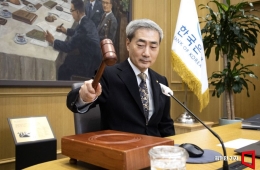
Hongkeun Park, Minister of Planning and Budget, stated at the National Fiscal Strategy Meeting held at the Blue House State Guest House on July 13, “Next year’s national tax revenue is expected to far exceed the original projection of 412 trillion won, reaching an all-time high of over 500 trillion won plus alpha.” He added, “Taking into account all perspectives, from calls for aggressive investment to arguments for fiscal safety nets, we will establish the Future Response Fund.”

He explained, “We will allocate the large-scale increase in tax revenue, which exceeds long-term trends, to the fund. We will then make focused investments in four areas: the young generation, growth engines, regional development, and talent, going beyond annual expenditure plans.”
Minister Park also outlined, “In the event of a tax revenue shortfall due to changes in economic conditions or the need for a supplementary budget, we will utilize surplus funds from the Future Response Fund to timely reinforce fiscal capacity and contribute to fiscal stabilization.”
He announced that, considering tax revenue conditions and the need for concentrated national investment, total expenditures for next year will be set at an all-time high, more than 10% higher than this year, at over 800 trillion won. In addition, the government aims to create investment capacity by undertaking expenditure restructuring at a record scale of 50 trillion won, double that of the previous year. Minister Park also mentioned plans to pursue such expenditure efficiency measures on an ongoing basis through a task force (TF) and public suggestions.
Minister Park stated, “Together with experts, we will review all spending programs from a ‘zero base’ and achieve the largest-ever reductions: 15% in discretionary spending, 10% in mandatory spending, and 10% through program abolishment. We will make every effort to alleviate the fiscal burden on future generations.” He continued, “Through integrated performance evaluations, we will identify low-performing programs and, in principle, cut them by at least 15%. For programs that are abolished, we will cut their budgets entirely, reflecting this in the 2027 budget proposal.”
As a representative example of expenditure efficiency, he cited the elimination of commuter buses for government employees in the Seoul metropolitan area and the comprehensive review of all SME support programs across ministries, which resulted in a 4 trillion won reduction across 99 projects in 17 ministries.
The government also plans to reform the Local Education Grant and Basic Pension, both of which have limited fiscal leeway. Minister Park emphasized, “The resources secured will be reinvested in Korea’s core, irreplaceable projects.”
He announced that the highest fiscal priority will be given to three mega-projects: semiconductors, artificial intelligence (AI) data centers, and physical AI. Additionally, he introduced other fiscal investment priorities, such as region-led growth through infrastructure, growth hubs, and K-culture; growth ladders and proactive welfare for youth, startups, and small business owners to address structural polarization; and strengthening public safety and peace through investments in safety, self-reliant national defense, economic security, and pragmatic diplomacy.
Minister Park stated, “We will ensure that corporate investments proceed without setbacks, and we will foster a robust industrial ecosystem by promoting next-generation technology and research and development projects.”
Addressing concerns that active fiscal spending could increase national debt, he responded, “The clear answer is that it will be fine. From next year, both the fiscal balance and national debt will see significant improvement.”
Regarding the nation’s fiscal planning over the next five years, Minister Park projected, “In 2026 and 2027, we will make proactive and expansionary fiscal investments based on increased national revenue.”
Hot Picks Today
 "The Transfer Failed, but 'Ding Dong' Money Came In"... 32.5 Billion Won Financial Incident at Toss Bank
- "They Wouldn't Give It a Second Look When Offered to Ancestors"... MZ Goes Wild for 80-Year-Old Ceremonial Liquor as a Household Must-Have
- Pinky swear: "I'll become a female soldier"... An elementary school student's moving letter of support from 11 years ago
- "Even If He's Handsome, That's a Bit Much"... The "Behavior" That Turns Off 7 in 10 Women
- The 'Hangover Legend' That Had You Waking Up the Day After Tomorrow Returns After 11 Years... Lee Sunmin's Captain Q Sells Out
He added, “From 2028, as the results begin to materialize, we will gradually stabilize the expenditure growth rate. As a result, the managed fiscal balance will improve compared to the original plan in all years, and the national debt ratio will be managed at a level lower than the original 2029 target by 2030.” He concluded, “We will put an end to unproductive fiscal debates and achieve the highest national credit rating in history.”
© The Asia Business Daily. All rights reserved. Unauthorized AI training and use prohibited.