[Policy Pulse] The National Football Team's Defeat Raises the Question of Leadership Qualifications
South Korea's World Cup Goal: Round of 32... Japan Aimed for 'Victory'
Ambitious Dreams and a Pressing Sense of Crisis Are Essential
The Competence of Those in Charge of Appointments Determines Organizational Success or Failure
![[Policy Pulse] The National Football Team's Defeat Raises the Question of Leadership Qualifications](http://www.asiae.co.kr/news/img_view.htm?img=2026071314593243990_1783922371.jpg)
The South Korean national football team's elimination from the World Cup in the round of 32 brought significant disappointment to the nation and prompted a renewed reflection on the essential qualities required of leaders.
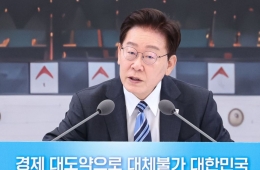
President Lee Jaemyung stated, "Once again, personnel appointments prove to be the most important factor. If you select an incompetent commander based on favoritism rather than ability, the outcome is as clear as day." He emphasized that this issue is not unique to sports, but is equally relevant to nations and corporations alike.
During the Joseon Dynasty, the position of Ijo Jeonrang had a low government rank but held immense authority in recommending personnel appointments. Under King Seonjo, as the Sarim scholars entered government in large numbers, they split into the Dongin and Seoin factions. Disputes over the Ijo Jeonrang position became the starting point of factional politics. These conflicts even led to the distortion of intelligence reports about the political situation in Japan. While Hwang Yun-gil warned of the threat from Japan, Kim Seong-il downplayed the danger in his report. As a result, the nation lost its opportunity to prepare for war.
During the Imjin War, Yu Seongryong recommended Yi Sun-sin, who went on to achieve consecutive victories at sea. However, exploiting King Seonjo's wariness of Yi Sun-sin, the Seoin faction removed him from command and appointed Won Gyun in his place, leading to the disastrous defeat at Chilcheonryang. In "Jingbirok," Yu Seongryong left a profound lesson: "When employing people, always consider their abilities and never let personal connections be the standard for appointments (用人必觀其才 不可以私交用人)."
The lesson is just as clear in the corporate world. The late Lee Kunhee, chairman of Samsung, emphasized the importance of securing global talent through his "New Management" initiative, saying, "If someone is the best talent in the world, we should bring them in from anywhere." Euisun Chung, Executive Chair of Hyundai Motor Group, also stated, "Purebloodism will not put food on the table," and recruited talent from NASA, Nissan, Google, Naver, and other diverse backgrounds. This stemmed from their vision for continuous development and a strong sense of urgency in the face of crisis.
The public sector is no exception. King Sejong established the Jiphyeonjeon to gather talent for academic and policy research, and King Jeongjo founded the Gyujanggak, even appointing people of secondary status. The late President Park Chunghee established the Korea Institute of Science and Technology (KIST) and encouraged overseas studies to secure technological talent. Ultimately, performance-based appointments determine the competitiveness of a country or organization.
Our society has experienced tragedies caused by position-based appointments and incompetent leadership, such as the Itaewon disaster, the failure to rescue the Sewol ferry, and the 12·12 military coup. Conversely, appointing talented individuals with ability and character has been central to overcoming crises and securing global competitiveness.
Human beings are instinctively inclined to leverage blood ties, school connections, and regional links. Even in the United States, nepotism is pointed out as a problem. According to research published in Harvard Magazine, around 77% of American companies place greater importance on personal connections than on ability during hiring. This favors children of the upper class but disadvantages women, minorities, and low-income groups.
So what empowers a leader to overcome personal connections? It is the establishment of high goals suited to the situation and a pressing sense of urgency. President George Washington appointed Alexander Hamilton as Secretary of the Treasury despite Hamilton's lack of respect for him. President Abraham Lincoln also appointed George McClellan as the commander of the Union Army, even though McClellan had insulted him as a "provincial politician." King Sejong made Choi Man-ri, who opposed the creation of Hangul, a key official. King Jeongjo implemented a policy of equilibrium, actively appointing officials from the minor Noron and Namin factions. All of these leaders recruited competent talent, transcending personal feelings, for national stability and unity.
This is precisely why the Football Association, which prepared for this World Cup, provoked public anger. While Japan's national team set its goal as "winning the championship," the South Korean team merely aimed for "reaching the round of 32." The difference in the height of the goal and sense of urgency determined the result.
The lesson is clear: the competence of those in charge of appointments directly determines whether an organization succeeds or fails. The true ability of a leader lies in selecting people with skill and integrity rather than those driven by desire for office, and for the public, choosing a capable President is a demonstration of their discernment. When the people set high goals and act with a sense of urgency and crisis, then—and only then—can the nation and society achieve true competitiveness.
Hot Picks Today
 "I Might End Up Paying My Entire Salary Just for Interest"... Annual Per-Person Interest Could Reach 6.73 Million Won, 'Yeongkeul-jok' Lament
- "Will I Really Be Left Out If I Don't Use It?"... The App Used by 23 Million Koreans Monthly, Is Naver Feeling the Pressure?
- Jensen Huang: "SK hynix ADR Is Incredibly Successful"
- 'Busan Roundhouse Kick' Victim Also Says, "Abolishing Supplementary Investigations Must Stop... Who Is the State Protecting?"
- "Die from Heat or Starve": Amid Unprecedented Heatwave and Delivery Ban, Italian Riders Go on Strike
Attorney Park Suman
© The Asia Business Daily. All rights reserved. Unauthorized AI training and use prohibited.